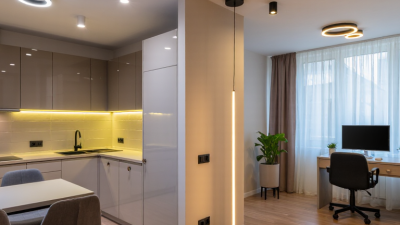
Top 10 Lumens Lighting Manufacturers for Global Buyers
Choosing among the Top 10 Lumens Lighting manufacturers takes more than comparing catalogues. Global buyers must weigh measured light output against beam control, color consistency, energy use, and product lifespan. Lumens describe how much visible light a source emits; they do not reveal how evenly it lights a workbench or whether glare will bother people nearby. Details matter.
Lighting researcher Dr. Mariana Figueiro has described light as “the most powerful synchronizer of the circadian system.” Her observation is a reminder that lighting affects people, not just room brightness. For buyers, the practical questions include where a product will be installed, how long it will operate each day, and whether its controls suit the space. A bright fixture can still be the wrong fixture.
This guide compares manufacturers through buyer-focused factors: product range, technical documentation, customization, quality processes, and support for international projects. It also considers whether suppliers provide useful specifications, such as lumen output, color temperature, and beam angle. Those figures deserve careful checking; a polished product page is not a substitute for clear evidence. This list is a starting point, not a verdict. A smaller supplier may fit a project better than a well-known name, and this overview cannot capture every regional requirement. Use it to shape questions, then verify details directly with each manufacturer before making a purchase.
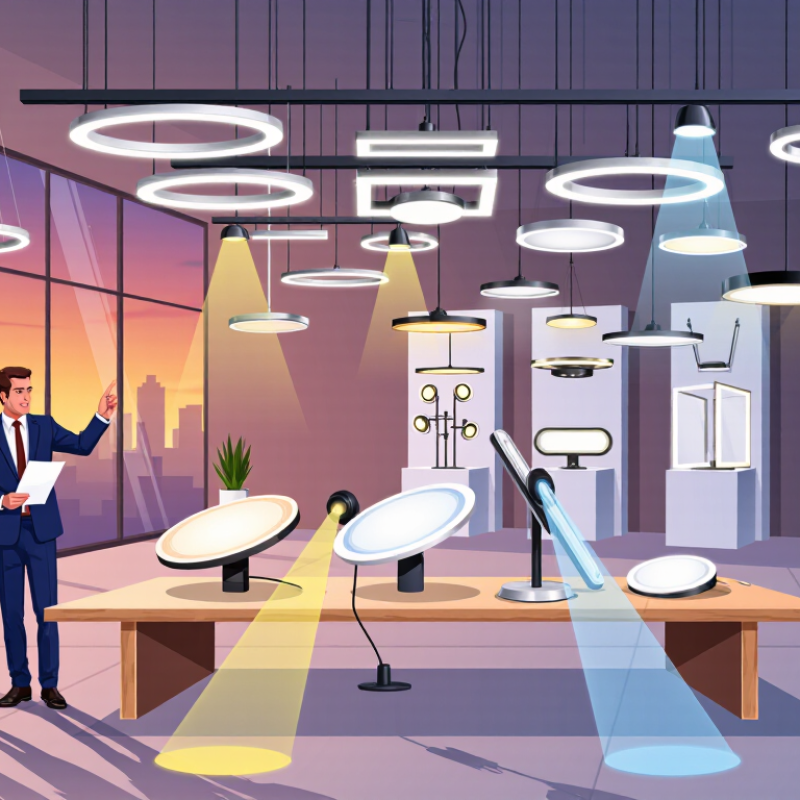
Understanding Lumens and Their Role in Lighting Performance
Lumens measure the total visible light emitted by a source, not the electricity it consumes. A higher lumen rating can mean more light, but it does not guarantee a better-lit room. Beam angle, fixture height, surface color, and room layout all affect where that light lands. Numbers need context.
When comparing lighting products, check rated lumens alongside wattage and efficacy, expressed as lumens per watt. Also look for test conditions and whether the figure describes initial output or maintained output after use. A narrow optic can concentrate light on a workbench, while a wide distribution may suit a corridor. The same lumen total can feel very different in each setting. That matters. For a practical check, compare illuminance targets in lux at the actual working surface, not just the fixture’s headline output. Product data may still leave gaps, and I would not treat one lumen figure as a verdict. Ask for photometric files or a lighting layout when placement is critical. Color temperature and glare also shape comfort, even though neither is captured by lumen count. A small sample installation can reveal uneven coverage that a specification sheet cannot.
Top 10 Lumens Lighting Manufacturers for Global Buyers – Understanding Lumens and Their Role in Lighting Performance
A product-category benchmark for comparing typical light output, efficacy, and common applications. Values are indicative ranges, not specifications for individual manufacturers or products.
| Lighting Product Category | Typical Light Output | Typical LED Efficacy | Common Applications | Buyer Consideration |
|---|---|---|---|---|
| LED A-type bulb | 450–1,600 lm | 80–120 lm/W | Homes, hospitality, and general indoor lighting | Compare lumens for brightness; wattage alone does not indicate light output. |
| LED downlight | 600–2,000 lm | 70–110 lm/W | Residential ceilings, offices, and retail spaces | Check beam angle, glare control, and whether the stated output is for the complete fixture. |
| LED panel light | 3,000–6,000 lm | 90–130 lm/W | Offices, classrooms, and healthcare interiors | Review uniformity, color rendering, and compatibility with dimming controls. |
| LED linear batten | 1,000–5,000 lm | 90–140 lm/W | Corridors, workshops, utility rooms, and commercial interiors | Compare length, distribution, and mounting options alongside total lumens. |
| LED high-bay luminaire | 10,000–30,000 lm | 120–180 lm/W | Warehouses, factories, and other high-ceiling spaces | Choose output and optics based on mounting height, spacing, and target illuminance. |
| LED floodlight | 2,000–20,000 lm | 100–150 lm/W | Building facades, yards, sports areas, and security lighting | Beam distribution and aiming affect usable light more than total lumens alone. |
| LED street luminaire | 5,000–20,000 lm | 100–160 lm/W | Roads, streets, and public pathways | Assess roadway optics, glare, mounting geometry, and applicable local standards. |
| LED wall-pack luminaire | 2,000–8,000 lm | 90–140 lm/W | Building entrances, exterior walls, and service areas | Check light distribution, shielding, ingress protection, and photocell options. |
| LED vapor-tight linear luminaire | 3,000–10,000 lm | 100–150 lm/W | Garages, food-processing areas, and damp or dusty locations | Verify the required enclosure rating and suitability for the installation environment. |
| LED area-light luminaire | 5,000–15,000 lm | 100–160 lm/W | Car parks, campuses, walkways, and outdoor communal areas | Consider pole height, spacing, glare, and light spill when comparing lumen ratings. |
How to interpret the figures: A lumen (lm) measures the total visible light emitted by a source; lux (lx) measures light arriving on a surface. Efficacy, expressed in lumens per watt (lm/W), indicates how efficiently electrical power is converted into light. Actual product performance varies with design, optics, color temperature, operating conditions, and test method. For procurement, confirm photometric data and certified specifications for the exact product.
How to Evaluate Lighting Manufacturers for Global Purchasing
Global buyers should compare more than headline lumens. A high lumen figure means little without input watts, beam angle, and test conditions. The IEA’s Energy Efficiency 2023 report says LEDs represented nearly half of global lighting sales in 2022. The U.S. Department of Energy’s 2020 Lighting Market Characterization found LEDs made up 48% of installed U.S. lighting stock. These figures show market adoption, not equal product quality. Ask for independent LM-79 photometric reports, flicker data, color consistency, and clear driver specifications. For lifetime claims, review LM-80 data and TM-21 projections; these cover LED package maintenance, not every fixture component. Details matter.
Then check whether samples match production units. Compare labels, wiring, finish, and measured light output across multiple pieces. Request documented checks for ingress protection, impact resistance, and operating temperature where the installation requires them. Verify voltage and frequency compatibility, spare-part availability, warranty terms, and batch traceability. A factory audit or live production inspection can help confirm capacity and quality controls. Review packaging too: a sound luminaire can still arrive with cracked lenses after a long shipment. This is where buyers sometimes compromise too early. Price pressure is real, but a low quote may omit testing, replacement parts, or clear tolerances. Ask for those details in writing, then assess the sample yourself. A polished datasheet is useful, but it is not proof.
Top 10 Lumens Lighting Manufacturers and Their Core Strengths
Lumens lighting manufacturers differ in more than advertised brightness. The strongest suppliers pair efficient LED chips with carefully designed optics, so light reaches work surfaces instead of spilling across ceilings. Some excel at high-bay fixtures for warehouses, where deep reflectors and thermal control matter. Others focus on linear office lighting, with even illumination and low-glare diffusers. Small details count.
Among ten manufacturer profiles, core strengths may include outdoor durability, retrofit compatibility, smart controls, custom optics, or dependable production at scale. A supplier specializing in streetlights may offer sealed housings and corrosion-resistant finishes. A commercial lighting producer may prioritize dimming options and consistent color temperature across large orders. Ask for photometric files, test reports, and sample units before comparing lumen claims. A bright fixture is not always a useful one.
Look closely at thermal design, too. Hot driver compartments can shorten service life, even when initial output looks impressive. Check whether replacement parts are available and whether installation instructions match your project conditions. Some catalogs are broad but thin on technical detail; that deserves a closer look. Request clear warranty terms and confirm that stated performance applies to the exact fixture configuration.
Comparing Product Ranges, Technologies, and Market Applications
A useful comparison of ten lighting manufacturers should begin with product range, not headline lumen output. Check whether each supplier offers high-bay fixtures, floodlights, linear systems, and outdoor luminaires for your project. Lumens alone can mislead. A warehouse with tall racks needs controlled optics and even floor coverage; a road project needs suitable distribution and glare control. Ask for photometric files and confirm that test conditions match the proposed fixture.
Technology matters in daily operation. Compare efficacy, color rendering, driver options, dimming compatibility, surge protection, and thermal design. For offices, comfortable color quality and low flicker may matter more than maximum brightness. For factories, heat, dust, and maintenance access deserve close review. Certifications and warranty terms should be checked against the exact model, not just the manufacturer’s general catalog. Some catalogs look impressive, yet matching a fixture to a real site can still take extra work.
Tips: Request sample specifications, installation dimensions, and lighting calculations for your own layout. Compare delivered lumens, not just LED-chip output. Ask how performance changes in hot conditions, and verify control-system compatibility before ordering. A small trial area can reveal glare or uneven coverage that a spreadsheet misses.
Assessing Certifications, Supply Capacity, and Long-Term Value
A high lumen figure is useful, but it tells only part of the story. Global buyers should check whether reported output comes from an independent photometric test, ideally with clear test conditions and product configuration. Ask for the report, not just a number on a datasheet. Small differences in optics, driver settings, and ambient temperature can change real-world performance.
Certifications deserve the same careful review. Confirm that documents match the exact model and destination market, and check their validity with the issuing body where possible. Quality systems such as ISO 9001 can indicate process controls, while relevant electrical safety and material-compliance documents address other risks. They are not interchangeable. A neat certificate folder is reassuring, but it cannot prove every shipment will be consistent.
Supply capacity is more than a factory’s stated monthly output. Request realistic lead times, component sourcing details, production inspection records, and a plan for handling replacement parts. A sample may perform beautifully. The larger order is the real test. Compare warranty terms, driver availability, and expected maintenance costs over several years. Some buyers overlook these details until a fixture fails above a busy loading bay. That is an expensive way to learn. Even strong suppliers can face delays, so build reasonable time into procurement plans and verify claims through references or a controlled trial order.
Top 10 Lumens Lighting Manufacturers for Global Buyers — Assessing Certifications, Supply Capacity, and Long-Term Value
A standards-based view of key lighting supplier checks. The chart counts selected standards by assessment area; it does not rank or score manufacturers.
How to use this: Check applicable product safety and photobiological requirements, and ask suppliers for relevant test reports and quality-system evidence. Separately assess production capacity, lead times, traceability, warranty terms, and spare-part support. IES LM-79 and LM-80 are test methods, not product certifications; applicability depends on the product and destination market.
Related Posts
-
What Is Home LED Lighting and How Does It Work?
-
Top Home LED Lighting Manufacturers Worldwide
-

How to Find a Reliable Lighting House in 2026?
-

How to Choose the Best LED Lighting Solutions?
-

Which Is the Best China Lighting House for Global Buyers?
-
How to Choose the Right Lighting Lumens for Any Space?
Skip to content