Top Home LED Lighting Manufacturers Worldwide
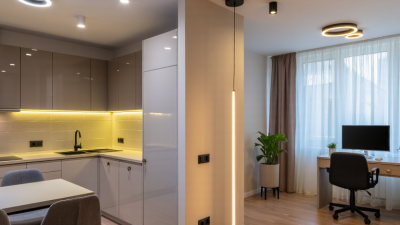
Choosing among the top Home Led Lighting manufacturers worldwide requires more than comparing product prices. It requires careful attention to performance, safety, design, and long-term service. Leading companies now offer recessed downlights, smart bulbs, outdoor fixtures, and architectural systems for different household needs. Their products may look similar. Their internal quality can differ significantly.
A credible comparison should examine luminous efficacy, color rendering, flicker control, thermal management, dimming compatibility, and expected lifespan. It should also consider warranty terms, testing procedures, supply reliability, and after-sales support. A warm 2700K lamp can make a bedroom feel calmer, while a 4000K fixture may improve visibility in a kitchen. Small details matter. Poor heat dissipation can shorten LED performance, even when the packaging looks impressive.
Dr. Mariana Figueiro, a respected lighting and health researcher, has stated, “Light is the most powerful synchronizer of the human circadian system.” This insight reminds buyers that Home Led Lighting affects more than energy consumption. Timing, brightness, and color can influence comfort and daily routines. However, no global ranking is perfect. Regional certifications, electrical systems, installer skills, and consumer expectations vary widely. A manufacturer trusted in Europe may not provide the same support elsewhere. That possibility deserves attention.
This guide evaluates worldwide manufacturers through transparent criteria, practical household experience, and available technical evidence. It considers how products perform in real rooms, from a softly lit hallway to a demanding home office. Some conclusions may remain debatable. That is useful. Responsible research should leave room for better data, independent testing, and honest reconsideration.
Definition and Scope of Home LED Lighting Manufacturers
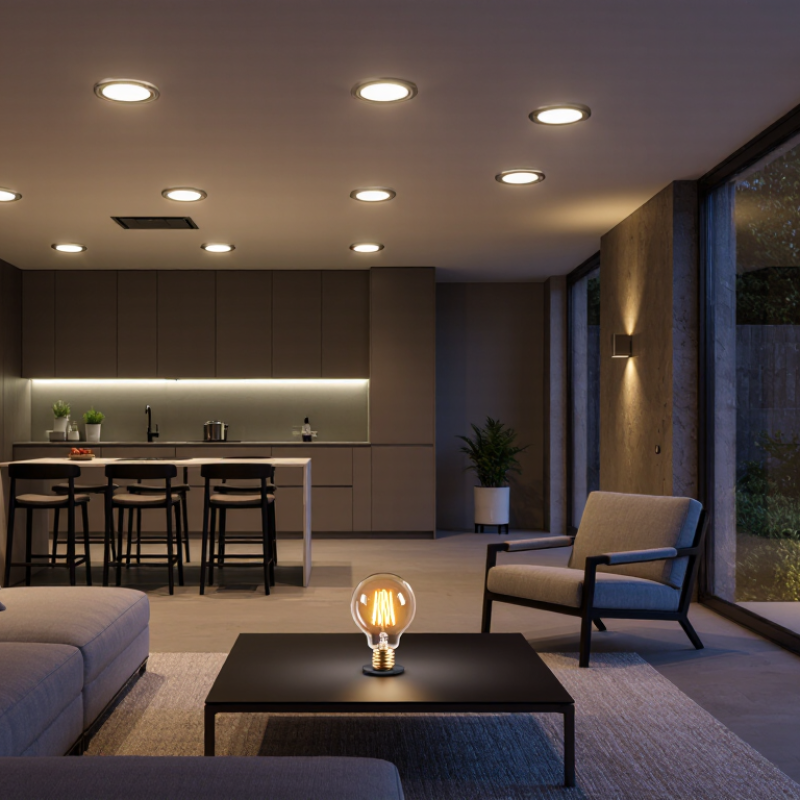
Home LED lighting manufacturers are companies that design, produce, assemble, or control LED products for residential spaces. Their work covers bulbs, ceiling fixtures, wall lights, strips, downlights, and smart lighting systems. The definition also includes manufacturers supplying components, drivers, housings, and control modules. However, a trading company is not always a manufacturer. Its role should be checked carefully.
The scope includes product research, optical design, heat management, electrical safety, factory testing, and quality control. Reliable manufacturers normally document lumen output, color temperature, color rendering, power consumption, and expected service life. They should also test products against applicable regional standards. Factory experience matters, but it is not enough. A polished catalog can hide weak thermal performance. I have seen lighting specifications change between samples and mass production. That gap deserves attention.
Tips: Compare technical sheets with physical samples. Ask how testing is performed and recorded. Check warranty terms, replacement procedures, and production consistency. For indoor rooms, examine glare, flicker, and heat around the fixture. For connected products, review data protection practices and software support. Do not judge quality by brightness alone. A softer light may be more useful.
Key Technologies Used in Residential LED Lighting
Top Home LED Lighting Manufacturers Worldwide
Key Technologies Used in Residential LED Lighting
Residential LED systems now rely on more than simple diode chips. Phosphor-converted LEDs create white light by combining blue emission with a phosphor layer. This design improves efficiency and keeps costs practical. The U.S. Department of Energy reported laboratory LED packages exceeding 200 lumens per watt in its 2023 solid-state lighting research. Household products usually achieve less. Heat, optics, and driver losses still reduce real performance.
Constant-current drivers help maintain stable brightness when voltage changes. Quality products also control flicker through better circuit design. IEEE 1789-2015 offers guidance for reducing health risks linked with temporal light modulation. Tunable-white systems adjust color temperature from warm evening light to cooler task lighting. Occupancy sensors and daylight controls can reduce unnecessary operation. The International Energy Agency reported that LEDs represented more than half of global lighting sales in 2022. Adoption is strong, but installation quality remains uneven.
Tips: Choose 2700–3000K for bedrooms and living rooms. Use 3500–4000K for kitchens or work areas. Check measured lumens, color-rendering data, and flicker information. A high efficacy number alone is not enough. Poor thermal design can shorten a lamp’s useful life. This is often overlooked. Also, smart controls may save energy, yet they add standby demand and setup complexity. The better choice depends on actual room use, not only laboratory claims.
Global Regions and Leading Manufacturer Categories
Home LED Lighting Manufacturers Worldwide
Regional strengths shape the global LED lighting supply chain. The International Energy Agency’s 2024 Energy Efficiency Market Report states that LEDs exceeded half of global lighting sales in 2022. Adoption is uneven, however. Asia-Pacific remains the largest manufacturing base, supported by dense component networks and high-volume contract production. Factories there often produce lamps, drivers, panels, and outdoor fixtures within short shipping distances.
Europe emphasizes efficiency, repairability, optical performance, and stricter product documentation. North American manufacturers focus strongly on commercial retrofits, connected controls, and warehouse-scale projects. The Middle East and Latin America show expanding demand for efficient outdoor and residential systems, although currency pressure and installation skills can slow projects. The map is not neat.
Manufacturer categories now overlap. Integrated fixture producers design luminaires, thermal systems, and control interfaces. Retrofit specialists replace fluorescent tubes or halogen lamps with compatible LED products. Component manufacturers supply chips, drivers, lenses, sensors, and power modules. Contract OEM and ODM factories offer private-label production, which can reduce development time but may weaken quality visibility.
The U.S. Department of Energy’s 2023 Solid-State Lighting R&D Opportunities report highlights improved efficacy, controls, and thermal management as continuing priorities. In practical terms, a dependable fixture needs more than a bright diode. It needs stable drivers, measured heat dissipation, consistent color, and clear warranty conditions. Some market forecasts still treat every LED product as equal. That assumption deserves more scrutiny, especially when laboratory efficiency differs from performance after years in a dusty ceiling or humid street environment.
Top Home LED Lighting Manufacturers Worldwide - Global Regions and Leading Manufacturer Categories
Global industry map by manufacturing region, product category, value-chain position, and primary residential application
| Global Region | Manufacturing Strength | Leading Manufacturer Categories | Common Home LED Product Forms | Primary Residential Applications | Typical Compliance and Performance Priorities | Value-Chain Position |
|---|---|---|---|---|---|---|
| East Asia | Deepest concentration of the LED electronics supply chain, including semiconductor components, LED packages, drivers, printed circuit assemblies, and finished luminaires. | LED package manufacturers Driver manufacturers Lamp manufacturers Luminaire OEM/ODM manufacturers | A-lamps, candles, globes, downlights, panel lights, strip lights, track lights, outdoor wall lights, and smart bulbs. | General room lighting, kitchens, bedrooms, decorative lighting, gardens, balconies, and connected-home installations. | Energy efficiency, thermal management, color consistency, flicker control, electrical safety, dimming compatibility, and export-market certification. | Semiconductor-to-finished-product integration, large-scale component sourcing, contract manufacturing, and private-label production. |
| Southeast Asia | Important electronics assembly and lighting production base supported by regional supply chains and export-oriented manufacturing infrastructure. | Lamp assembly manufacturers Residential luminaire manufacturers Electronics assembly manufacturers LED module manufacturers | Bulbs, battens, ceiling fixtures, recessed lights, linear lights, cabinet lights, outdoor fixtures, and decorative products. | New residential construction, apartment retrofits, retail homes, hospitality-style interiors, and outdoor residential areas. | Manufacturing consistency, supply reliability, ingress protection for outdoor products, heat dissipation, and compatibility with regional voltage systems. | Component assembly, finished-product manufacturing, export production, and regional distribution. |
| Europe | Strong in engineered lighting, architectural design, professional residential systems, controls, and high-efficiency products developed for regulated markets. | Architectural lighting manufacturers Smart-control manufacturers Premium luminaire manufacturers Emergency-lighting manufacturers | Recessed spotlights, pendant fixtures, linear systems, cabinet lighting, wall luminaires, garden fixtures, and connected lighting systems. | Design-focused homes, kitchens, living spaces, renovations, energy-efficient buildings, and premium outdoor environments. | Ecodesign requirements, electrical safety, photobiological safety, electromagnetic compatibility, circularity, repairability, and high color rendering. | Product engineering, system design, controls integration, specialized manufacturing, and premium-market distribution. |
| North America | Established market for residential retrofit products, connected lighting, ceiling fixtures, controls, and electrical distribution channels. | Residential retrofit manufacturers Smart-lighting manufacturers Ceiling-fixture manufacturers Lighting-control manufacturers | Replacement bulbs, retrofit downlights, recessed kits, ceiling fans with LED lights, under-cabinet fixtures, smart bulbs, and landscape lighting. | Single-family homes, apartments, garages, kitchens, bathrooms, home offices, porches, and landscape areas. | Energy-label requirements, safety certification, dimmer compatibility, wireless interoperability, power-quality performance, and building-code alignment. | Product specification, systems integration, final assembly, channel distribution, and retrofit-oriented product development. |
| South Asia | Growing production base for cost-efficient lamps, basic luminaires, electrical assemblies, and residential products designed for broad market adoption. | Affordable lamp manufacturers Residential fixture manufacturers LED driver manufacturers Bulk-project manufacturers | Bulbs, battens, surface-mounted panels, downlights, ceiling fixtures, rechargeable lamps, and basic outdoor lights. | Residential replacement, new housing, community projects, small businesses, and areas requiring efficient alternatives to fluorescent or incandescent lamps. | Affordability, voltage tolerance, surge protection, service life, local electrical safety, heat management, and availability of replacement products. | Local assembly, domestic-market manufacturing, contract production, and project supply. |
| Middle East | More prominent in project supply, lighting integration, specification, and distribution than in upstream LED semiconductor manufacturing. | Decorative luminaire manufacturers Project-lighting integrators Outdoor-lighting manufacturers Smart-building integrators | Decorative pendants, chandeliers with LED sources, recessed lights, façade fixtures, garden lights, pathway lights, and high-temperature products. | Large residences, villas, hospitality-style homes, courtyards, façades, entrances, and outdoor living spaces. | High ambient-temperature performance, dust resistance, ingress protection, glare control, long service life, and project-specific specifications. | System integration, project customization, distribution, installation, and regional sourcing. |
| Latin America | Regional production and assembly focus on mainstream lamps, retrofit products, residential fixtures, and distribution for diverse voltage and climate conditions. | General-lighting manufacturers Retrofit lamp manufacturers Outdoor-lighting manufacturers Local assembly manufacturers | Bulbs, tubes, downlights, ceiling fixtures, floodlights, street-adjacent residential fixtures, and outdoor decorative lights. | Home retrofits, apartments, houses, small commercial-residential buildings, garages, patios, and security lighting. | Voltage variation tolerance, surge protection, thermal performance, local certification, price efficiency, and broad replacement availability. | Regional assembly, imported-component integration, finished-product distribution, and retrofit supply. |
| Oceania | Market emphasis on certified residential products, renovation, outdoor lighting, energy efficiency, and climate-resistant luminaires. | Residential retrofit manufacturers Outdoor-lighting manufacturers Smart-home lighting manufacturers Electrical accessory manufacturers | Downlights, replacement lamps, ceiling lights, bathroom fittings, exterior wall lights, garden lights, and smart controls. | Home renovation, coastal residences, bathrooms, kitchens, verandas, gardens, and energy-saving upgrades. | Electrical safety, moisture resistance, corrosion resistance, dimming performance, energy efficiency, and building-regulation compliance. | Product certification, regional distribution, final assembly, specification, and renovation-focused supply. |
| Africa | Demand is strongly connected to affordable lighting, distributed energy, solar-compatible products, and durable solutions for variable grid conditions. | Affordable lamp manufacturers Solar LED manufacturers Rechargeable-light manufacturers Project-supply manufacturers | Basic bulbs, rechargeable lamps, solar home lights, compact battens, floodlights, security lights, and small off-grid lighting systems. | Household illumination, rural electrification, backup lighting, security, outdoor paths, and small residential or mixed-use properties. | Low energy consumption, battery performance, solar charging efficiency, durability, surge tolerance, ease of maintenance, and affordability. | Product distribution, local assembly, project deployment, off-grid system integration, and after-sales servicing. |
How to Evaluate Home LED Lighting Manufacturers
Evaluating home LED lighting manufacturers requires more than comparing prices and product photos. Start by examining their technical documentation. Reliable manufacturers should provide lumen output, color temperature, color rendering index, beam angle, power factor, and expected lifetime. Ask how these figures were tested. Marketing claims can look precise while hiding weak testing methods.
Factory experience matters. Request product samples and inspect them in real rooms, not only under showroom lighting. Check for visible flicker, uneven brightness, plastic quality, connector strength, and heat buildup after several hours. Good manufacturers explain their thermal design and maintain consistent performance across production batches. Independent safety and electromagnetic testing also deserve attention. Certifications should be verifiable and suitable for the target market.
Communication reveals operational reliability. A professional supplier answers technical questions clearly, shares inspection records, and explains warranty limits without vague promises. Ask about replacement parts, quality control stages, minimum order quantities, and delivery procedures. Speaking with long-term customers can expose issues that brochures omit. No evaluation is perfect. I have found that even a strong sample may not represent every batch. For this reason, repeat inspections and written specifications are worth the extra effort. Consider energy use over several years, not only the initial purchase cost. A cheaper lamp may require earlier replacement. That difference changes the real value.
Top Home LED Lighting Manufacturers Worldwide - How to Evaluate Home LED Lighting Manufacturers
This chart presents a practical evaluation framework for residential LED lighting manufacturers. Energy efficiency, rated life, light quality, safety, and product compatibility are key criteria when comparing suppliers. The percentages represent evaluation priorities rather than market share or company performance.
Market Trends Shaping the Future of Residential LED Lighting
Residential LED lighting is moving beyond simple energy savings. The International Energy Agency reports that LEDs now represent more than half of global lighting sales. This shift is changing household expectations. Buyers increasingly want lower bills, adjustable brightness, and warmer evening light in one fixture.
Smart controls are becoming a practical market driver. The U.S. Department of Energy states that residential LEDs use at least 75% less energy than incandescent lamps and can last up to 25 times longer. Motion sensors, daylight dimming, and app-free voice controls can reduce unnecessary use. A hallway light may dim after midnight, while a kitchen fixture reaches full brightness during meal preparation. However, connected features can add cost and installation friction. Not every home needs another app.
Health-focused lighting is also gaining attention. Research reviewed by the U.S. Department of Energy links evening blue-rich light with possible disruption to circadian rhythms, encouraging demand for tunable white systems. Material efficiency is another concern. The European Commission’s ecodesign policies increasingly emphasize repairability, efficiency, and product information. Manufacturers may need clearer replacement parts and longer support periods. Progress is real, but recycling remains uneven, and many “smart” products still become waste when software support ends.
Related Posts
-
What Is Home LED Lighting and How Does It Work?
-
What Is the Best Type of Home Lighting Solution?
-
How to Find a Reliable Lighting House in 2026?
-

How to Choose the Best LED Lighting Solutions?
-
Which Is the Best China Lighting House for Global Buyers?
-
How to Choose the Right Lighting Lumens for Any Space?
Skip to content