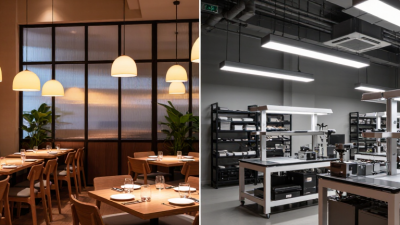
What Are the Top LED Lighting Types in 2026?
Choosing the right LED Lighting in 2026 means looking beyond brightness. A bulb’s shape, beam angle, color quality, and controls all affect how a room feels. A warm A19 bulb can soften a bedside table, while a narrow spotlight can pick out a kitchen counter. Small differences matter.
Lighting researcher Mariana Figueiro has described light as “the most powerful synchronizer of the circadian system.” That idea helps explain why color temperature and timing deserve attention, not just wattage. This guide compares popular options, including A19 replacement bulbs, recessed downlights, LED strips, flat panels, high-bay fixtures, and outdoor floods. It also considers smart and tunable-white products, whose features can be useful but are not automatically worth the extra cost.
The right choice depends on the space. Ceiling height, glare, dimmer compatibility, and the fixture’s actual light output can change the result. Check product specifications and independent testing where available; marketing labels alone are not enough. For a workshop, a high-bay fixture may suit a tall ceiling, while a panel can spread light more evenly across an office. There is no universal winner. I should also admit that product ranges change quickly, so a “top” type is a starting point, not a final verdict. The following outline weighs practical strengths, trade-offs, and suitable uses, helping readers match each LED type to real rooms and tasks.
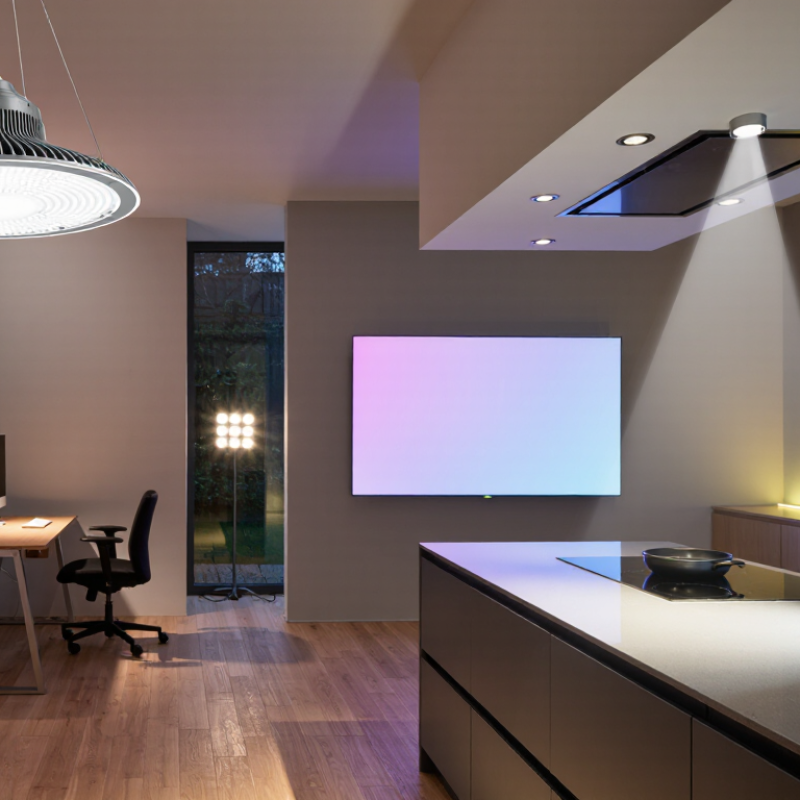
Classify 2026 LED Types Using DOE’s 75% Energy-Saving Benchmark
LED lighting is best classified by how it delivers light, then checked against energy use. The U.S. Department of Energy’s 75% benchmark compares LED energy consumption with incandescent lighting for similar light output. It is a useful reference, not a promise that every LED installation will save exactly that amount.
Ambient LEDs light a whole room, such as a kitchen ceiling. Task LEDs focus light on a desk or work surface, while directional LEDs send a narrower beam toward a hallway or display. Decorative LEDs may prioritize shape and appearance. Smart LEDs add controls such as dimming or scheduling. The categories can overlap. That distinction matters.
To assess a product, compare its brightness in lumens with its power use in watts, and check whether it suits the fixture and task. A bright lamp in a small room may waste energy, even if its rated efficiency looks strong. Controls and hours of use also affect real savings. The benchmark is a starting point, not the whole calculation. I’d still check actual use.
Compare LED Bulbs, Tubes, and Panels by Lumens, Watts, and Rated Life
What Are the Top LED Lighting Types in 2026?
Compare LED Bulbs, Tubes, and Panels by Lumens, Watts, and Rated Life
Choosing an LED means comparing light output, energy use, and rated life—not just the shape. The U.S. Department of Energy says LEDs use at least 75% less energy and can last up to 25 times longer than incandescent bulbs.
As a practical shopping comparison, an 800-lumen household bulb often draws 8–10 watts; an LED tube may deliver around 1,800–2,200 lumens at 12–18 watts.
Flat panels commonly provide 3,000–5,000 lumens at roughly 25–40 watts. These are typical ranges, not guarantees; check each product’s specification sheet.
Rated life varies too. Bulbs often list 15,000–25,000 hours, while tubes and panels may claim 30,000–50,000 hours. A longer rating can look impressive, but heat, switching frequency, and installation conditions affect real-world performance.
Lumens per watt helps compare efficiency: divide lumens by watts. Still, it does not tell you whether a panel will feel comfortable over a desk or whether a tube fits an existing fixture.
Tips:
Match lumens to the space, then confirm wattage, color temperature, dimmer compatibility, and rated life. For a fair comparison, use figures from product data sheets and check how life was tested.
One detail is easy to miss: a high-lumen panel may create glare without suitable diffusion.
Evaluate High-Bay and Street LEDs Using IES and IP-Rating Criteria
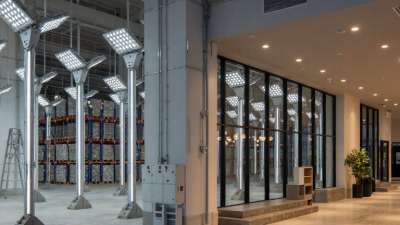
High-bay and street LEDs should be judged by measured light distribution, not wattage alone. Ask for an IES photometric file and review how the fixture directs light at the planned mounting height. In a warehouse, compare the spacing and beam pattern against aisle widths, rack heights, and target illuminance. For streets, assess the road width, pole spacing, and optical distribution to limit dark gaps and excessive light near homes. Uniformity matters. A bright patch beneath each pole can still leave unsafe-looking shadows between them.
Use the applicable project criteria to check maintained illuminance and uniformity; an IES file helps, but it does not replace a site-specific calculation. IP ratings address enclosure protection, not lighting quality. The first digit describes protection from solids, and the second describes water ingress. IP65 is dust-tight and resists water jets; IP66 is tested against more powerful jets. Choose based on actual exposure, not the biggest number available. An IP rating does not confirm resistance to corrosion, cleaning chemicals, or heat. That distinction is easy to overlook. Check the installation environment and maintenance plan, then verify that the selected rating fits both.
Rank Horticultural LEDs by Photon Efficacy, with Leading Fixtures Near 3 µmol/J
For horticultural LEDs in 2026, photon efficacy offers a useful way to compare fixtures. It measures how many micromoles of photosynthetic photons a light produces per joule of electricity. At the leading edge, fixtures approach 3 µmol/J, though results depend on the test method and operating conditions. Check whether a figure describes the complete fixture or only its LED components; those numbers are not interchangeable.
A practical ranking starts with efficient, full-spectrum fixtures near that range, followed by models with lower measured efficacy but suitable output and coverage. Look for independent test data, reported spectrum, and performance at the intended dimming level. Heat matters, too. A fixture mounted close to a canopy may run differently from one tested in open air. Efficacy is important, but it cannot tell you how evenly light reaches the edges of a growing area. I would compare photon distribution and power draw alongside the headline number. Even then, the “best” choice can be less obvious than a tidy ranking suggests: room layout, crop needs, and fixture height all change the result.
Assess Smart LEDs by CCT Range, CRI, and Control Compatibility
For 2026, compare smart LEDs by measured color behavior, not “tunable” on the box. ANSI C78.377-2017 defines common nominal white-light bins from 2700 K through 6500 K, including 3000 K and 4000 K. A wide CCT range is useful only when the lamp reaches it smoothly. Check the stated endpoints and whether adjustment works through the app, remote, or wall control. Range matters.
Color quality needs another check. The IES TM-30-20 method reports fidelity (Rf) and gamut (Rg), adding detail that a single CRI number can hide. For a kitchen, compare reds and skin tones under the actual lamp; two bulbs labeled CRI 90 can still look different. Ask for TM-30 data, not just CRI. This is often missing.
Compatibility is not universal. Confirm the wireless protocol, dimmer type, hub requirement, and whether color-temperature control works without internet. Matter, Wi-Fi, Bluetooth, and Zigbee do not guarantee the same functions; device, controller, and software support must overlap. Test one lamp on the intended circuit before buying several. A specification sheet can omit awkward edge cases, so check low-end dimming and recovery after power loss.
What Are the Top LED Lighting Types in 2026? — Assess Smart LEDs by CCT Range, CRI, and Control Compatibility
| LED Lighting Type | Typical CCT Range | Typical CRI | Common Smart Control Compatibility | Typical Applications | Selection Considerations |
|---|---|---|---|---|---|
| Smart A-Series Bulb General-purpose screw-base bulb |
Fixed white: usually 2,700–5,000 K; tunable-white models commonly span about 2,200–6,500 K | Typically 80+; some models are 90+ | Varies by model: Wi-Fi, Bluetooth, Zigbee, Thread/Matter, or a compatible smart hub. Some versions also support dimming through an app or voice assistant. | Bedrooms, living rooms, table lamps, and standard household fixtures | Check base type, bulb dimensions, enclosed-fixture rating, dimmer requirements, and whether the chosen control protocol works with the home system. |
| Smart PAR Spotlight Directional reflector lamp |
Commonly 2,700–5,000 K; tunable versions vary by product | Typically 80+; higher-CRI options are available | Often offered in Wi-Fi, Bluetooth, or hub-based versions; compatibility and dimming method are model-specific. | Track lights, recessed accent lighting, display areas, and outdoor-rated fixtures | Match the lamp to the socket and beam angle. Verify whether the fixture is suitable for the lamp’s heat output and indoor or outdoor location. |
| Smart BR Reflector Bulb Wide-beam reflector lamp |
Usually 2,700–5,000 K; some tunable-white models offer a wider range | Typically 80+; check the product specification for higher values | May use Wi-Fi, Bluetooth, Zigbee, or another listed smart platform; smart dimming is not universal across all versions. | Recessed cans, general room lighting, and wide-area accent lighting | Check reflector diameter, fixture clearance, beam spread, and whether the lamp is compatible with the existing dimmer. |
| Smart Recessed Downlight Integrated or retrofit ceiling light |
Fixed-CCT versions commonly range from 2,700–5,000 K; selectable-CCT models often offer preset values within that range. Tunable models vary. | Typically 80+; 90+ options are available | May use Wi-Fi, Bluetooth, Zigbee, Thread/Matter, or wired controls such as 0–10 V or DALI, depending on the fixture. | Kitchens, hallways, bathrooms, offices, and general ceiling lighting | Confirm cutout size, ceiling depth, insulation-contact rating, wet-location rating where needed, and the exact control and dimming method. |
| Smart LED Strip or Tape Flexible linear lighting |
Single-CCT strips are commonly 2,700–6,500 K; tunable-white strips combine warm and cool channels. RGB models may not provide high-quality white light. | Often 80+ for white-light strips; verify CRI for color-critical use | Common options include Wi-Fi, Bluetooth, Zigbee, or a dedicated controller. Addressable RGB strips require a compatible controller and power supply. | Under-cabinet lighting, shelves, coves, signage, and indirect accent lighting | Check voltage, power supply capacity, cut intervals, controller channel type, heat management, and whether the strip’s IP rating suits the location. |
| Smart LED Panel or Troffer Flat or recessed area luminaire |
Commonly fixed or selectable 3,000–5,000 K; tunable-white options vary by model | Typically 80+; 90+ models are available | Controls may include 0–10 V, DALI, wireless mesh, or a networked control system. Confirm that the driver and controller are compatible. | Offices, classrooms, healthcare spaces, and other large indoor areas | Compare dimensions, lumen output, glare control, driver type, dimming range, and ceiling-system compatibility. |
| Smart Linear LED Fixture Suspended or surface-mounted luminaire |
Often 3,000–5,000 K; tunable-white variants are available | Typically 80+; 90+ options are available for applications needing improved color rendering | Depending on the driver, may support 0–10 V, DALI, wireless mesh, or another specified control protocol. | Offices, work areas, corridors, retail spaces, and task lighting | Review glare performance, mounting method, driver compatibility, dimming behavior, and whether the desired system supports scene or schedule control. |
| Smart LED High-Bay Fixture High-output industrial luminaire |
Commonly 4,000–5,000 K; exact choices depend on the fixture | Often 80+; confirm the specified value for color-sensitive work | Frequently available with 0–10 V dimming, occupancy or daylight sensors, and sometimes wireless controls. Compatibility depends on the driver and control package. | Warehouses, workshops, gyms, and high-ceiling commercial or industrial spaces | Size output for mounting height and task needs. Check ambient-temperature limits, sensor coverage, ingress rating, and control wiring. |
Note: CCT ranges, CRI, and control features are representative specifications, not guarantees for every product in a category. Confirm the individual fixture’s data sheet, dimmer or driver compatibility, and applicable safety ratings before purchase or installation.
Related Posts
-
How to Choose the Best LED Lighting Solutions?
-

How to Choose the Best LED Lighting Solutions?
-
10 Best LED Lighting Solutions for Global Buyers
-
Unlocking the Advantages of Innovative Led Lighting Solutions
-
Advantages of Choosing Led Lighting Solutions for Your Business
-
How to Maximize Energy Efficiency with LED Lighting: Insights from Industry Studies
Skip to content