10 Best LED Lighting Solutions for Global Buyers

Choosing the right Led Lighting Solutions can shape energy costs, workplace comfort, and long-term project reliability. Global buyers often compare brightness, color temperature, beam angle, warranty terms, and installation requirements. A warehouse may need durable high-bay fixtures, while a boutique hotel may prefer warm, dimmable downlights. These differences matter.

This guide examines ten practical lighting options for international purchasing teams. It considers performance data, material quality, driver stability, heat management, and maintenance access. We also look at supplier communication, sample testing, packaging, and documented compliance with applicable regional standards. Specifications can appear impressive on paper. Real conditions may disagree.

A reliable product should perform consistently after repeated switching, temperature changes, and extended daily use. Buyers should request test reports, photometric files, warranty policies, and clear replacement procedures before placing large orders. Small details help.

Field experience shows that installation errors can reduce an efficient fixture’s value. Poor ventilation, unsuitable dimmers, or incorrect voltage may cause flicker and early failure. Therefore, professional assessment remains important, especially for projects crossing borders. No single solution fits every market.

Some recommendations may require adjustment after local testing. That is not a weakness; it is part of responsible procurement. Product availability, regulations, labor costs, and climate conditions can change the final decision. By balancing verified evidence with practical observation, buyers can select Led Lighting Solutions that support safer, more efficient, and more comfortable spaces.

10 Best LED Lighting Solutions for Global Buyers

LED Lighting Solutions: Types, Features, and Global Applications

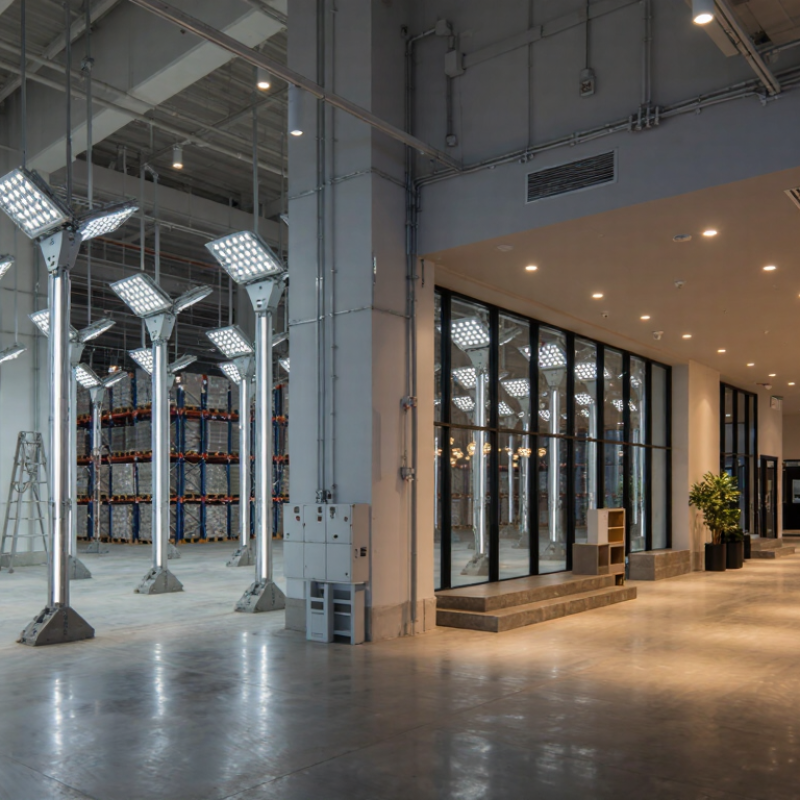
LED lighting solutions vary by space, climate, and operating schedule. Common types include bulbs, panels, linear fixtures, high bays, floodlights, and streetlights. Each type serves a different purpose. Panels create even light in offices and classrooms. High bays suit warehouses with ceilings above six meters. Floodlights support yards, facades, and outdoor work areas. Streetlights require controlled beams and strong weather resistance.

Key features deserve careful checking. Lumens show light output, while watts show energy use. Color temperature affects atmosphere and visibility. A high color rendering index helps retail products and inspection areas look more natural. IP ratings indicate protection from dust and water. Dimming, motion sensors, and network controls can reduce wasted energy. Thermal design also matters, especially in hot regions. In practical lighting assessments, poor heat control often causes earlier performance loss. One assumption can fail.

Tips: Match the beam angle to the mounting height. Request photometric files before purchase. Check flicker performance for cameras and sensitive workspaces. Compare warranty terms with local service capacity. Test a sample during daytime and nighttime. Coastal sites may need corrosion-resistant materials. Cold regions need drivers rated for low temperatures. Certification requirements also differ across markets, so confirm local electrical standards with a qualified professional. Do not choose by wattage alone. Measure the actual space.

How to Evaluate LED Quality, Efficiency, and Product Lifespan

10 Best LED Lighting Solutions for Global Buyers

Evaluating LED quality starts with measurable output, not attractive packaging. ENERGY STAR reports that certified LEDs use at least 75% less energy than incandescent lamps and can last up to 25 times longer. Still, efficiency claims often describe the LED chip, not the complete fixture. Ask for luminaire efficacy in lumens per watt, tested at operating temperature. A warehouse fitting producing 150 lm/W on paper may perform differently inside a dusty, poorly ventilated ceiling.

Check photometric files, color rendering, and flicker results. A CRI above 80 suits general commercial areas, while retail displays may require higher color fidelity. The U.S. Department of Energy’s solid-state lighting research emphasizes thermal management as a major factor in performance. Heat sinks, airflow, and driver quality matter. A bright fitting with a hot housing can age quickly.

Lifespan needs careful interpretation. Look for LM-80 test data and TM-21 projections, plus an L70 rating showing when output may fall to 70% of initial lumens. A claimed 50,000 hours is not automatically reliable. Verify the test temperature, duty cycle, driver warranty, and failure rate. The International Energy Agency has identified lighting as roughly 15% of global electricity use, so small efficiency gains can scale significantly. I would also test a sample for several weeks. Specifications can be correct, yet installation conditions may expose weaknesses.

10 Best LED Lighting Solutions for Global Buyers

How to Evaluate LED Quality, Efficiency, and Product Lifespan

The chart compares representative commercial LED solution benchmarks. Higher efficacy means more light output per watt, while rated life indicates the expected operating period before light output typically falls to 70% of the initial level. Buyers should also verify CRI, color consistency, thermal management, surge protection, warranty terms, and applicable regional certifications.

Top LED Lighting Solutions for Commercial and Industrial Buyers

Commercial and industrial buyers need more than bright fixtures. They need predictable output, lower maintenance, and measurable energy savings. The International Energy Agency’s Energy Efficiency 2024 report identifies efficient lighting and controls as important tools for reducing electricity demand. This supports LED upgrades in warehouses, offices, factories, and retail facilities.

High-bay luminaires suit warehouses with ceilings above eight metres. Linear fixtures provide even illumination over production lines. Area lights improve loading yards and access roads. Occupancy sensors can reduce operating hours in low-traffic zones.

The U.S. Department of Energy’s 2023 Solid-State Lighting R&D Opportunities report notes that advanced LED packages can exceed 200 lumens per watt in laboratory conditions. Real installations usually perform lower. Heat, dust, poor optics, and aging drivers matter.

Specify measured system performance, not marketing claims. Check efficacy, colour consistency, glare control, surge protection, and driver warranty terms. IEC 60598 provides a useful safety framework for many commercial luminaires. EN 62471 helps assess photobiological safety. Site audits often reveal over-lighting near windows and dark areas beneath shelving. That is a design failure, not a lamp failure. Controls may also be poorly commissioned. A better plan begins with lux mapping, operating schedules, temperature conditions, and maintenance records. No project is perfectly optimized. Allow room for review after installation.

Choosing LED Products for Residential, Outdoor, and Smart Lighting Needs

For global buyers, LED selection should match room function, climate, controls, and maintenance access. Ten practical solutions include dimmable bulbs, recessed downlights, under-cabinet strips, panel lights, weatherproof wall fixtures, pathway lights, floodlights, high-bay luminaires, sensor lights, and connected color-tunable lamps. Each option serves a different setting. The U.S. Department of Energy reports that LEDs use at least 75% less energy and last up to 25 times longer than incandescent lighting. That difference matters in homes, warehouses, and remote outdoor areas.

Residential spaces usually benefit from 2700–3000K warm light and high color rendering. Outdoor fixtures need suitable ingress protection, corrosion resistance, surge protection, and stable performance during temperature changes. Smart lighting should support local control, reliable wireless protocols, scheduled dimming, and continued software support. The International Energy Agency states that lighting represents about 15% of global electricity consumption. Efficiency remains important. Specifications can mislead. I would test glare, connection stability, and real brightness before placing a large order.

Tips: Request photometric files, warranty terms, replacement parts, and safety certifications for the destination market. Compare lumens, not watts alone. Check the driver, flicker performance, and standby power. A small sample installation often reveals problems that a product sheet hides.

Global Buying Factors: Certifications, Suppliers, Pricing, and Logistics

Global LED buyers should examine compliance before comparing unit prices. Certification needs vary by destination and application. Ask suppliers for current test reports, not copied certificates. Common documents may include CE, UKCA, UL, EMC, and RoHS evidence. Verify the product model on every document. A report for another driver is not enough. Ask for photometric files, ingress ratings, and electrical safety data. Small details matter.

Supplier evaluation should include more than a polished website. Request production samples, factory quality procedures, warranty terms, and replacement-part policies. Check how the supplier handles failed samples. A clear answer shows practical experience. Vague promises create future delays. I would also confirm LED lifetime data, but lifetime claims can be optimistic. Ambient heat, dust, and poor ventilation often reduce real performance. That gap matters.

Pricing should reflect the landed cost. Include tooling, packaging, inspection, freight, insurance, duties, and local installation. A low quotation may hide expensive air shipping or weak cartons. Confirm voltage, color temperature, dimming method, and connector type before ordering. Logistics plans should state Incoterms, lead time, pallet dimensions, and spare quantities. Use protective packaging for glass or delicate housings. Delays still happen. Build a reasonable buffer, especially before seasonal demand. A small pilot shipment can expose labeling, customs, and installation problems before a larger purchase.

10 Best LED Lighting Solutions for Global Buyers — Global Buying Factors: Certifications, Suppliers, Pricing, and Logistics
Rank & LED Solution Typical Applications Key Buying Specifications Relevant Certifications & Standards Suitable Supplier Profile Indicative FOB Price Range* Typical MOQ Packaging & Logistics Considerations Main Global Buying Risks
1. LED Bulbs and A-Type Lamps Residential rooms, hotels, retail stores, offices, and general-purpose replacement lighting. 4–15 W; 400–1,600 lm; 220–240 V or 100–277 V; 80+ CRI; 2,700–6,500 K; E26/E27 or B22 bases. IEC 62560 IEC 61347 CE/RoHS where applicable Regional energy label High-volume lamp manufacturer with integrating-sphere reports, LM-80/TM-21 data where relevant, and documented driver testing. US$0.60–4.00 per unit 500–5,000 units Lightweight and cube-efficient; use molded inserts or partition cartons. Sea freight is economical for container quantities; air freight suits samples and urgent replenishment. Flicker, poor power factor, lumen depreciation, incorrect base dimensions, and regional energy-label noncompliance.
2. LED Tubes and Linear Replacement Lamps Offices, schools, warehouses, supermarkets, hospitals, and industrial facilities replacing fluorescent tubes. 0.6–1.5 m lengths; 9–25 W; 900–3,000 lm; T8 or T5 formats; single- or double-ended wiring; 120–277 V or 220–240 V. IEC 62776 IEC 61347 CE/RoHS where applicable Electrical safety testing Commercial lighting supplier able to provide wiring diagrams, ballast-compatibility information, photometric files, and installation instructions. US$1.50–8.00 per unit 200–2,000 units Long cartons require edge protection and drop testing. Ocean freight reduces cost per unit; mixed-length air shipments have a high dimensional-weight charge. Unsafe ballast compatibility, incorrect wiring method, tube breakage, inconsistent color temperature, and obsolete fluorescent retrofit assumptions.
3. LED Panels and Troffers Suspended ceilings, offices, classrooms, clinics, corridors, and commercial interiors. 30–60 W; 3,000–6,000 lm; 300 × 1,200 mm or 600 × 600 mm; UGR <19 options; 0–10 V, DALI, or non-dimming control. IEC 60598-1 IEC 60598-2-2 EN 62471 CE/UKCA or market equivalent Project-oriented OEM supplier with photometric files, glare calculations, driver documentation, and ceiling-mount accessories. US$12–45 per unit 50–500 units Corner guards and double-wall cartons are essential. Panels are volumetric products; palletized sea freight is usually more economical than parcel shipping. Frame deformation, visible LED dots, glare above project limits, driver noise, and incompatibility with local ceiling systems.
4. LED Downlights and Spotlights Retail displays, hospitality venues, residences, galleries, restaurants, and office interiors. 5–30 W; 400–3,000 lm; 24°–60° beam angles; 80+ or 90+ CRI; trim and cut-out size must be confirmed. IEC 60598-1 IEC 60598-2-2 EN 62471 IP rating test where applicable Architectural-lighting supplier offering replaceable drivers, accurate beam-angle data, and samples matched to the final ceiling cut-out. US$4–35 per unit 100–1,000 units Compact cartons enable efficient air or sea shipping. Protect trims and lenses from abrasion; consolidate drivers and accessories in labeled inner boxes. Incorrect cut-out dimensions, color inconsistency between batches, insufficient heat dissipation, and inaccurate beam or lumen claims.
5. LED High-Bay Fixtures Warehouses, factories, logistics centers, sports halls, workshops, and high-ceiling commercial buildings. 100–240 W; 15,000–36,000 lm; 4–12 m mounting height; IP65 or higher; 0–10 V, DALI, microwave, or occupancy controls. IEC 60598-1 IEC 60598-2-1 IP65/IP66 testing EN 62471 Industrial fixture supplier with thermal test results, surge-protection data, mounting hardware, and project-specific lighting simulations. US$35–160 per unit 20–200 units Use reinforced cartons or pallets. Fixtures are bulky but durable; ocean freight is preferred for projects, while mounting accessories should be packed separately. Thermal failure, inadequate surge protection, wrong beam distribution, missing suspension hardware, and insufficient illumination calculations.
6. LED Floodlights and Area Lights Building façades, yards, loading areas, security zones, sports grounds, and outdoor work sites. 30–400 W; 3,000–55,000 lm; IP65/IP66; IK08–IK10 options; 100–277 V or 220–240 V; adjustable mounting bracket. IEC 60598-1 IEC 60598-2-5 IP/IK testing EMC and surge testing Outdoor-lighting manufacturer with corrosion-resistant housings, salt-spray data, photometric files, and documented surge protection. US$18–180 per unit 20–300 units Stackable cartons and pallet strapping reduce handling damage. Sea freight is cost-effective; verify outdoor packaging against humidity and condensation. Water ingress, bracket corrosion, glare to neighboring properties, premature driver failure, and inadequate wind-load information.
7. LED Street and Roadway Lights Municipal roads, parking areas, residential streets, pedestrian routes, and highways. 40–250 W; 5,000–35,000 lm; roadway optics; IP66; adjustable spigot; photocell or central-control compatibility; surge protection. IEC 60598-1 IEC 60598-2-3 EN 13201 project criteria IP66 testing Infrastructure supplier able to provide IES/LDT files, structural calculations, dimming protocols, warranty terms, and public-tender documentation. US$45–260 per unit 20–200 units Ship on pallets with protected optical covers. Sea freight is normal for tenders; confirm pole-arm dimensions, customs codes, and spare-driver quantities before dispatch. Incorrect roadway classification, poor optical distribution, insufficient surge protection, incompatible control systems, and unclear warranty scope.
8. LED High-Mast and Sports Lighting Ports, airports, stadiums, large yards, sports fields, industrial compounds, and open logistics sites. 500–2,000 W; high-output modular design; narrow or asymmetric optics; active cooling options; remote aiming and DALI/DMX controls. IEC 60598-1 IEC 60598-2-5 EN 62471 EMC and structural testing Engineering-led supplier with photometric simulation, aiming plans, thermal analysis, replacement-module support, and commissioning capability. US$350–2,500 per unit 5–50 units Crate shipment and moisture barriers are recommended. Ocean freight is typical; coordinate lifting points, installation tools, and on-site commissioning requirements. Glare, uneven illumination, wind loading, difficult maintenance access, overheating, and inadequate control-system integration.
9. LED Strip Lights and Linear Profiles Cabinet lighting, retail displays, hospitality interiors, signage, coves, architectural details, and furniture. 4.8–24 W/m; 12 V or 24 V DC; 60–240 LEDs/m; 80+ or 90+ CRI; IP20–IP68; aluminum profile and power supply options. IEC 62031 IEC 61347 IEC 60598 for complete luminaires RoHS where applicable Custom-lighting supplier with binning control, voltage-drop guidance, adhesive testing, aluminum extrusion capability, and complete-system samples. US$1.50–18 per meter 100–1,000 meters Reels are compact and suitable for consolidated air or sea freight. Avoid tight bending and heat exposure; pack profiles separately to prevent scratches. Voltage drop, uneven color, overheating, poor adhesive, incorrect power-supply sizing, and mismatched controllers.
10. Solar LED Street and Area Lighting Rural roads, parks, pathways, remote facilities, campuses, parking lots, and locations with limited grid access. Integrated or split design; LED output matched to battery capacity; LiFePO4 battery; photovoltaic panel; dusk-to-dawn or motion control; IP65 or higher. IEC 60598-1 IEC 60598-2-3 IEC 62133 battery safety UN 38.3 transport testing Solar-lighting integrator able to provide energy-balance calculations, battery cycle data, panel specifications, controller settings, and replacement-part plans. US$120–900 per set 10–100 sets Batteries require dangerous-goods documentation and compliant labeling. Use palletized ocean freight for projects; verify local import rules for lithium batteries. Insufficient autonomy during cloudy periods, battery degradation, incorrect solar sizing, theft exposure, and incomplete installation hardware.
*Indicative FOB price ranges are general market estimates for standard configurations and bulk purchasing. Final pricing depends on wattage, quantity, customization, testing, packaging, payment terms, destination requirements, and current material costs. Buyers should verify compliance with the regulations of the destination market before ordering.