 Skip to content

How to Choose the Right Flex Light in 2026?
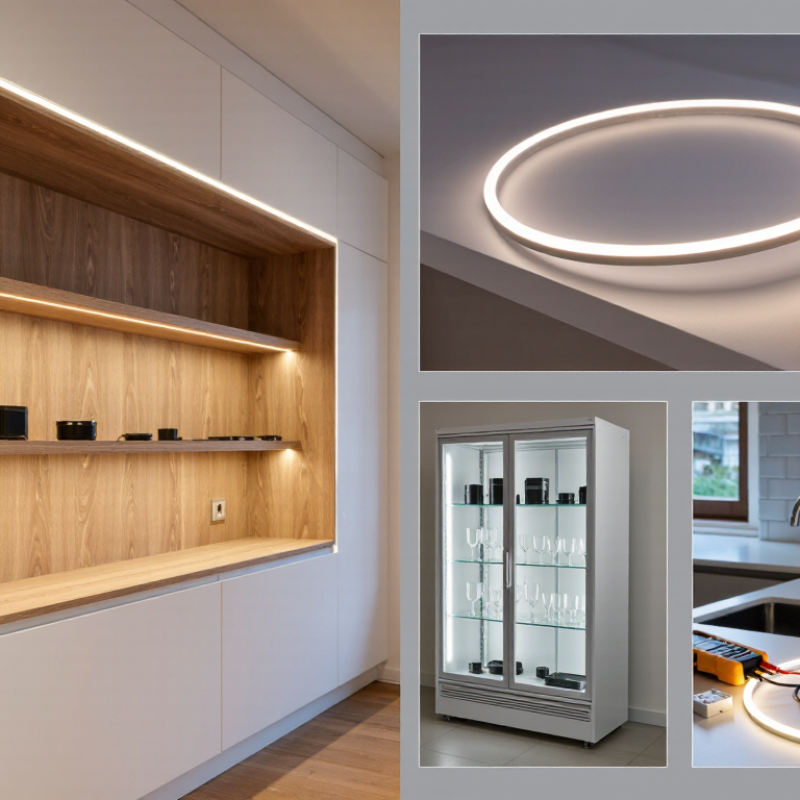
Choosing a Flex Light in 2026 means matching its performance to the space, not just picking a bright strip. A warm, diffused glow may suit a kitchen shelf, while a crisp, even line can make a display cabinet easier to see. The right choice depends on where the light will go, how it will be controlled, and what daily use demands. Small details matter.
Start with brightness and color quality, then check color temperature against the room’s finishes and purpose. Review the product’s stated voltage, power consumption, dimming method, and expected service life. For humid or dusty locations, verify the protection rating and installation guidance rather than relying on appearance alone. A datasheet is useful, but a sample test can reveal glare, uneven color, or a connector that feels awkward to fit.
Bend limits deserve attention. A flexible-looking light may still be damaged by a tight curve, and corners often expose weak planning. Measure the route, note the power-source location, and confirm compatible controllers before ordering. If the light will run for long periods, consider heat management and access for future maintenance. Installation conditions vary. No single specification guarantees a good result. This guide explains how to compare Flex Light options, spot practical trade-offs, and choose a setup that fits your project—with room to reconsider if the first plan proves too optimistic.
What Is a Flex Light and How Is It Used?
A flex light is a light source with a bendable or adjustable section, letting you aim illumination where it is needed. The term can describe a flexible LED strip or a lamp with a movable neck. They serve different purposes. A strip can trace a shelf edge or fit inside a display; an adjustable task light can direct a pool of light onto a desk, workbench, or reading chair.
Flex lights are useful when fixed overhead lighting leaves shadows. A strip under a cabinet can brighten a countertop, while a bendable lamp can follow your hand as you work. Check how the light is powered, mounted, and controlled before choosing one. For flexible strips, also check whether the stated length includes the power lead. Small detail, often missed. The U.S. Department of Energy’s LED lighting guidance reports that residential LEDs use at least 75% less energy and last up to 25 times longer than incandescent lighting. That comparison is useful, but actual performance depends on the product and how it is used.
Match brightness and color temperature to the task, then consider where the light will sit. A dimmable option can help in a bedroom, but it is not essential for every workspace. Measure bends and corners before buying; a strip may not turn tightly without damage. One awkward bend can spoil the installation. Check the maker’s instructions for minimum bend radius and whether the light is suitable for damp or dusty areas.
How to Choose the Right Flex Light in 2026? - What Is a Flex Light and How Is It Used?
| Selection Dimension | Common Options or Facts | How to Choose | Typical Uses |
|---|---|---|---|
| What a flex light is | A flexible lighting product, usually built around LEDs on a bendable circuit board or inside a flexible diffuser. The term can refer to LED tape, flexible neon-style lighting, or other bendable linear lights. | Check the product construction and installation instructions; “flex light” does not describe one universal electrical specification or bending capability. | Under-cabinet lighting, shelves, coves, signage, display cases, and decorative outlines. |
| Light format | LED tape or strip provides visible LED points unless it has a diffuser or closely spaced/COB LEDs. Neon-style flex uses a diffusing cover to create a more continuous-looking line of light. | Choose tape for compact, concealed lighting and neon-style flex when the light source itself is visible and an even line is preferred. | Tape: cabinets and coves. Neon-style flex: signs, architectural outlines, and decorative features. |
| Supply voltage | Many LED strips operate on low-voltage DC, commonly 12 V or 24 V. Some flexible lighting products are designed for direct mains power; their voltage and installation requirements vary by product and region. | Match the light to its specified power supply. For long low-voltage runs, 24 V can reduce voltage drop compared with 12 V, but the product’s instructions and maximum run length still apply. | Low-voltage DC is common for indoor accent lighting. Mains-voltage products are used where their listed installation method is suitable. |
| Brightness and output | Light output is commonly stated in lumens per metre or per foot. Output varies by LED density, power, optics, and product design. | Compare stated light output and power consumption for the same length. For task lighting, confirm that the installed output is adequate; decorative applications may need less. | Higher-output products can suit work surfaces; lower-output products can suit indirect or accent lighting. |
| Color temperature | Warm white is commonly around 2700–3000 K; neutral white around 3500–4000 K; cool white around 5000–6500 K. Exact available values depend on the product. | Choose a color temperature that complements nearby lighting and finishes. For a consistent installation, use the same specified color temperature throughout. | Warm white: living areas and hospitality settings. Neutral white: kitchens and work areas. Cool white: applications that call for a crisp appearance. |
| Color rendering | Color Rendering Index (CRI) describes how faithfully a light source renders colors compared with a reference. CRI 80 or above is a common baseline; CRI 90 or above is often chosen when color appearance matters more. | Check the stated CRI when selecting lights for spaces where food, clothing, artwork, or finishes need to appear accurate. | Kitchens, retail displays, dressing areas, and galleries may benefit from higher color rendering. |
| Dimming and color control | Some products are fixed-output; others support dimming, tunable white, or color-changing control. Compatibility depends on the light, controller, and power supply. | Confirm that all components support the same control method before purchase. Do not assume a standard dimmer will work with every LED driver. | Fixed output for simple installations; dimmable or tunable products for rooms where ambience or brightness needs to change. |
| Ingress protection (IP) rating | IP ratings indicate protection against solids and water under defined test conditions. For example, IP20 offers no stated water protection, while IP65-rated products are tested for water jets; ratings do not by themselves establish suitability for every location. | Match the complete installed system to the environment. Check connectors, end caps, power supplies, and local electrical requirements—not just the light strip’s rating. | Indoor dry areas may use products rated for dry locations. Damp or outdoor applications need products specifically rated and installed for those conditions. |
| Bending direction and radius | Flexible products have limits on minimum bend radius and permitted bending direction. Some can bend side-to-side but not fold or bend sharply in another direction. | Follow the manufacturer’s bend-radius guidance and avoid twisting, creasing, or bending across the wrong axis, which can damage the circuit or diffuser. | Choose a product whose bending profile matches the curve, corner, or outline in the design. |
| Cutting and length | Many LED strips can be cut only at marked cut points. The spacing between cut points and whether cut sections can be reconnected vary by product. | Measure the installation first and check cut intervals, maximum run length, and approved connectors. Cutting outside marked points can make a section unusable. | Useful for fitting lights to shelves, cabinets, coves, and sign outlines. |
| Heat management and mounting | LEDs and their power components produce heat. Mounting surface, airflow, enclosure, and operating conditions affect temperature and service life. | Use the specified mounting method. Aluminum channels can help protect strips and provide a more finished installation, but they do not replace required ventilation or product-specific guidance. | Especially relevant for long runs, enclosed installations, and lighting operated for extended periods. |
| Power supply sizing | Power requirements are determined by the product’s rated watts per unit length and the total installed length. The supply must match the required output voltage and provide sufficient capacity. | Calculate total load from the product rating and installed length, then follow the product guidance for supply capacity and wiring. Avoid exceeding specified run limits. | All low-voltage DC strip installations that use an external power supply. |
Practical tip: Before choosing a flex light, confirm its voltage, light output, color temperature, IP rating, bend limits, cut points, and compatibility with the intended power supply and controls. Specifications vary by product, so use the product’s installation documentation for final selection and installation.
Related Posts
-

Ultimate Guide to Choosing the Best LED Neon Signs for Your Business
-
Discover the Excellence of Best Flex Light from Leading Chinese Manufacturers
-

Illuminate Your World: China’s Premium Decorative Lighting as Your Global Sourcing Ally
-

How to Choose the Best Neon Light for Your Home Décor?
-
How to Choose the Right Lighting Lumens for Your Space?
-

Discovering the Benefits of Light Home for Sustainable Living