How to Choose the Right Lighting Lumens for Your Space?
Choosing the right Lighting Lumens for a space is crucial for achieving optimal ambiance and functionality. According to a recent report by the Illuminating Engineering Society, proper lumens can improve productivity and comfort in various environments. Dr. Emily Zhang, a renowned lighting expert, states, "Understanding lumens helps create spaces that inspire and enhance daily life."
In residential settings, incorrect lighting levels can lead to eye strain and discomfort. For instance, a living room typically requires about 1,500 to 3,000 lumens, while a kitchen may need 5,000 lumens or more. However, many homeowners overlook these specific requirements, resulting in poorly lit or excessively bright areas. This can compromise both aesthetics and utility.
Additionally, workplaces benefit from tailored lighting solutions. A study by the National Institute of Standards and Technology highlights that appropriate lighting can boost employee morale and performance by 20%. Balancing warm and cool lighting sources along with adequate lumens can significantly impact mood and focus. Reflecting on personal lighting choices can reveal areas for improvement and optimization.
Understanding Lumens and Their Role in Lighting
Understanding lumens is crucial for creating the right ambiance in your space. Lumens measure the amount of light emitted by a source. Unlike watts, which indicate energy use, lumens focus on brightness. Choosing the correct lumens can enhance functionality and comfort in different areas.
A cozy reading nook may require fewer lumens than a kitchen or workspace. For instance, a comfortable setting might need around 150-300 lumens. In contrast, kitchens often need between 300-800 lumens for effective task lighting. This distinction highlights the necessity of understanding your specific needs. A stark room with inadequate lighting may feel uninviting.
Sometimes, we underestimate how lumens impact our mood. Too much light can create a harsh atmosphere, while insufficient light may lead to eye strain. Experimenting with various lumen levels can be insightful. It’s essential to assess your lighting choices regularly. Consider the activities you do in each space to ensure your light levels are just right. Balancing brightness with warmth can make a significant difference in how a room feels.
Understanding Lumens for Different Spaces
This bar chart illustrates the recommended lumens for various spaces in a home or office. Lumens measure the amount of light emitted from a source, and understanding the appropriate lumens for each area helps create an optimal lighting environment.
Assessing the Needs of Your Space for Appropriate Lighting
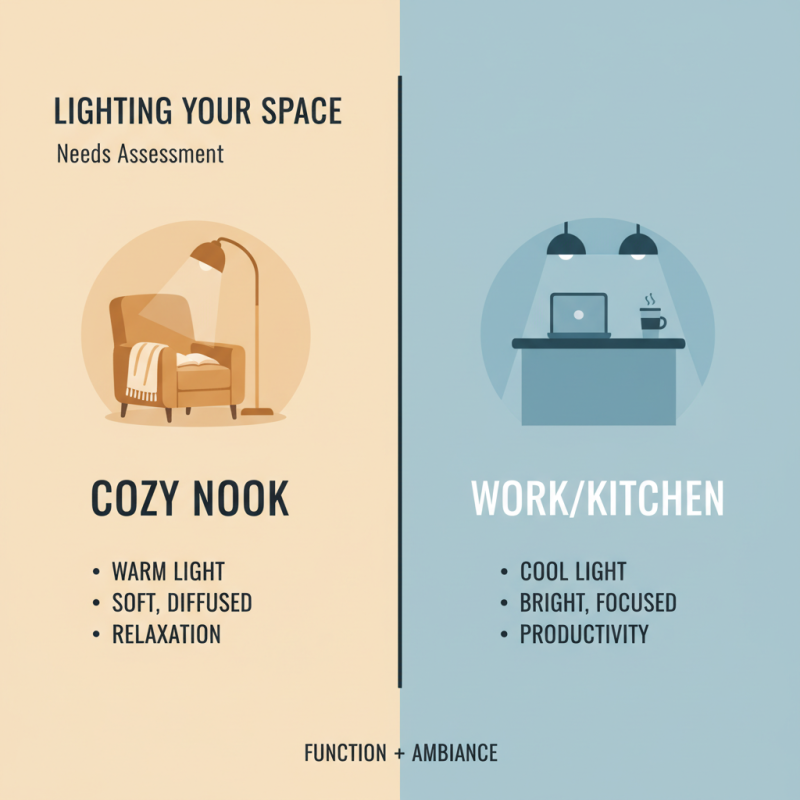
Assessing the needs of your space for appropriate lighting is crucial. Different areas serve different purposes. A cozy reading nook requires warmer, softer lighting. Conversely, a kitchen or workspace benefits from brighter, cooler lumens. Understanding these differences helps create a functional and inviting atmosphere.
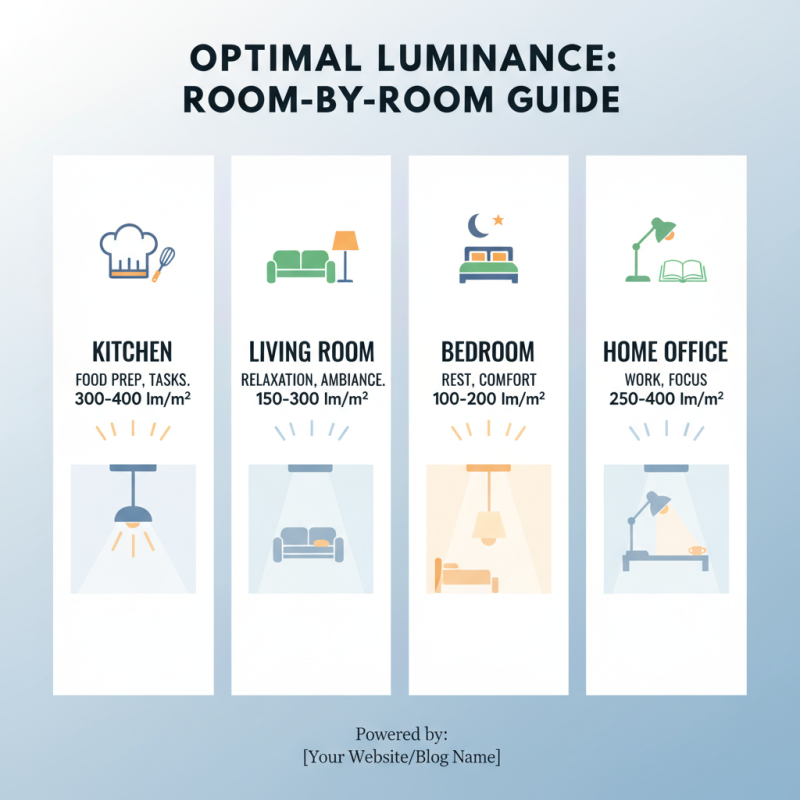
Tips: Consider the tasks you'll perform in each room. For kitchens, aim for 400-600 lumens per square meter. In contrast, a bedroom might only need 100-300 lumens. Test various lighting options. The perfect setup might not be what you expect. Experimentation is key to achieving balance.
Think about the size and layout of your space. High ceilings may require more lumens to fill the area adequately. Dark walls absorb light, while light-colored walls reflect it. Adjust your choices based on these factors. Often, what feels right in theory doesn’t translate into practice. Don’t hesitate to reassess your lighting as your needs change over time.
Balancing Brightness and Ambiance in Home Lighting
Choosing the right lighting for your home involves a delicate balance between brightness and ambiance. Research by the Lighting Research Center shows that light levels significantly affect mood and productivity. For instance, a well-lit living room encourages relaxation and social interaction. In contrast, softer lighting in bedrooms helps promote restful sleep.
When selecting lumens, consider the purpose of each space. A kitchen may need 300-600 lumens per square meter for adequate visibility. On the other hand, a cozy reading nook might only require 100-200 lumens. Aim for layered lighting to create depth and interest. Use overhead fixtures, wall sconces, and table lamps. The mix of light sources can enhance the room's character.
Many homeowners overlook the dimming capability of lights. Dimmer switches allow for flexible brightness levels, adapting to various activities and moods. While brighter is often assumed to be better, excessive light can lead to glare and discomfort. Striking the right balance is crucial. It's an area where many struggle. Exploring different light temperatures can also transform a space. Warmer tones create intimacy, while cooler colors can invoke clarity.
How to Choose the Right Lighting Lumens for Your Space?
| Room Type |
Recommended Lumens per Square Foot |
Total Lumens for 100 sq. ft. |
Suggested Lighting Fixtures |
| Living Room |
10-20 |
1000-2000 |
Chandeliers, Floor Lamps |
| Kitchen |
20-35 |
2000-3500 |
Recessed Lighting, Pendant Lights |
| Bedroom |
10-15 |
1000-1500 |
Table Lamps, Wall Sconces |
| Bathroom |
30-40 |
3000-4000 |
Vanity Lights, Recessed Lights |
| Office |
20-30 |
2000-3000 |
Desk Lamps, Ceiling Lights |
Tips for Selecting the Right Bulbs Based on Lumen Output
Choosing the right bulbs based on lumen output can significantly impact your space. Lumen measures the brightness of light. Higher lumen values mean brighter light. For living rooms, aim for 1,500 to 3,000 lumens. This range offers a warm and inviting atmosphere. In kitchens, much brighter light is needed, often 5,000 lumens or more. It aids in cooking and food preparation.
Consider the function of each room. A cozy bedroom may require 1,000 to 2,000 lumens. Soft lighting helps create a relaxing environment. In contrast, an office needs at least 3,500 lumens to enhance focus and productivity. Placement is crucial. Overhead lights might uniformly distribute brightness, but task lighting targets specific areas.
Reflect on personal preferences as well. Not everyone appreciates bright light. Some prefer soft, ambient lighting. Experimenting might lead to surprising results. You may find an unexpected charm in lower lumens. Adjusting the wattage of bulbs can also influence the feel of the room. Embrace the process of finding your ideal lighting solution.
 Skip to content