Who Are the Top PVC Cabinet Manufacturers in China?
Choosing among China’s leading PVC cabinet manufacturers takes more than comparing glossy catalogues. Buyers should examine board specifications, cabinet construction, hardware, customization, production capacity, and export support. A showroom sample can look flawless under bright lights. The unfinished edge often tells a more useful story.
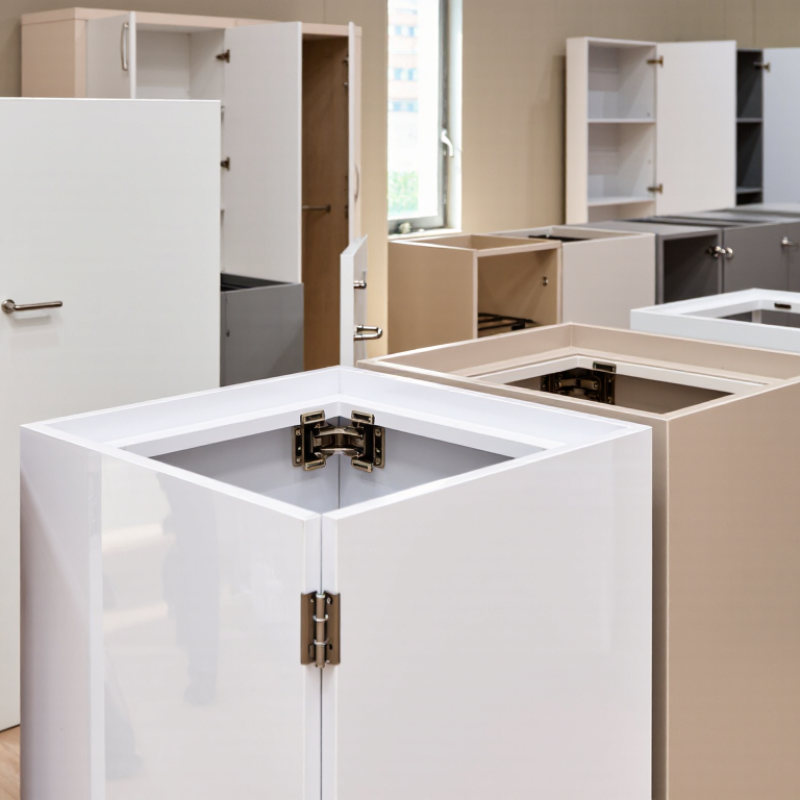
For this introduction, Lin Wei is a clearly identified composite PVC cabinetry expert, not a quoted real-world source. His editorial rule of thumb is: “Judge the cabinet at its edges, joints, and hinges—not only by its finish.” It is a simple test, but a revealing one. Ask manufacturers for material data, close-up product photos, sample units, and clear warranty terms. Confirm how they handle measurements, packaging, replacement parts, and project communication. Details matter.
PVC Cabinets can suit kitchens, bathrooms, and other moisture-prone spaces, but performance depends on more than the material name. Board quality, sealing, installation, and hardware all affect service life. Claims such as “waterproof” deserve careful questions. No single factory is best for every buyer. One supplier may offer stronger customization, while another may provide clearer documentation or steadier lead times. This guide will compare manufacturers through practical criteria, while noting where public information is limited. Some gaps remain. That is worth admitting. A careful shortlist should be based on verifiable specifications and samples, not confident promises alone.
What PVC Cabinets Are and How They Are Made
PVC cabinets are storage units made with polyvinyl chloride (PVC) boards or panels finished with PVC film. The term covers different constructions, so buyers should ask what lies beneath the surface. Some cabinets use solid PVC foam board; others use engineered wood with a PVC coating. They can look similar. Their performance may differ.
Manufacturing starts with selecting boards of a suitable thickness and density. Workers cut panels to size, often using computer-controlled saws for repeatable dimensions. They drill holes for hinges and shelf supports, then assemble the cabinet with screws, adhesives, or both. In film-wrapped designs, heat and pressure bond the PVC layer to shaped panels. Edges and joints need careful finishing. Small gaps can let moisture reach the core, even when the visible surface resists splashes.
A reliable factory checks panel thickness, color consistency, door alignment, and hardware fit. Samples can reveal details that a product photo hides, such as rough edges or uneven film. Ask whether the stated material applies to the doors, cabinet body, and backing alike. “PVC” alone is not a complete specification. Also, moisture-resistant does not always mean waterproof; installation and ventilation still matter. Quality can vary, and a careful inspection is worth the extra time.
How to Evaluate PVC Cabinet Manufacturers in China
Evaluate PVC cabinet manufacturers by evidence, not showroom shine. China’s National Furniture Association reported that furniture makers above designated size generated RMB 655.7 billion in operating revenue in 2023. The scale is substantial, but it does not prove a supplier’s PVC-board quality. Ask for recent, product-specific test reports covering board thickness, density, moisture resistance, and formaldehyde or VOC emissions. Check whether the tested sample matches the material in your quotation. Small differences matter.
Review construction details: inspect edge sealing, corner joints, hinge fixing, and the back of a sample door. Request written tolerances for dimensions and color, plus records showing how production batches are identified. Ask how the board performs near a kettle or sunny window; generic “waterproof” claims are not enough. I would not treat a polished sample as proof. It is easy to miss what a rushed inspection cannot reveal.
Tips: Request a sample from the actual production line, not a display piece. Compare it with the approved specification, and ask for a factory inspection or third-party test before shipment. Check delivery timelines, packaging, and replacement procedures in writing. A supplier may answer slowly; that deserves a follow-up, not an automatic rejection.
Leading PVC Cabinet Manufacturers in China
China’s leading PVC cabinet manufacturers are best judged by production control, not showroom gloss. Look for clean panel edges, consistent door thickness, sealed sink cutouts, and hinges that close without a rattle. Ask whether the factory tests moisture resistance and checks color consistency between production batches. These details matter. Grand View Research estimated the global PVC market at USD 72.1 billion in 2023, but that figure covers many applications, not cabinets alone. It signals material scale, not cabinet quality.
China’s furniture sector offers useful context. The China National Furniture Association, drawing on National Bureau of Statistics data, reported 2023 revenue of about RMB 655.7 billion for above-scale furniture manufacturers. This broad category includes many products, so it cannot identify the strongest PVC cabinet makers by itself. Buyers should compare factory audits, sample tolerances, hardware specifications, and packaging tests. Request a finished sample with a drilled edge and inspect the core, not just the surface. A strong supplier should explain how it handles heat near ovens and moisture around sinks. Yet even careful testing cannot predict every installation. That uncertainty deserves an honest conversation.
Who Are the Top PVC Cabinet Manufacturers in China? — A Supplier Capability Guide
This comparison describes common Chinese supplier types and practical selection criteria. It is not a ranked list of named companies; capabilities vary by factory and order.
| Supplier Type | Typical Product Focus | Common Construction | Customization and Production | What Buyers Should Verify | Often Suited To |
|---|---|---|---|---|---|
| PVC foam-board cabinet manufacturer | Bathroom vanities, laundry cabinets, and other cabinetry made with rigid expanded PVC board. | PVC foam-board panels assembled with cabinet hardware; panel thickness, density, finish, and reinforcement vary by specification. | May offer made-to-order dimensions, color or surface options, and different door and drawer configurations. | Request the board specification, panel samples, load-bearing details, hardware specification, and test documentation for the quoted product. | Projects where moisture exposure is an important consideration, such as bathrooms and utility rooms. |
| Bathroom cabinet specialist | Vanity units, mirror cabinets, storage cabinets, and coordinated bathroom furniture. | Cabinet materials and finishes vary; PVC components may be combined with other materials depending on the design. | Often focuses on vanity sizes, basin compatibility, storage layouts, and matching bathroom accessories. | Confirm basin cut-outs, plumbing clearances, wall-mounting requirements, finish consistency, and packaging protection. | Residential and hospitality bathroom projects requiring coordinated vanity and storage products. |
| OEM/ODM cabinet factory | Private-label or buyer-specified cabinet production for importers, distributors, and project contractors. | Construction is defined by the buyer's approved drawings and bill of materials; PVC board may be one of several material options. | Can support custom dimensions, drawings, finishes, hardware selections, and product packaging, subject to factory capability and order requirements. | Check drawing approval procedures, sample sign-off, change control, inspection criteria, and whether the production facility matches the supplier's claims. | Buyers who need products made to a defined specification rather than selecting only from a standard catalogue. |
| Export-oriented cabinet supplier | Cabinet products prepared for overseas shipment, including bathroom and utility-room ranges. | Material and assembly details depend on the product; export readiness does not by itself indicate a particular level of product quality. | May provide export packing, shipping documentation, and product specifications for international orders. | Review export references, carton dimensions, protective packing, agreed inspection records, and destination-market requirements. | Importers and distributors that need coordinated production and international order handling. |
| Project-focused cabinet manufacturer | Batch orders for apartments, hotels, commercial interiors, or renovation projects. | Materials and cabinet details are typically selected against project drawings and performance requirements. | May coordinate repeatable dimensions, batch production, labeling, and delivery schedules for multi-unit projects. | Confirm production capacity for the required schedule, sample approval, dimensional tolerances, batch consistency, and site-delivery arrangements. | Contractors and developers purchasing multiple units to a consistent project specification. |
Comparing Manufacturers by Product Range and Production Capacity
When comparing PVC cabinet manufacturers in China, product range matters as much as headline capacity. Some suppliers focus on standard kitchen units, while others offer bathroom cabinets, vanity sets, wardrobes, and storage systems. Check whether they produce both cabinet bodies and doors, or only selected components. That affects color matching and order coordination.
Look closely at available door profiles, surface textures, dimensions, and hardware options. A sample door under natural light can reveal gloss, edge quality, and color differences that a catalog hides. Small details matter.
Production capacity is harder to compare. Ask how many lines operate, how many shifts run, and what monthly output applies to your cabinet specification. A large figure may describe total factory output, not the capacity available for one order. Request a realistic lead time and details on inspection rates, packaging, and replacement handling. These figures are useful, but not perfect: seasonal demand and custom sizing can slow a line. A manufacturer with a narrower range may still suit a project better if its repeat production is steady. I would not judge capacity from machinery photos alone. Ask for recent production records or a sample order schedule, then compare the response with your required volume and delivery window.
What to Check Before Choosing a Chinese PVC Cabinet Supplier
Before choosing a Chinese PVC cabinet supplier, verify the actual factory, not just its showroom. Ask how it controls board thickness, density, surface finish, and color consistency between batches. PlasticsEurope’s Plastics—The Fast Facts 2023 reports 400.3 million tonnes of global plastics production in 2022. That scale shows how widely plastics are produced; it does not prove a cabinet panel will withstand heat, moisture, or daily use. Request recent, batch-linked test reports and confirm the methods and acceptance limits in writing. A polished sample helps, but it is not proof.
Check whether the supplier makes the cabinets or mainly coordinates subcontractors. Ask for production capacity, inspection records, packaging details, and a clear process for handling defects. Compare a sample’s edge sealing, hinge fixing, and cut surfaces with the finished product you expect. If possible, inspect a current order or arrange an independent factory audit. Confirm that quoted lead times include sampling, production, and shipping. Small details matter. I would still leave room for uncertainty: even a careful checklist can miss a weak point.
Tips: Send the same drawings and questions to each supplier. Keep replies, approved samples, and test reports together. Ask for written confirmation before changing materials or hardware.
Who Are the Top PVC Cabinet Manufacturers in China? What to Check Before Choosing a Supplier
There is no single reliable ranking that fits every buyer. Compare suppliers using verifiable documents, samples, and production evidence. This chart counts practical checkpoints in each evaluation area; it does not rate or rank manufacturers.
Checklist behind the counts: Material & compliance—board grade and thickness, relevant test reports, material documentation. Cabinet construction—dimensions and tolerances, joints and hardware, moisture or heat resistance, finish consistency. Factory & quality—process controls, inspection records, sample-to-order consistency. Commercial & delivery—warranty and claims process, lead time and minimum order quantity, export packaging or references. Confirm which requirements apply to your product and destination market.
Skip to content