
Who Are the Top BM Shoes Manufacturers in China?
China remains the world’s largest footwear producer, making it a major sourcing base for buyers comparing bm shoes manufacturers. The World Footwear Yearbook 2024, published by APICCAPS, reports that China produced about 55% of global footwear in 2023. Scale matters, but it does not guarantee consistent workmanship or reliable delivery.
The right factory depends on the product. A buyer seeking lightweight casual shoes needs different materials, tooling, and quality checks than one developing structured leather footwear. Look closely at sample finishing, stitching, sole bonding, material traceability, production capacity, and communication. Details matter. A polished showroom sample is useful, but repeat orders reveal more about consistency.
Footwear designer Manolo Blahnik once said, “Shoes are the quickest way for women to achieve instant metamorphosis.” That design-led view is a useful reminder: a shoe must work on the foot, not only in a catalogue. Yet supplier rankings can oversimplify the choice. A large factory may not suit a small launch, and a low quoted price may exclude important testing or packaging details. This guide compares leading bm shoes manufacturers in China through practical sourcing questions, rather than treating “top” as a universal label. Some details still require direct verification; public company profiles cannot replace factory audits, current samples, and written production specifications.
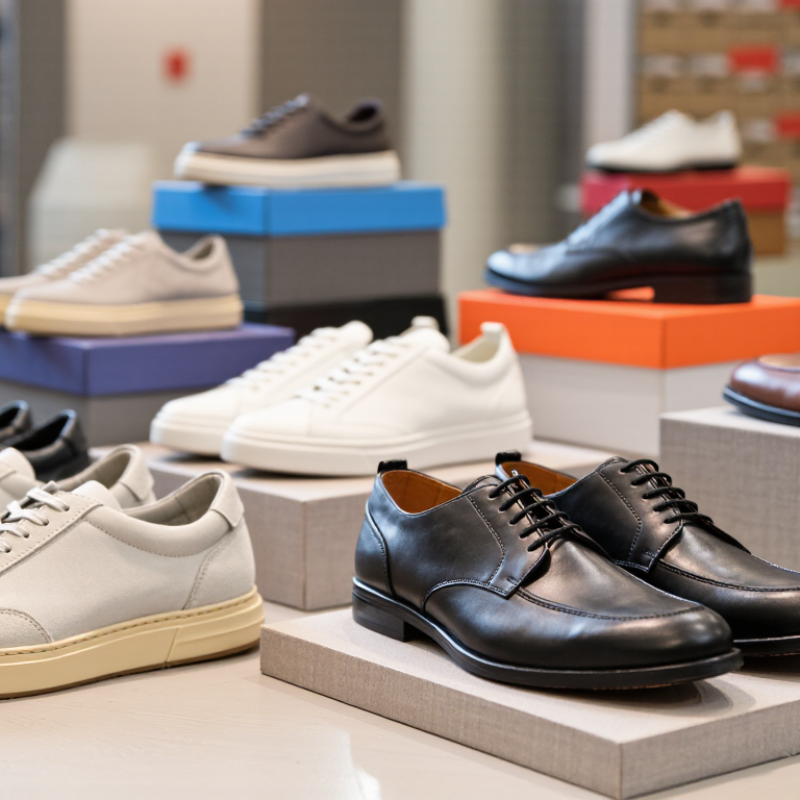
What Defines BM Shoes and Their Essential Features
BM shoes do not have one universally accepted technical definition. In sourcing, the term may refer to a particular buyer specification or product range, so buyers should confirm its meaning before comparing factories. Clear drawings, size ranges, materials, and intended use help prevent misunderstandings.
The essential features depend on the shoe’s purpose. A stable last supports consistent shape, while a secure heel and comfortable toe box affect fit during movement. The upper should suit the intended conditions; for example, mesh can improve airflow, while reinforced panels may add support.
The outsole also matters. Check its grip pattern, flexibility, and wear resistance against the surfaces where the shoes will be used. Fit matters. Request a sample and inspect its stitching, seams, insole, and sole bonding.
Then test it through ordinary wear, not just a quick fitting. Even careful specifications can miss small comfort issues, and a polished sample may not represent every production pair. That is worth checking.
How China’s BM Shoe Manufacturing Industry Is Structured
Who Are the Top BM Shoes Manufacturers in China?
How China’s BM Shoe Manufacturing Industry Is Structured
China’s shoe industry is a network, not a single factory model. The World Footwear Yearbook 2024 reports that China made about 12.4 billion pairs in 2023, roughly 55.5% of global output. That scale supports several layers: material mills, component makers, assembly plants, testing services, and export logistics. The numbers show capacity, not quality by themselves.
Manufacturers commonly work as OEM or ODM partners, while smaller workshops may focus on stitching, soles, or finishing. Production clusters in coastal provinces help suppliers deliver uppers, outsoles, and packaging within short distances. A buyer might review a sample room, inspect stitching density, then check how cartons move from factory to port. The chain is efficient, but not perfectly tidy; subcontracting can make oversight harder. This is where factory audits and documented quality checks matter.
Tips: Ask who makes each production stage, not only who signs the contract. Request recent test reports, sample approval records, and a clear production timeline. Check details in person when possible. A polished sample is useful, but it cannot prove every bulk pair will match.
Criteria for Identifying Leading BM Shoe Manufacturers
A leading BM shoe manufacturer should be judged by repeatable production, not factory size alone. The World Footwear Yearbook 2024 estimates that China produced about 13 billion pairs in 2023, around 58% of global output. That scale offers deep material and component networks. It does not prove a supplier can meet your specifications. Ask for recent production records, sample-to-bulk comparisons, and documented defect rates. Check whether the factory can explain how it controls sole bonding, stitching tension, and sizing consistency. Details matter.
Evaluate quality systems and delivery resilience together. Request evidence of incoming-material checks, in-line inspections, and final random sampling, then confirm how corrective actions are recorded. A useful audit examines actual workstations, not just certificates on a wall. Review capacity against the proposed order and peak-season workload; verify subcontracting arrangements and traceability for key materials. The World Footwear Yearbook describes a highly concentrated production landscape, but concentration can also mean shared exposure to regional disruptions. Ask how the supplier handles delays and replacement components. A polished sample is not enough. Compare several production batches where possible. Some factories may resist sharing granular data, and that is worth probing rather than ignoring. The strongest partner is transparent about limits as well as strengths.
Notable BM Shoe Manufacturers in China and Their Capabilities
China’s notable BM shoe manufacturers are best compared by production capability, not factory size alone. APICCAPS’s World Footwear Yearbook 2024 estimates that China produced roughly 12 billion pairs in 2023. That scale supports broad sourcing, tooling, and repeat production. But national output cannot confirm one factory’s fit, finish, or quality.
In coastal manufacturing clusters such as Jinjiang and Wenzhou, suppliers may specialize in molded soles, mesh uppers, or leather construction. For BM shoes, check whether the factory can hold consistent dimensions across sizes and match sole flexibility to the design. Ask to inspect outsole molds, stitching on curved panels, and finished samples under different lighting. Details matter. Capabilities vary between workshops, even within the same region.
Request a sample made with the proposed materials, then inspect bonding, seams, and left-right symmetry. Ask for documented test results covering abrasion, flexing, and sole adhesion; confirm which laboratory performed each test. ISO/IEC 17025 accreditation can help assess a laboratory’s technical competence, but it does not certify the shoe itself. A glossy sample can still conceal weak glue lines. I would be cautious about judging production readiness from one approved pair alone.
How to Compare Manufacturers by Quality, Compliance, and Capacity
A reliable comparison starts with evidence, not a polished factory tour. Ask for recent inspection records, material specifications, and defect logs from comparable shoe orders. Check whether stated standards fit the destination market and product type; certificates alone cannot prove consistent production. Request a sample pair and inspect stitching, bonding, sole alignment, and sizing against a written specification. Look closely. Production quality can vary between samples and bulk runs. Agree on in-line checks and defect limits before ordering.
Compliance review should cover traceable material sources, worker-safety procedures, relevant chemical testing, and records that can be independently verified. Ask who performs each check, how often, and what happens when results fail. Do not treat a document folder as proof. Records can be incomplete, so verify key claims directly and keep the requirements in writing.
Capacity means more than a monthly output figure. Compare available production lines, peak-season workload, lead times, and the factory’s ability to replace rejected components without delaying shipment. A short pilot order can reveal bottlenecks before a larger commitment. Still, no audit predicts every disruption; leave room for schedule changes and revisit assumptions after the first run.
Who Are the Top BM Shoes Manufacturers in China? — How to Compare Manufacturers by Quality, Compliance, and Capacity
Practical comparison scorecard: This table provides evidence-based criteria for evaluating Chinese barefoot/minimalist (BM) shoe suppliers. It does not rank or make factory-specific claims about unnamed manufacturers; verify each item against current documents, samples, and an audit.
| Comparison Dimension | What to Request | How to Compare Suppliers | Strong Evidence | Warning Signs |
|---|---|---|---|---|
| BM shoe construction experience | Examples of production in the relevant category: flexible, low-stack footwear; wide toe-box lasts; intended upper and outsole materials. | Compare products made with construction methods and materials similar to your design, rather than relying on general footwear experience alone. | Recent, inspectable reference samples and clear explanations of last development, sole attachment, and material choices. | Only unrelated footwear examples, or claims of specialist experience without samples or production details. |
| Product quality controls | Written inspection plan, defect classifications, in-line and final inspection records, and applicable test reports. | Check whether inspection criteria are defined before production and whether records can be traced to a style, batch, and date. | Documented checks for dimensions, stitching, bonding, appearance, sizing, and carton packing, with corrective-action records for failures. | Verbal quality assurances, undocumented pass rates, or no consistent method for recording defects. |
| Outsole and upper durability | Test results relevant to the actual material and shoe design. ISO 17708 describes a footwear method for upper-to-outsole adhesion; ISO 20871 describes an abrasion-resistance method for footwear outsoles. | Confirm the exact test method, specimen, result, and acceptance limit. Compare like-for-like materials and construction; these methods do not by themselves certify an entire shoe. | Reports identify the tested sample and method, and results are linked to the production specification or approved sample. | Generic reports for different materials, missing test conditions, or claims that one test proves overall product safety or durability. |
| Material and chemical compliance | Material composition details and test documentation matched to the destination market and product type. | For EU sales, review applicable REACH restrictions and relevant substance requirements. For US children’s products, assess applicable CPSIA requirements, including lead and phthalates where relevant. | Current, traceable reports for the actual materials or finished product, from a competent laboratory, with a clear link to the order’s bill of materials. | Undated certificates, reports for unrelated products, or a blanket “compliant worldwide” claim without market-specific evidence. |
| Management systems and audits | Current management-system certificates, if held, plus audit scope, site details, and corrective-action follow-up. | Check the issuing body, validity, covered facility, and scope. A management-system certificate is not a product certificate and does not replace product testing. | Certificates that can be independently verified and audit findings supported by documented corrective actions. | Certificates covering another site, expired documents, or treating a general factory certificate as proof that every shoe meets market requirements. |
| Production capacity and scalability | Monthly capacity by construction type, current utilization, minimum order quantity, production calendar, and peak-season plan. | Ask for capacity assumptions and recent output records for comparable products. Check whether capacity is in-house or depends on subcontractors. | A realistic production plan with identified bottlenecks, confirmed material lead times, and transparent disclosure of outsourced processes. | Large capacity figures without supporting records, unclear subcontracting, or schedules that ignore material sourcing and approval time. |
| Sampling and product development | Development workflow, sample stages, tooling responsibilities, revision tracking, and approval records. | Compare how accurately each supplier follows the technical pack and how changes are recorded between sample rounds. | Controlled sample versions, written fit and construction feedback, and a signed-off reference sample before bulk production. | Untracked revisions, unresolved fit issues, or production proposed before the final sample and specifications are approved. |
| Traceability and change control | Lot or batch identification, material supplier records, approved bill of materials, and a process for notifying buyers of changes. | Check whether a finished pair can be linked back to its production batch and whether material or process substitutions require approval. | Consistent production records and written buyer approval for changes to materials, components, or manufacturing location. | Unannounced substitutions, incomplete batch records, or inability to identify which materials were used for an order. |
| Commercial and delivery reliability | Quotation with clear Incoterms, payment terms, lead-time assumptions, packaging details, and responsibility for testing and rework. | Compare total landed-cost assumptions and the clarity of commitments, not just the quoted unit price. | Itemized quotation, realistic milestone dates, written acceptance criteria, and a defined process for delays or nonconforming goods. | Unclear cost exclusions, unsupported delivery promises, or refusal to document agreed specifications and remedies. |
Suggested decision method: Score each supplier against the same evidence checklist, verify documents independently where possible, and approve production only after the specification, compliance plan, and reference sample are agreed in writing. Applicable legal requirements depend on the destination market, product classification, and intended user.
Skip to content