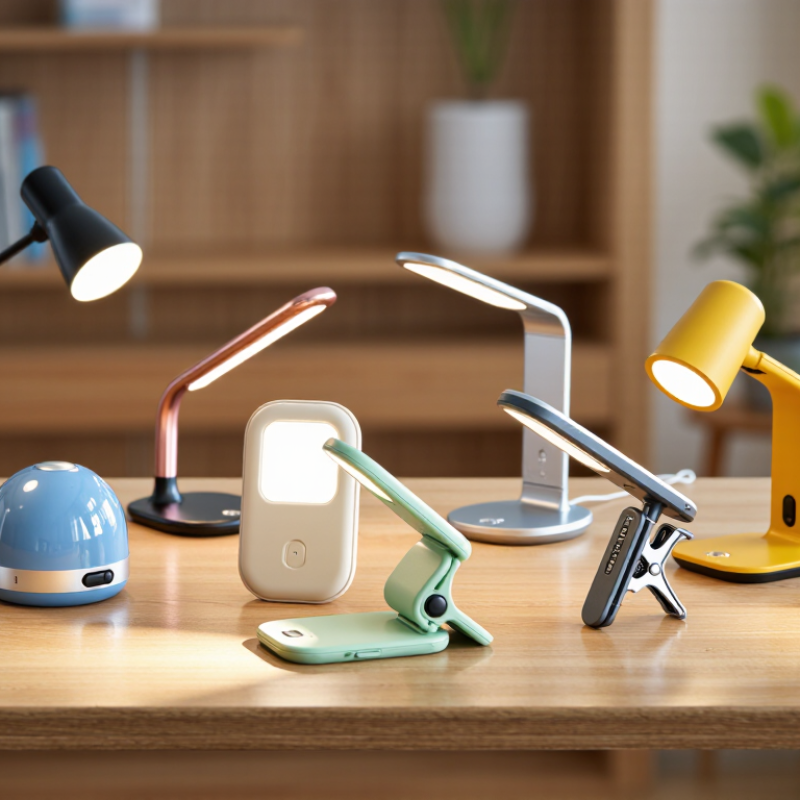
Top 10 Battery Study Lamps for Global Buyers
Choosing a Battery Study Lamp is about more than finding a bright light. Global buyers must weigh usable brightness, battery capacity, charging options, portability, and safe, stable construction. A lamp that looks powerful in a product photo may feel harsh on a small desk. And advertised runtime can change sharply with brightness settings.
The need is practical. Tracking SDG 7: The Energy Progress Report 2024 estimates that 685 million people lacked electricity in 2022, underscoring the value of dependable lighting where supply is limited or unreliable. For energy use, the U.S. Department of Energy reports that LEDs use up to 90% less energy than traditional incandescent bulbs. These figures provide context, not a guarantee that any particular lamp will perform well. Details matter.
This guide presents ten battery study lamps for buyers comparing everyday features across markets. It considers light adjustment, charging methods, battery information, desk stability, and portability. A neat specification sheet can still hide an inconvenient trade-off: compact designs may sacrifice battery capacity, while higher brightness can shorten runtime. Product claims also vary, so check test conditions and warranty terms before ordering. The best choice is not always the brightest. It is the lamp that suits the user’s study space, power access, and daily routine.
Define Study-Lamp Needs: 500 lx Task Lighting Under EN 12464-1
For a study lamp, 500 lx is a useful target for reading and writing, but it describes illuminance on the work surface—not the lamp’s brightness rating. EN 12464-1 sets lighting recommendations for defined indoor work tasks. It also considers factors such as uniformity and glare. A lamp alone cannot establish compliance for an entire room.
Check the light where the work happens. Place a lux meter on the desk beside an open book, with the lamp in its normal position. Aim for about 500 lx across the main task area, not just beneath the brightest spot. Look for a broad, even beam. Hard-edged shadows can make handwriting tiring. Glare on a tablet screen matters, too. Small changes in angle can help.
Battery performance adds another variable. Test the lamp at full charge and again as the battery runs low; some models dim noticeably. Useful details include adjustable brightness, stable color, and controls that are easy to reach without shifting the lamp. A caveat: desk color, room lighting, and measuring position can alter readings. One measurement is not the whole story.
Compare Battery Capacity in Wh, Runtime, and Charging Options
When comparing battery study lamps, start with watt-hours (Wh), not milliamp-hours alone. Wh accounts for both capacity and voltage, making different battery packs easier to compare. A 10 Wh battery powering a lamp that draws 2 W suggests about five hours in ideal conditions. Real use is often shorter because brightness settings and power losses matter. Numbers need context.
Check runtime at a stated brightness level, not just a seller’s “up to” figure. A warm pool of light on a notebook may use less power than maximum brightness across a desk. For a fair comparison, look for test details: brightness setting, charging state, and whether the lamp was used continuously. A simple test at your usual desk setting can reveal more than a headline claim. I still find runtime estimates frustratingly inconsistent.
Charging options affect daily convenience. USB-C can simplify charging across devices, while older USB inputs may require a separate cable. Check the lamp’s input rating and the recommended charging time; a larger battery is not automatically faster to recharge. For travel, confirm that the included adapter suits your destination, or choose a model charged through a standard USB supply. If the lamp supports replaceable batteries, verify their type and availability before purchase.
Assess Light Quality: CRI Ra ≥80 for Reading and Writing
For a battery study lamp, CRI Ra ≥80 is a useful screening point for reading and writing. It indicates how faithfully the lamp renders a standard set of colours compared with a reference light. The CIE’s technical report, Method of Measuring and Specifying Colour Rendering Properties of Light Sources (CIE 13.3-1995), calculates general Ra from eight test colours. A score of 80 or higher can help keep pencil marks, coloured tabs, and printed diagrams easier to distinguish. Check the manufacturer’s measured specification, not just phrases such as “natural light.” Small print matters.
Ra is not the whole story. The CIE method’s general score does not include saturated red in its Ra average, so two lamps with similar scores can still render some colours differently. That sounds tidy. It is not. For a desk test, place a colour chart and a page of handwriting beneath the lamp, then compare them in daylight. Also check for flicker and uneven lighting; CRI does not measure either. The Illuminating Engineering Society’s lighting guidance treats colour quality and visual conditions as separate considerations. In practice, a portable lamp should show Ra ≥80 and provide steady, even light across the page. Battery runtime can tempt buyers to accept a dimmer setting, but colour accuracy cannot fix a shadowed notebook. A simple hands-on check is worth doing.
Check Safety Compliance: IEC 60598, IEC 62133-2, and IEC 62471
When comparing battery study lamps, ask for evidence tied to the exact model, not a general product brochure. IEC 60598 addresses luminaire safety, including electrical construction, insulation, and mechanical risks. Check which relevant part and edition were used. A lamp’s hinge, charging port, and battery compartment deserve close attention. Small details matter.
For rechargeable lithium batteries, IEC 62133-2 evaluates safety under specified conditions, including charging and foreseeable misuse. Confirm that the report covers the installed cell or battery pack, not merely a similar component. Ask about protection against overcharge, short circuits, and excessive temperature. A warm housing is not proof of failure, but unexplained heat needs investigation. The paperwork should match the battery configuration being purchased.
IEC 62471 assesses photobiological safety from lamps and lamp systems, including potential eye and skin exposure. Request the risk-group classification and test conditions, especially for close desk use and adjustable lighting angles. A bright LED is not automatically unsafe; distance and exposure time also matter. Review the measured data, not just a “low blue light” claim. Requirements and accepted documentation can vary by destination, so have a qualified testing professional confirm what applies to the final product. A certificate alone may leave gaps.
Top 10 Battery Study Lamps for Global Buyers — Check Safety Compliance: IEC 60598, IEC 62133-2, and IEC 62471
Buyer shortlist: The lamp types and battery-capacity ranges below are illustrative specification-planning examples, not verified product listings or compliance claims. Confirm actual specifications and test documentation with the supplier.
| Rank | Lamp configuration | Illustrative battery specification | Charging consideration | IEC 60598: luminaire safety | IEC 62133-2: lithium battery safety | IEC 62471: photobiological safety | Buyer check |
|---|---|---|---|---|---|---|---|
| 1 | Foldable portable desk lamp | Rechargeable lithium-ion pack; illustrative planning range: 2,000–4,000 mAh | Check input rating, charging time, and whether the lamp can operate while charging. | Request evidence for the applicable IEC 60598 requirements for the product type. | Request battery or cell test documentation showing the applicable standard and exact model. | Request an assessment for the complete lamp’s light source and operating conditions. | Confirm hinge durability, stability, and instructions for safe charging. |
| 2 | Adjustable gooseneck study lamp | Rechargeable lithium-ion pack; illustrative planning range: 2,000–5,000 mAh | Check the supplied charger or cable specification and supported input voltage. | Verify mechanical and electrical safety evidence for the complete luminaire. | Check that documentation covers the installed battery configuration. | Ask for the risk-group classification or test report, including test conditions. | Inspect neck positioning, base stability, and glare control at typical desk distance. |
| 3 | Clamp-on desk lamp | Rechargeable lithium-ion pack; illustrative planning range: 2,000–4,000 mAh | Check charging-port access when clamped and the specified charging input. | Request applicable safety evidence for the lamp and its clamp arrangement. | Verify the cell or battery report corresponds to the fitted pack. | Request photobiological assessment for the lamp’s available brightness settings. | Check clamp grip, surface protection, and suitability for the intended desk thickness. |
| 4 | Wide-panel desk lamp | Rechargeable lithium-ion pack; illustrative planning range: 3,000–6,000 mAh | Confirm charging input and whether a power adapter is included or sold separately. | Request the applicable IEC 60598 test evidence for the complete panel lamp. | Request applicable IEC 62133-2 documentation for the lithium battery or cells. | Check the assessment covers the panel source and intended use distance. | Review light distribution, flicker information, and brightness control specifications. |
| 5 | Compact bedside study lamp | Rechargeable lithium-ion pack; illustrative planning range: 1,500–3,500 mAh | Check charging method, input rating, and battery replacement or service provisions. | Verify applicable luminaire safety evidence for the construction and intended use. | Confirm battery safety records are for the fitted chemistry and pack design. | Request a report or classification for the light source at relevant settings. | Check stable placement, accessible controls, and safe operation on a bedside surface. |
| 6 | Rechargeable lamp with removable battery pack | Removable lithium-ion pack; illustrative planning range: 2,500–5,000 mAh | Confirm the approved charging method and whether the pack charges in or outside the lamp. | Check safety evidence for the lamp with the specified pack installed. | Match the battery report to the exact removable pack and its protection design. | Request assessment of the lamp’s emitted light under its intended operating conditions. | Verify pack compatibility controls, replacement instructions, and protection against incorrect installation. |
| 7 | High-brightness task lamp | Rechargeable lithium-ion pack; illustrative planning range: 4,000–8,000 mAh | Check rated input, charging limits, and supplier-stated charging time. | Request applicable luminaire safety test documentation, including thermal considerations. | Verify the report covers the installed battery and relevant charging configuration. | Request assessment at the highest output setting as well as normal use settings. | Ask for measured light-output data and operating-time test conditions rather than estimates alone. |
| 8 | Dual-joint articulated desk lamp | Rechargeable lithium-ion pack; illustrative planning range: 2,000–5,000 mAh | Confirm cable or adapter requirements and charging-port placement through the full range of movement. | Verify the applicable safety evidence covers the articulated design and moving parts. | Check traceability between the tested battery model and the delivered product. | Request photobiological safety documentation for the installed light source. | Check joint retention, pinch-point design, and resistance to tipping in normal use. |
| 9 | Touch-control dimmable study lamp | Rechargeable lithium-ion pack; illustrative planning range: 2,000–4,500 mAh | Check compatibility of the charging input with the target market and supplied accessories. | Request applicable IEC 60598 evidence for the complete lamp, including controls and charging operation. | Confirm documentation applies to the exact cell or battery pack supplied. | Ask whether testing covers each selectable brightness or color setting. | Verify the control behavior, dimming steps, and any stated flicker performance. |
| 10 | Portable study lamp with carry handle | Rechargeable lithium-ion pack; illustrative planning range: 2,000–5,000 mAh | Confirm charging input and whether the lamp is intended to be used while connected to power. | Request applicable safety evidence for the portable luminaire and its intended use. | Request matching IEC 62133-2 documentation for the installed lithium battery. | Check for an assessment of the light source and intended viewing or working distances. | Review handle strength, drop-related instructions, and protection of the charging port. |
Standards note: IEC 60598 is a luminaire safety standards series; the applicable part depends on the product design and intended use. IEC 62133-2 concerns safety requirements for portable sealed secondary lithium cells and batteries. IEC 62471 addresses photobiological safety of lamps and lamp systems. A standards reference in this table is a buyer verification point, not a claim that any listed lamp type is certified. Confirm the relevant edition, scope, test report, product-model match, and destination-market requirements with a qualified conformity-assessment provider.
Rank the Top 10 by Portability, Runtime, Price, and Global Certification
Top 10 Battery Study Lamps for Global Buyers
This ranking weighs portability, measured runtime, price, and verifiable global certification. Rank 1 goes to a foldable lamp with a replaceable battery: light to pack, though often pricier. Rank 2 is a compact USB-rechargeable model with steady mid-level brightness. Rank 3 favors a clamp lamp for small desks. Rank 4 is a slim, lightweight lamp with a built-in handle. Rank 5 is a basic rechargeable lamp with simple controls. Runtime claims vary.
Rank 6 is a budget model with fewer brightness settings. Rank 7 is a larger lamp with a longer-lasting battery but less portability. Rank 8 is a multi-mode lamp suited to shared study spaces. Rank 9 is a solar-assisted design, best where daylight is reliable. Rank 10 is a low-cost emergency-style lamp; its light may feel harsh for close reading. This order is a practical guide, not a universal test result. Compare runtime at the brightness level you actually use, and check price against battery replacement costs.
Tips: Test the lamp on a desk at night; note glare, heat, and how easily its controls work. Ask suppliers for applicable safety and battery transport documents, then confirm they match your destination market. Certification names alone are not proof. Request current test records and verify the issuing body. This step takes time, and I would not skip it.
Top 10 Battery Study Lamp Profiles for Global Buyers
Illustrative comparison ranked by a combined score for portability, runtime, affordability, and certification coverage. Profiles are anonymous benchmark examples, not verified product listings.
How to read: Each bar shows a normalized score from 0–100, with higher scores indicating a stronger result. Portability reflects lower weight, runtime reflects longer use per charge, affordability reflects lower illustrative price, and certification coverage reflects documentation for common market requirements. Actual certifications and compliance requirements vary by model and destination country; verify them with the supplier.
Skip to content