
Why Choose Interactive Light Sculptures for Public Spaces?

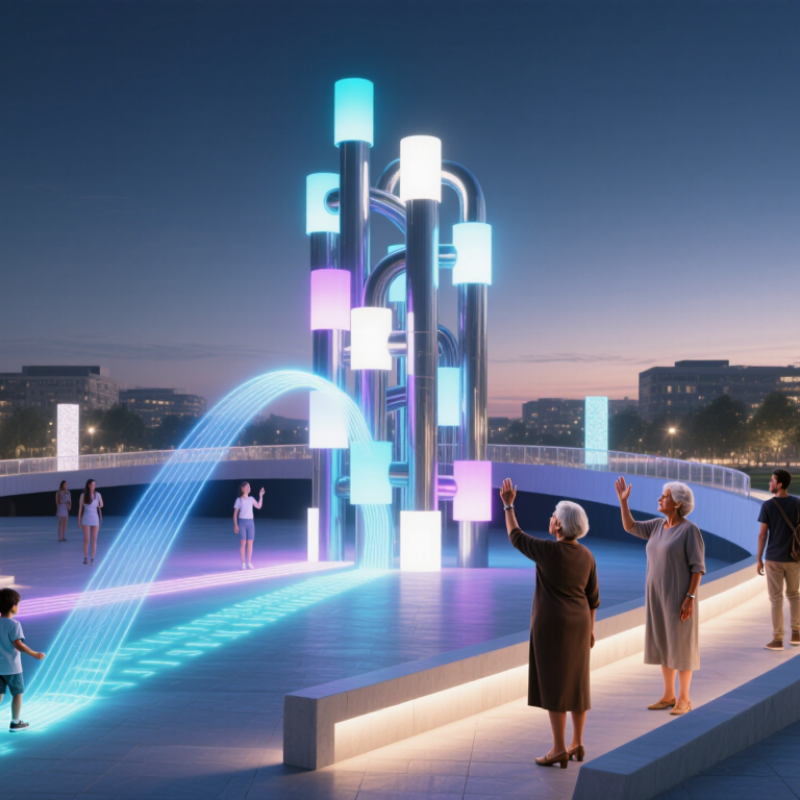
Public spaces need more than objects to look at; they need reasons to pause, gather, and take part. An Interactive Light Sculpture can turn a plaza after dusk into a shared experience, responding to a passing shadow, a raised hand, or footsteps across a lit path. A child may trigger a ripple of blue light while a nearby stranger joins in. That changes the brief. Artist Rafael Lozano-Hemmer has captured this idea in the phrase, “The audience is the medium.”

The appeal is not only visual. A well-planned installation can encourage social interaction, make a place feel more welcoming at night, and offer residents a fresh way to experience familiar surroundings. Yet spectacle alone is a weak design goal. Brightness, glare, sound, power access, weather resistance, and maintenance all shape how an artwork performs in daily use. Small details matter. Designers also need to consider wheelchair access and whether the interaction remains clear for people who do not want to touch a screen or sensor.

Not every interaction works as intended. Sensors can miss a gesture, and a crowded setting can make an artwork confusing rather than inviting. That possibility deserves honest planning. The strongest projects balance surprise with reliability, using durable materials and simple cues that visitors can understand quickly. For public agencies, curators, and communities, the question is not just whether a sculpture looks impressive in a photograph. It is whether people feel comfortable approaching it, sharing it, and returning to it. Done thoughtfully, interactive light can make public space feel more alive—without pretending technology solves every urban challenge.
Why Choose Interactive Light Sculptures for Public Spaces?

What Defines an Interactive Light Sculpture in a Public Space

A public-space interactive light sculpture combines a physical artwork with lighting that responds to people or changing conditions. A passerby might approach a column and see warm bands of light ripple across its surface. The response could be triggered by movement, touch, sound, or a simple control nearby. Not just decoration. The interaction gives visitors a visible role in how the artwork changes.

Its defining feature is a clear link between an action and a light response. A sculpture might brighten as people gather, then soften as the plaza empties. At a walkway, gentle floor-level light can trace movement without dazzling nearby residents. Clear feedback helps visitors understand what they can do. If a gesture produces no visible change, the piece may feel broken, even when its sensors are working.

Good design considers more than the effect at night. Surfaces need to withstand rain, dust, and repeated contact, while controls should be reachable by people with different mobility needs. Maintenance matters, too: a dark panel can make an otherwise lively work seem neglected. Designers cannot predict every visitor’s response. Some people may ignore the sculpture; others may linger longer than expected. That uncertainty is part of the public setting, and sometimes the interaction will feel awkward.

How Sensors and LEDs Make Sculptures Respond to Visitors

Interactive light sculptures turn a passerby’s movement into part of the artwork. A proximity sensor can detect someone approaching, then cue LEDs to brighten, ripple, or shift color. At a plaza entrance, a slow wave of light might follow visitors across the paving. Small changes matter. The response should feel immediate, but not startling.

Sensor choice shapes the experience. Motion sensors can trigger broad changes; distance sensors allow gradual effects as people draw nearer. Pressure sensors can respond to footsteps, though outdoor installation demands careful protection from weather and wear. U.S. Department of Energy guidance notes that LEDs use at least 75% less energy than incandescent lighting and can last up to 25 times longer. That helps with operating demands, but it does not make a sculpture maintenance-free. Sensors still need testing and recalibration.

The International Energy Agency reports that lighting accounts for around 15% of global electricity consumption and 5% of greenhouse gas emissions. Efficient LEDs and timed dimming can help limit a sculpture’s energy use. Yet a technically clever interaction may still confuse visitors. A light that reacts only after someone waits in one spot can feel broken. Designers should test response speed, brightness, and accessibility at different times of day. Not always easy. Crowds, rain, and glare can all change what the sensors perceive.

Why Choose Interactive Light Sculptures for Public Spaces? - How Sensors and LEDs Make Sculptures Respond to Visitors

Input or sensor What it detects Possible LED response Public-space use Practical design consideration
Passive infrared (PIR) sensor Changes in infrared radiation, commonly caused by a warm body moving across the sensor’s field of view. Light a section as someone approaches, or let a glow fade after movement stops. Approach-activated installations and pathways where simple motion response is sufficient. PIR generally responds to movement rather than reliably tracking a stationary visitor. Placement, temperature, and obstructions affect detection.
Time-of-flight distance sensor Distance to a nearby surface or person by measuring the return time of emitted light. Shift brightness, color, or light patterns as a visitor moves nearer or farther away. Responsive objects that invite visitors to approach without requiring physical contact. Performance depends on the sensor model and conditions such as target reflectivity, sunlight, and viewing angle.
Capacitive touch sensor A change in capacitance when a person touches, or comes close to, a suitably designed conductive surface. Trigger a color change, a short light sequence, or a shared response across connected elements. Hands-on installations designed for deliberate visitor interaction. The sensing surface and electronics need suitable insulation and protection for the setting; avoid exposed electrical parts.
Pressure or load sensor Applied force or a change in load, typically through a purpose-built platform or structural element. Illuminate a floor segment when stepped on, or create a light ripple that follows a visitor’s path. Interactive floors and installations where the intended action is stepping or pressing. Structural strength, slip resistance, accessibility, and safe load limits must be considered in the installation design.
Ambient-light sensor The brightness of the surrounding environment. Adjust LED output so the sculpture can remain visible while reducing unnecessary brightness in darker conditions. Outdoor or mixed-light settings where daylight and nighttime conditions differ. Sensor location matters: the sculpture’s own LEDs should not unintentionally distort the light reading.
Sound-level sensor Sound intensity or changes in the surrounding sound environment; it does not need to identify spoken words. Make light gently pulse or change in response to the overall sound level. Installations intended to reflect the general energy of a plaza or gathering area. Set limits to avoid disruptive flashing, and make clear whether audio is sensed or recorded; sound-level response does not require speech recognition.
LED lighting system LEDs produce the visual output; a controller uses sensor signals to determine when and how they change. Create color, brightness, and timed patterns using one LED or multiple coordinated segments. Provides visible feedback that can make a visitor’s presence or action feel acknowledged. Choose components and enclosures suitable for the site, and consider glare, maintenance access, power use, and local lighting requirements.

How Public Installations Support Social and Cultural Activity

Interactive light sculptures can make a public space feel inviting after daylight fades. A softly lit arch may draw strangers into the same courtyard, while changing colors give children a reason to stop and look. People linger. A brief pause can become conversation, a shared photo, or an informal meeting.

The Knight Foundation and Gallup’s Soul of the Community study surveyed more than 43,000 people across 26 communities between 2008 and 2010. It identified social offerings among the strongest drivers of residents’ attachment to their communities. The study did not test light sculptures specifically, so it cannot prove that an installation creates connection. Still, it points to a practical design goal: make public places welcoming enough for people to gather. UN-Habitat’s Global Public Space Toolkit likewise emphasizes inclusive spaces that support social interaction and cultural activity.

For a public installation, that means more than adding bright effects. Give people room to sit, meet, and view the work from different angles. Programmed light changes can mark a seasonal celebration or reflect local stories, inviting residents to contribute rather than simply watch. Keep the lighting comfortable, and consider nearby homes and nighttime visitors. A sculpture may attract attention but still feel awkward if there is nowhere to pause. That is worth admitting. The social value depends on the setting, not the spectacle alone.

U.S. DOE: LEDs Use at Least 75% Less Energy Than Incandescent Lamps

Interactive light sculptures can make a plaza feel inviting after sunset, but their energy use deserves attention. The U.S. Department of Energy says LEDs use at least 75% less energy than incandescent lamps. That difference matters when lights run for hours each evening. A sculpture beside a walkway might glow softly, while small sensors brighten sections as people pass. LEDs can support these changes without relying on power-hungry incandescent bulbs. The result can be vivid, responsive lighting with less electricity used for the light source.

The percentage is a useful benchmark, not a guarantee for every installation. Actual consumption depends on brightness, operating hours, control systems, and the equipment powering the lights. A poorly planned display can still use more energy than expected. Keep it modest. Designers should test brightness on site, where reflections from wet pavement or nearby windows can change how intense a sculpture feels. Maintenance matters, too: accessible components make repairs easier and reduce the chance that a damaged section stays lit inefficiently. I would not treat the energy figure as the whole story. Public art also needs to feel comfortable to nearby residents, especially when colors shift or lights pulse late at night.

How ADA’s 60-Inch Turning Space Guides Accessible Installation Design

Interactive light sculptures invite people to pause, move, and explore. That experience works best when visitors can approach without encountering blocked routes or tight corners. A useful planning reference is the ADA’s 60-inch turning space: a clear area that can accommodate a wheelchair turn, subject to the applicable standards and site conditions.

Designers can treat that space as part of the artwork’s footprint, not leftover floor. Keep sculpture bases, cables, barriers, and queues outside the intended turning area. Check the layout at floor level, where a cable cover or projecting plinth may be easy to overlook in a drawing. Controls should also be placed for seated and standing visitors, with clear instructions and enough room to reach them. Small details matter.

A 60-inch circle is not the only permitted turning configuration under ADA standards; a compliant T-shaped space may also apply. Requirements depend on the setting, so confirm dimensions and clearances with a qualified accessibility professional. Test the installation with mobility-device users before opening. Their feedback may reveal that a technically clear path still feels cramped, or that bright effects make a control hard to find. We sometimes assume a clean plan means a comfortable visit. It doesn’t always. Revising the layout before fabrication is easier than asking visitors to work around the artwork.

Why Choose Interactive Light Sculptures for Public Spaces?

How ADA’s 60-Inch Turning Space Guides Accessible Installation Design

ADA benchmarks include a 30 × 48-inch minimum clear floor space, a 36-inch minimum accessible-route width in typical conditions, and a turning space that is either a 60-inch-diameter circle or a 60 × 60-inch T-shaped space. These are accessibility dimensions, not a sculpture’s footprint or a substitute for project-specific design review.