
How to Choose a Gramophone Record Player?

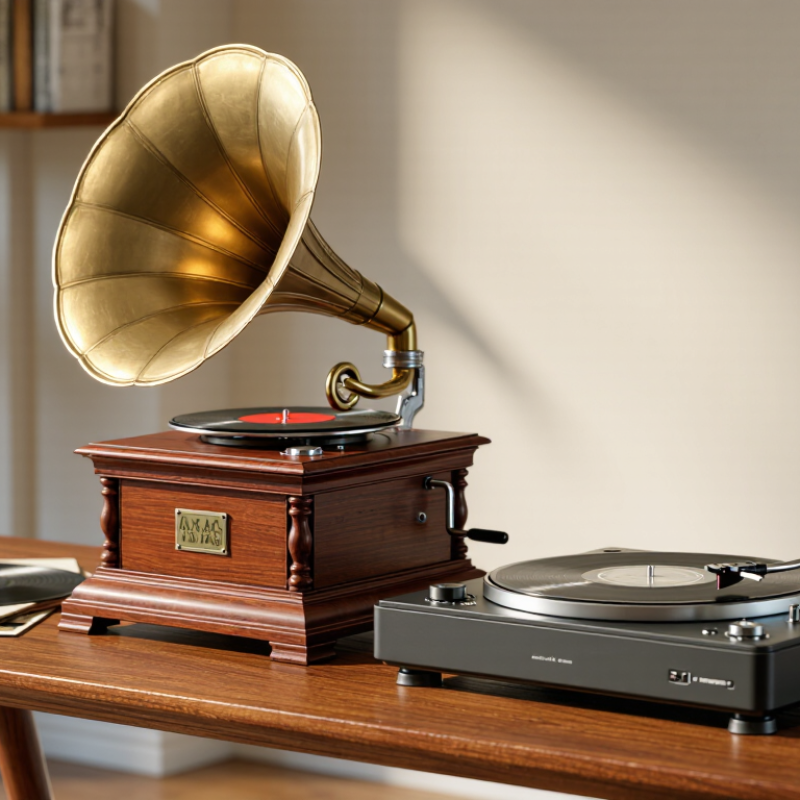
Choosing a Gramophone Record Player starts with a simple question: do you want a working vintage gramophone, or a modern turntable with a classic look? These are not quite the same thing. A traditional acoustic gramophone uses a horn and mechanical sound reproduction, while many modern models use an electrical cartridge and speakers. Knowing which experience you want can prevent an attractive but unsuitable purchase.

For a vintage machine, examine the cabinet, winding mechanism, soundbox, and horn for damage or signs of careless repair. Ask whether it has been tested, and whether replacement parts or a knowledgeable repairer are available. Old mechanisms can be charming. They can also need patient attention. For a modern player, check the drive system, supported record speeds, cartridge, and whether a phono preamp is built in. You may also need powered speakers or a separate amplifier, so include those costs in your budget.

Think about where the player will sit. A sturdy, level surface helps reduce vibration; a sunlit shelf beside a speaker may look lovely but can be a poor listening spot. Small details matter. Check that the tonearm moves smoothly, the stylus is in good condition, and the controls feel secure. If possible, listen to a familiar record before buying. A seller’s confident description is useful, but a careful inspection is better evidence.

The right choice depends on your records, room, budget, and willingness to maintain the machine. No single model suits everyone. This guide explains the features worth comparing, the questions to ask sellers, and the compromises that are easy to overlook. It cannot replace hands-on testing, but it can help you shop with clearer expectations.
How to Choose a Gramophone Record Player?

Define Your Listening Needs and Available Space

Before choosing a gramophone record player, picture how you will use it. Will you play a few records on quiet evenings, or listen for hours with family? Regular listening makes easy controls and a stable tonearm more important. Occasional use may call for a simpler setup. Think about your records, too: a growing collection needs safe, upright storage nearby. A narrow shelf can quickly become crowded.

Room dimensions matter. Measure the player’s footprint, then leave space to open its dust cover and reach the controls. Keep it on a level, sturdy surface, away from speakers that could cause vibration. RIAA’s 2023 Year-End Music Industry Revenue Report put US vinyl revenue at $1.4 billion, up 10% from 2022. That shows vinyl remains a significant format, but it does not mean every listener needs an elaborate system. Match the setup to your habits.

Be realistic about the room’s limits. A compact player may fit a desk, yet leave little room for records or accessories. A full-size setup can feel awkward in a shared space. I might be overvaluing appearance when comparing cabinets; easy access matters more after the novelty fades. Measure twice. Then consider where cables will run and whether the floor or furniture feels steady.

How to Choose a Gramophone Record Player? — Define Your Listening Needs and Available Space

Listening Need Suitable Player Setup Approximate Surface Space Additional Space to Plan For Best Fit When...
Simple, occasional listening All-in-one player with built-in speakers About 18 × 16 in (46 × 41 cm) Allow room for the lid to open and for power and audio cables. You want a straightforward setup with minimal equipment and no separate speakers.
Regular listening with separate speakers Turntable connected to powered speakers About 20 × 18 in (51 × 46 cm) for the turntable Allow separate space for two speakers, with room between them for stereo separation. You want a simple system with more flexible speaker placement.
Listening with an existing stereo system Turntable connected to a compatible amplifier or receiver and passive speakers About 20 × 18 in (51 × 46 cm) for the turntable Plan shelf or cabinet space for the amplifier, plus separate space for speakers. Check whether the system needs a phono input or a separate phono preamp. You already own audio equipment or want to build a modular system.
Focused, higher-quality listening Turntable, phono preamp if required, amplifier, and separate speakers At least 24 × 18 in (61 × 46 cm) for the turntable surface Provide stable, level support and space for the other components. Keep speakers from vibrating the turntable surface. You have room for careful speaker placement and want to upgrade components over time.
Private listening Turntable connected to a headphone amplifier or a system with a headphone output About 20 × 18 in (51 × 46 cm) for the turntable Allow room for the amplifier or preamp, headphones, and cable access. Confirm that the system provides the connections your headphones require. You mainly listen alone or need to keep sound from disturbing others.
Limited shelf or desk space Compact player, with speakers placed separately if needed Measure the unit; reserve at least 2–3 in (5–8 cm) of extra depth where possible Check the player’s lid-opening clearance, cable exits, and ventilation needs for any nearby amplifier. You have a small room or fixed furniture and can verify the available space before buying.

Planning note: Dimensions are practical estimates, not universal product specifications. Check the player’s exact measurements, lid clearance, and connection requirements before choosing a shelf or cabinet.

Compare Gramophone Player Types and Drive Systems

How to Choose a Gramophone Record Player?

“Gramophone player” can mean an acoustic, wind-up machine or a modern electric turntable. Acoustic models use a horn and mechanical needle to amplify sound, so they need no power. They also offer limited volume and can wear records faster with unsuitable needles. Electric turntables use a cartridge and amplifier, giving you more control over sound and playback. Listen for the difference. It is not always dramatic in a noisy room.

Drive systems affect speed stability, noise, and maintenance. Belt-drive models isolate the platter from motor vibration, making them popular for home listening. Direct-drive systems connect the motor to the platter, offering quick start-up and steady speed. Idler-wheel designs can deliver strong torque, but worn parts may add rumble. The RIAA’s 2023 Year-End Revenue Report recorded US vinyl revenue of $1.4 billion, its 17th consecutive year of growth. That measures record sales, not player demand, but it shows why careful playback choices matter.

Tips: Check that the player supports your record speeds and cartridge type. Listen for low hum between tracks. A level surface helps; an uneven shelf can make even a good setup sound wrong. I still find speed specifications easy to overlook.

Assess Speeds, Cartridges, and Essential Components

Speed support should match the records you actually play. Most modern LPs use 33⅓ rpm, while many singles use 45 rpm. Older shellac discs may require 78 rpm and a suitable stylus. Check the speed selector and cartridge compatibility before buying. A player that spins at the right speed but uses the wrong stylus can damage delicate grooves. Small details matter.

The cartridge turns groove movement into an electrical signal. Moving-magnet cartridges are generally easier to set up; moving-coil designs often need compatible amplification. Check stylus replacement options and the manufacturer’s recommended tracking force. Too much force can increase wear; too little may cause skipping. A built-in phono preamp simplifies connection to standard speakers, while an external preamp offers more flexibility. That extra choice can also mean extra cables and setup.

Inspect the tonearm, platter, drive system, and dust cover as carefully as the cartridge. Belt-drive models isolate motor vibration; direct-drive designs can offer steady speed and quick starts. Neither is automatically better for every listener. The Recording Industry Association of America’s 2023 Year-End Report recorded 43.2 million vinyl LP units sold in the United States, showing sustained demand for records. It does not prove any one player is superior. I would weigh stable speed and replaceable parts over decorative features, though that preference may undervalue convenience. Listen for rumble in a quiet passage. It can be revealing.

Check Record Compatibility, Connections, and Upgrade Options

Before choosing a gramophone record player, check which records it can play. Many current turntables support 33⅓ and 45 rpm records, but older 78 rpm shellac discs need a suitable speed and stylus. A microgroove stylus may not fit their wider grooves properly. Check the player’s specifications and the record label, rather than guessing from the disc’s appearance. Small details matter.

Next, look at the connections. A turntable with a built-in phono preamp can connect to standard powered speakers or an auxiliary input. A model without one needs an external preamp or a receiver with a phono input. Check the available sockets before buying; the wrong connection can mean quiet, thin sound. If you plan to use wireless speakers, confirm that the player has the needed wireless output, since some models only offer wired connections.

Think about upgrades, too. A replaceable cartridge, adjustable counterweight, and standard headshell can make future stylus or cartridge changes easier. These features matter if you expect to play records often. A belt may also need replacement over time, so check whether it is accessible. Not every upgrade improves sound in every room, and setup can be fiddly. I would compare the manual’s compatibility details with your actual records and equipment before deciding.

Weigh Build Quality, Maintenance, and Overall Cost

A gramophone record player should feel sturdy before it looks impressive. Check whether the plinth sits flat and whether the tonearm moves smoothly, without wobbling. Lift the lid and inspect the hinges; thin, loose fittings can become annoying with daily use. A heavier body may reduce vibration, but weight alone proves little. Listen for a steady motor and clear sound at a comfortable volume.

Maintenance affects how much you enjoy the player over time. Ask how easily you can replace the stylus, clean the platter, and access the drive belt if it uses one. Dust gathers around the needle surprisingly fast. Keep a small brush nearby, and avoid touching the stylus with your fingers. Some adjustments, such as cartridge alignment, may feel fiddly at first. That is worth admitting: a low purchase price can hide a learning curve.

Compare the total cost, not just the price on the shelf. Include replacement needles, belts, cleaning supplies, and any setup service you might need. A basic player with accessible parts may cost less to own than a polished model with hard-to-find components. I’d be wary of paying extra for decorative details while ignoring repair access. Still, the cheapest option is not always the sensible one; a shaky tonearm can wear records unevenly and make listening less pleasant.

How to Choose a Gramophone Record Player? — Weigh Build Quality, Maintenance, and Overall Cost

Suggested decision weights for comparing record players—not measured market data. Give build quality the largest share, then consider the effort and cost of upkeep alongside the total purchase cost, including any essential accessories.