 Skip to content

How to Choose the Best Clay Litter for Your Cat?
Choosing the right Clay Litter can make daily care easier and your cat’s litter box more inviting. Yet the best option is not simply the one with the strongest odor control or the lowest price. Your cat’s comfort matters. So do dust, tracking, clump strength, and the effort required to keep the box clean.
Feline behavior expert Dr. Mikel Delgado has written about how individual cats can have distinct preferences around their litter boxes. I cannot verify a direct quotation from her specifically about Clay Litter, so I will not invent one. Her broader expertise still points to a useful principle: observe your own cat. Does your cat step into the box readily, dig, and cover waste? Or does it hesitate, sneeze, or leave small clay grains across the floor? Those details can help guide a practical choice.
A good comparison starts with the litter’s texture and dust level, then considers scent, clumping, and how easily it scatters. Small differences matter. A fine-grained product may feel soft under paws but track farther; a heavier formula may stay put but feel less comfortable to some cats. No single product suits every home. This guide will explain what to check on the bag, how to compare common Clay Litter features, and how to introduce a change gradually. Watch your cat’s response. That is useful evidence, not a perfect test.
Understand the Main Types of Clay Cat Litter
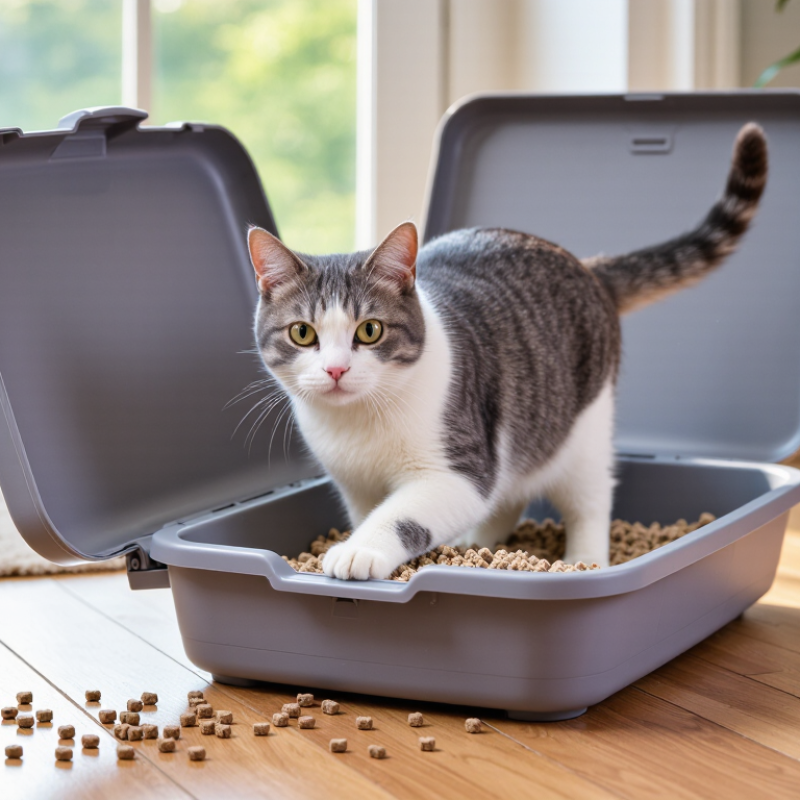
Clay cat litter usually falls into two main groups: clumping and non-clumping. Clumping clay commonly uses bentonite, which forms firm lumps when wet. That makes daily scooping straightforward and helps keep unused litter cleaner. It can, however, create dust or track across the floor, depending on the formula. Watch the box rim. Fine grains may cling to paws and collect beside the mat. A low-dust label can help, but the actual pour tells you more. Pour slowly. If a visible cloud rises, ventilate the area and consider another option.
Non-clumping clay absorbs liquid without forming scoopable lumps. It may cost less and suit owners who prefer changing the full tray regularly. Odor control depends on replacement frequency, litter depth, and room airflow. Some products contain fragrance; unscented litter may be more comfortable for cats and people sensitive to strong smells. Neither type is automatically best. Compare dust, tracking, cost, and your cat’s willingness to use the tray. A gradual switch can help: mix a little new litter into the old over several days. I might still misjudge a texture from the package alone. Your cat’s first visits can tell you more than the label.
| Litter Type | Typical Clay | Moisture and Waste Handling | Odor Control | Dust and Tracking | Cleaning and Replacement | Best Suited For | Things to Consider |
|---|---|---|---|---|---|---|---|
| Clumping clay litter | Usually sodium bentonite, which forms clumps when wet. | Urine binds into removable clumps; solid waste can be scooped out. | Frequent removal of clumps can help limit odors. A clean, dry litter box is still important. | Dust and tracking vary by product and particle size; some litter may stick to paws. | Scoop regularly and top up as needed. Replace the litter and clean the box periodically according to its condition and the product directions. | Many adult cats and households that prefer to remove soiled areas daily. | Often heavier than plant-based litter. Avoid flushing unless local guidance and the product label explicitly permit it. |
| Non-clumping clay litter | Often made with absorbent clay such as calcium bentonite; formulations differ. | Absorbs liquid without forming firm, scoopable clumps. Wet litter may collect near the bottom of the box. | Absorption can help manage moisture, but odor may build up as the litter becomes saturated. | Dust and tracking depend on the formulation, granule size, and handling. | Remove solid waste and replace the litter more often when it becomes damp or odorous; follow the package directions. | People seeking a simple, often lower-cost clay option, or cats that already use this texture comfortably. | Soiled areas can be harder to remove individually, so the box may need more frequent full changes. |
| Low-dust or dust-reduced clay litter | May be clumping or non-clumping clay processed to reduce airborne dust. | Handling depends on whether the product is clumping or non-clumping. | Odor control depends on the base litter and how often waste is removed. | Designed to release less dust during pouring or scooping, though no litter is necessarily dust-free. | Use the cleaning routine for its clumping or non-clumping format. | Households that want to reduce dust around the litter box. | “Low-dust” performance varies. Pour slowly and keep the box in a well-ventilated area. |
| Scented clay litter | Can be clumping or non-clumping clay with added fragrance. | Moisture handling follows the underlying litter type. | Added fragrance masks some odors; it does not replace regular scooping and box cleaning. | Dust and tracking depend on the underlying formula. | Follow the cleaning routine for its clumping or non-clumping format. | Households that prefer a fragranced litter and whose cat accepts it. | Some cats or people may be sensitive to fragrance. If the cat avoids the box, consider switching to an unscented option. |
| Unscented clay litter | Can be clumping or non-clumping clay without added fragrance. | Moisture handling follows the underlying litter type. | Odor control relies on absorption, prompt waste removal, and regular box cleaning rather than added perfume. | Dust and tracking depend on the underlying formula. | Follow the cleaning routine for its clumping or non-clumping format. | Cats or households that prefer litter without added fragrance. | Unscented does not mean odor-proof; regular scooping and litter replacement remain necessary. |
Choosing tip: Introduce a new litter gradually, keep the box clean, and monitor whether your cat uses it comfortably. Avoid sudden changes when possible.