How to Choose the Best Canvas Awnings in 2026?
Choosing the right Canvas Awnings in 2026 requires more than matching fabric to your home’s exterior. The awning must manage sunlight, rain, wind, maintenance, and daily movement. A beautiful canopy can still disappoint if its frame bends or its fabric fades quickly.
Industry consultant Gary H. Krawczyk offers a useful reminder: “An awning should solve a comfort problem before it creates a design statement.” That principle keeps the buying decision practical. Measure the window, patio, or storefront carefully. Record its width, projection, mounting height, and exposure to afternoon sun. A south-facing wall may need stronger UV protection. A coastal property may require corrosion-resistant hardware.
Material choice matters. Acrylic canvas often provides dependable color retention and breathable performance. Coated polyester can offer stronger water resistance, but it may feel warmer beneath direct sunlight. Check the fabric weight, warranty terms, stitching quality, and cleaning instructions. Do not trust a vague “all-weather” label.
The frame deserves equal attention. Aluminum resists rust and stays relatively light. Steel can feel sturdier, but poor protection may invite corrosion. Motorized models add convenience, especially beside high windows. Manual systems remain simpler and easier to repair.
Small details matter.
Look at the seams. Inspect the brackets. Ask who installs it and who services it later. Even experienced buyers can overlook drainage or winter storage. I would not choose purely from a product photograph. Visit a showroom, touch the fabric, and observe how the awning opens. The best choice is not always the most expensive one. It is the one that fits your climate, building, habits, and honest maintenance capacity.
Understanding Canvas Awning Types and Their Main Uses
How to Choose the Best Canvas Awnings in 2026?
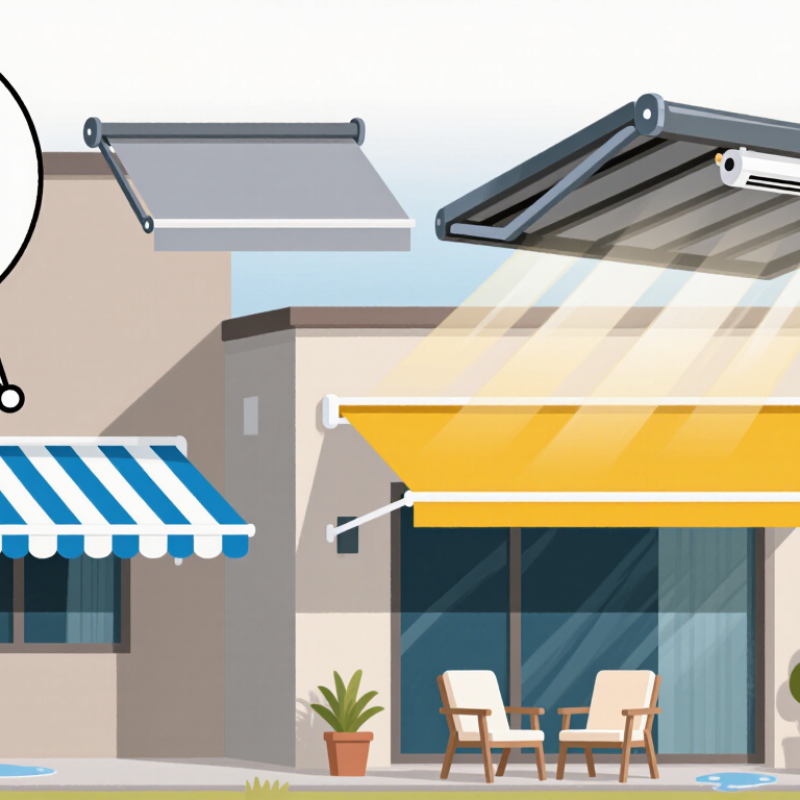
Canvas awnings vary by structure, movement, and purpose. Fixed awnings provide permanent shade over windows, doors, and shopfronts. They suit exposed walls, but need strong mounting and regular fabric checks. Retractable awnings offer flexible patio coverage. Open the canvas for sunlight, then extend it during hot afternoons. Drop or vertical awnings work like outdoor blinds. They reduce glare and add privacy beside balconies or dining areas.
The U.S. Department of Energy’s Energy Saver guidance reports that awnings can reduce solar heat gain by up to 65% on south-facing windows and 77% on west-facing windows. That makes orientation important. A west-facing patio may need deeper coverage than a sheltered northern wall. In practical site checks, I would also inspect wind exposure, drainage, fabric tension, and the wall substrate. I once assumed larger coverage was always better. It was not. Oversized canvas can collect wind and complicate operation.
Tips: Measure the shaded area at noon and late afternoon. Choose breathable, solution-dyed canvas for intense sunlight. Check the fabric’s water resistance, UV rating, stitching, and warranty terms. The Professional Awning Manufacturers Association recommends reviewing installation quality, not only fabric specifications. Leave clearance for doors, lights, and rainwater flow. A retractable model is convenient, but it may require more maintenance than a fixed design. Recheck the choice after one season. Real weather often exposes assumptions.
Evaluating Fabric Quality, Weather Resistance, and Durability
How to Choose the Best Canvas Awnings in 2026?
Fabric quality affects comfort, color retention, and service life. Examine tightly woven material with consistent texture and no thin patches. Solution-dyed fibers usually resist ultraviolet fading better than surface-dyed fabrics. Check the stated weight, coating, and breathability rather than trusting appearance alone. A water-repellent finish is useful, but it should not create trapped moisture underneath. During practical inspections, I look closely at folded edges, stitching density, and reinforced corners. Small gaps often become larger tears after repeated wind movement.
Tips: Hold the fabric toward daylight. Uneven light may reveal weak areas. Rub a damp cloth across a hidden section and inspect for color transfer. Ask for test data covering ultraviolet exposure, water penetration, and mildew resistance. Avoid choosing by price alone. Cheap fabric can become expensive after one replacement.
Weather resistance also depends on construction. Strong thread, double-stitched hems, and corrosion-resistant hardware improve reliability. The awning should shed rain without forming heavy pockets that strain its frame. Wind ratings need careful attention because installation quality changes real performance. Anchors, wall condition, pitch, and tension all matter. I have seen durable fabric fail because the mounting surface was unsuitable. That experience is easy to overlook. Inspect the frame every season, tighten loose fittings, and allow damp fabric to dry fully before rolling it away.
Choosing the Right Awning Size, Shape, and Mounting Style
How to Choose the Best Canvas Awnings in 2026?
Choosing the Right Awning Size, Shape, and Mounting Style
Measure the window, door, or patio before comparing canvas awnings. Record the width, projection, and available headroom. The awning should cover the opening without blocking nearby lights, vents, or doors. For a south-facing window, a deeper projection can reduce intense summer glare. However, excessive projection may create clearance problems on narrow walkways. Small errors matter.
Shape should match both the building and the weather. A sloped awning sheds rain more effectively than a nearly flat design. Curved profiles can soften a box-shaped façade, while straight lines suit modern walls. Consider how water will drain after heavy rain. A visually attractive shape may still perform poorly if its edge holds water.
Mounting style depends on the wall structure, not personal preference alone. Masonry walls usually need suitable anchors, while timber requires solid framing behind the surface. Avoid fixing heavy hardware only into cladding or thin decorative panels. Check the manufacturer’s load guidance and local installation requirements. In exposed areas, reinforced brackets may be necessary. Canvas also needs airflow and regular inspection for sagging, mildew, or loose stitching. I would measure twice, then test the door swing and walking clearance before drilling. A careful plan is less exciting, but repairs are worse.
How to Choose the Best Canvas Awnings in 2026? - Choosing the Right Awning Size, Shape, and Mounting Style
Typical residential and light-commercial sizing guidance. Confirm site dimensions, structural support, drainage, wind exposure, and local building requirements before installation. | Application | Typical Awning Size | Recommended Shape | Useful Projection | Suitable Mounting Style | Recommended Clearance | Key Selection Notes |
| Small window | 4–6 ft wide
1.2–1.8 m | Standard slope or dome | 2–3 ft
0.6–0.9 m | Wall-mounted | At least 6–8 in above the window or trim | Extend the awning beyond both sides of the window to improve shade. Check that the projection does not obstruct shutters, vents, or outward-opening windows. |
| Standard exterior door | 3–4 ft wide
0.9–1.2 m | Dome or waterfall | 2.5–3.5 ft
0.75–1.05 m | Wall-mounted above the door | Allow full door swing and maintain comfortable head clearance | Measure from the finished wall, not the door slab. Keep hinges, handles, lighting, and security cameras clear of the frame. |
| Wide window or bay window | 6–10 ft wide
1.8–3.0 m | Convex or segmented dome | 3–4 ft
0.9–1.2 m | Wall-mounted with multiple brackets | Keep the top frame below eaves, gutters, and window trim | Use additional support brackets as the width increases. A segmented design can follow a bay-window profile more accurately than a single flat panel. |
| Patio or outdoor seating area | 8–12 ft wide
2.4–3.7 m | Standard slope or waterfall | 6–10 ft
1.8–3.0 m | Wall-mounted or roof-mounted | Provide sufficient height for walking and furniture clearance | Choose a slope that directs rain away from the wall. Verify that the wall or roof structure can support the frame and expected loads. |
| Shopfront or entrance | 10–20 ft wide
3.0–6.1 m | Dome, waterfall, or straight valance | 4–8 ft
1.2–2.4 m | Wall-mounted into structural backing | Maintain unobstructed access, signage visibility, and required pedestrian clearance | Break very wide installations into supported sections where appropriate. Review local accessibility, fire-safety, and signage requirements. |
| Balcony or apartment opening | 5–10 ft wide
1.5–3.0 m | Compact slope or dome | 3–5 ft
0.9–1.5 m | Soffit-mounted or wall-mounted | Stay within the balcony boundary and preserve railing access | Obtain property-owner or building approval when required. Avoid blocking drainage paths, neighboring windows, or emergency access. |
Measurement checklist: Measure the opening width, available mounting height, desired projection, wall or roof construction, and the lowest finished edge. Leave space for gutters, lights, vents, doors, windows, and maintenance access. Canvas awnings are generally intended for shade and light weather protection; follow the installer’s guidance for removal or retraction during severe wind, snow, or storms.
Comparing Operation Methods, Features, and Maintenance Needs
Choosing the best canvas awning in 2026 depends on operation, fabric performance, and maintenance discipline. Manual crank systems cost less and remain practical during power interruptions. Motorized awnings offer smoother daily use, especially above large windows. However, motors add wiring, controls, and future repair points. Wind sensors improve protection, but they cannot replace sensible supervision.
The U.S. Department of Energy reports that awnings can reduce solar heat gain by up to 65% on south-facing windows and 77% on west-facing windows. These figures make projection depth and window orientation important features. A tightly woven, solution-dyed acrylic canvas usually resists fading better than ordinary outdoor fabric. Look for breathable material, stainless hardware, and a cassette that shields the folded fabric from rain. Small details matter.
Maintenance is less glamorous, but it determines service life. Brush away leaves before they become damp stains. Rinse the canvas with clean water, then let it dry completely. Inspect seams, brackets, crank resistance, and motor noise each season. Never force a stiff arm. My practical mistake was treating “weather-resistant” as “maintenance-free”; it is not. The DOE data also reflects controlled conditions, so local wind, dust, and installation quality can change real savings. Reference: U.S. Department of Energy, Energy Saver, “Awnings.”
Balancing Installation Requirements, Lifespan, and Overall Cost
Choosing a canvas awning begins with the wall, not the fabric. Inspect brick, concrete, timber, and existing cracks before selecting brackets. A heavy awning needs solid fixing points and enough clearance for doors, windows, and rainwater flow. Measure twice. Small errors can force expensive adjustments during installation.
Installation complexity directly affects the real cost. A narrow, manually operated awning may suit a simple patio and require limited labor. Larger retractable systems often need reinforced supports, careful alignment, and professional electrical work. Include delivery, mounting hardware, access equipment, and future fabric replacement in your budget. The cheapest quotation may exclude these details. That matters.
Lifespan depends on fabric density, coating quality, ventilation, and daily exposure. Look for tightly stitched seams, corrosion-resistant hardware, and fabric tested for ultraviolet and moisture resistance. In coastal or rainy areas, salt and trapped dampness can shorten service life quickly. Clean the canvas gently and let it dry fully before retracting it. Never ignore sagging or loose brackets. These small defects can become structural problems. A realistic choice balances purchase price with maintenance over five to ten years. I would not treat every lifespan estimate as guaranteed; shade direction, weather, and cleaning habits can change performance considerably. A slightly higher initial cost may be sensible when it reduces repairs, replacement frequency, and installation risks.
 Skip to content