How to Choose ALKO Leaf Springs in 2026?
Choosing alko leaf springs in 2026 requires more than matching a catalog number. These components support trailer load, ride quality, and braking stability. The wrong spring can cause uneven height, harsh rebound, or premature wear. Small errors matter.
This guide examines load ratings, axle compatibility, spring dimensions, mounting hardware, and corrosion protection. It explains how to compare genuine alko leaf springs with suitable replacement options. Measurements should come from the removed spring, not photographs. Check the eye-to-eye length, width, center-bolt position, and arch before ordering. A workshop inspection can reveal cracked leaves, oval eyelets, or flattened camber. Those details often tell a clearer story than mileage alone.
Practical experience shows that trailer use changes the decision. A boat trailer faces salt and moisture. A utility trailer may experience repeated overloads. A lightly used caravan still needs correct ride height and secure fastening. Manufacturer specifications remain the safest reference. Independent advice helps, but it should connect with technical data and qualified inspection. This guide also addresses common mistakes, including confusing axle capacity with spring capacity. Some recommendations may need refinement as model ranges change. That uncertainty deserves attention, not confident guessing. Readers will gain a clearer method for choosing ALKO leaf springs that fit, carry safely, and last in real conditions.
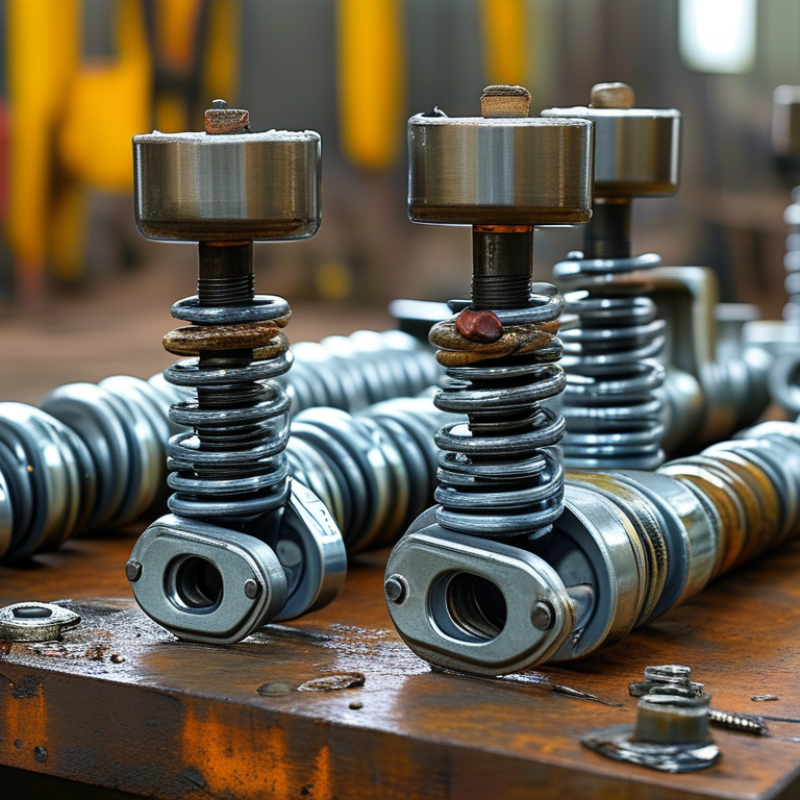
Define AL-KO Axle Type, Part Number, and Rated Load in Kilograms
How to Choose ALKO Leaf Springs in 2026?
Define AL-KO Axle Type, Part Number, and Rated Load in Kilograms
Choosing an AL-KO leaf spring starts with the axle identification plate, not appearance. Record the axle type, production code, and complete part number. A single missing digit can change the spring length, eye diameter, or mounting position. Measure the unloaded spring, but do not trust measurement alone. Corrosion and sag can hide the original specification.
Rated load must be read in kilograms. Check the axle’s permitted load, then compare it with the spring pair’s capacity. Do not confuse axle rating with trailer payload. For example, a 1,500 kg axle does not automatically support 1,500 kg of cargo. Braking equipment, wheels, and hitch load also affect the legal operating limit. UNECE Regulation No. 55 requires marked coupling values, while the European Road Safety Observatory recorded about 20,400 road deaths in the European Union during 2023. Correct load identification supports safer trailer control.
Professional workshops usually verify three details: axle type, exact part number, and rated load per axle. They also inspect shackle plates, bushes, and U-bolts before installation. I have seen visually identical springs carry different ratings. That mistake is easy to make. It is worth checking twice. The 2024 European Commission transport statistics show road freight remains the dominant inland freight mode in Europe, increasing the importance of accurate load matching. Still, catalog data can be incomplete. Photograph the plate, weigh the trailer, and confirm the specification with a qualified parts supplier.
How to Choose Leaf Springs in 2026
Compare common trailer axle load classes before selecting a replacement leaf spring. The axle type, exact part number, spring dimensions, and rated load must all match the original assembly.
The values show typical reference load classes in kilograms per axle: 750, 1,000, 1,300, 1,500, and 1,800 kg. A part number identifies the exact spring design, while the rated load indicates the maximum permitted axle capacity. Always verify the axle plate, spring length, eye diameter, number of leaves, mounting position, and load rating before ordering.
Measure Spring Length, Width, Thickness, and Camber in Millimetres
Choosing a replacement leaf spring starts with accurate measurements, not a catalogue photograph. Park the trailer on level ground and remove the spring before measuring. Record eye-to-eye length from the centre of each eye. Measure width across the leaf, then thickness at the centre section, away from clamps and wear marks. Measure camber as the vertical distance from the spring’s highest point to a straight line between both eyes. Use millimetres throughout. Small errors matter. A 1 mm thickness change can alter theoretical bending stiffness by about 33%, because stiffness varies with thickness cubed.
SAE J1123 distinguishes free camber from loaded camber, so do not compare a relaxed spring with a compressed specification. Industry inspection guidance also recommends recording both sides, because unequal wear can hide a poor match. My practical mistake was measuring a dirty spring without removing surface rust; the reading looked precise but was not reliable. Clean the contact points first. A digital caliper suits width and thickness, while a steel rule and straightedge work better for length and camber. Check the manufacturer’s drawing against your notes, including eye diameter, centre-bolt position, and leaf count. If one dimension differs, pause before ordering. The 2024 Global Automotive Leaf Spring Market report from IMARC projects continued replacement demand through 2032, but market growth does not guarantee dimensional compatibility. Source documents can be incomplete. Your measured spring remains the stronger evidence.
Match Spring Capacity to Axle Load, Payload, and Safety Margin Data
How to Choose Leaf Springs in 2026?
Choose leaf springs by measured axle load, not by appearance or catalogue length. Check the axle plate, trailer documents, and actual scale readings. Include cargo, water, tools, spare tires, and accessories. The coupling load usually rests on the towing vehicle, so do not add it twice. Record the heaviest realistic axle load.
A practical example helps. If one axle carries 1,600 kilograms, each spring supports roughly 800 kilograms under balanced loading. A spring rated near 900 to 960 kilograms may provide a useful safety margin. However, the axle, tires, hangers, and frame must support that rating too. More capacity is not always safer. Overly stiff springs can reduce comfort, increase vibration, and stress mounting points.
The calculation is not perfect.
Measure the original spring carefully. Check eye-to-eye length, width, center-bolt position, number of leaves, and unloaded arch. Measure both sides because uneven wear can mislead you. Inspect for cracked leaves, flattened arches, loose bushings, and polished contact marks. Replace springs as a matched pair. A close fit is not enough.
From hands-on repair work, uneven loading causes many premature failures. A toolbox placed permanently on one side can change spring behavior. I once focused too heavily on spring capacity and overlooked a worn hanger. That mistake changed my inspection process. Confirm the highest expected axle load, apply a reasonable margin, and verify every connected component before ordering.
Compare Spring Rate in N/mm, Deflection, Ride Height, and Comfort
How to Choose Leaf Springs in 2026?
Spring rate, measured in N/mm, shows how much force is needed for one millimetre of compression. A higher rate supports heavier loads with less deflection. However, excessive stiffness can create sharp impacts on rough roads. I have seen vehicles sit correctly while still feeling unpleasantly rigid. The number alone never tells the whole story.
Measure the current ride height from the axle centre to a fixed body point. Measure it loaded. Compare this figure with the manufacturer’s intended height and available suspension travel. Too little deflection may cause frequent bump-stop contact. Too much deflection can lower the body, alter alignment, and reduce clearance. Record axle load accurately, including tools, passengers, and normal cargo.
Comfort depends on more than spring rate. Dampers, tyres, bushings, and load distribution also change how the vehicle responds. A moderate rate with controlled deflection often feels better than an extremely soft spring. Check the spring’s unloaded arch, eye dimensions, mounting position, and rated capacity before selecting a replacement. Small dimensional differences matter.
My own mistake was focusing on ride height first. The vehicle looked right, but it compressed too easily under working load. A better choice matched the real axle weight and preserved usable travel. Test measurements after installation, because practical results can disagree with catalogue figures.
Verify 2026 Fitment Through OEM Records, VIN Data, and Load Certification
Choosing trailer leaf springs in 2026 requires more than matching dimensions. Verify the original equipment record, including axle capacity, spring length, eye diameter, and mounting position. A similar-looking spring can still change ride height or overload the axle.
S&P Global Mobility’s 2024 aftermarket analysis reports an average U.S. vehicle age of 12.6 years. Older trailers often carry mixed replacement parts. Therefore, confirm the VIN against the manufacturer’s archived build data. Check the axle serial number, production date, and approved suspension configuration. Then compare the spring’s stamped load rating with the axle’s certification label. SAE J2807 load terminology can support towing assessments, but it does not replace the vehicle manufacturer’s certification. Paperwork matters.
Tips: Photograph every label before ordering. Measure unloaded and loaded ride height. Ask for a certificate showing rated capacity, material specification, and test method. Do not trust an online catalog alone. I have seen accurate measurements produce the wrong fitment when the axle had been replaced. That detail is easy to miss. If the VIN record conflicts with the current axle, pause the installation and request written confirmation from a qualified supplier or inspection professional. Keep invoices, photographs, and certification records together. This makes future verification faster.
How to Choose ALKO Leaf Springs in 2026? - Verify 2026 Fitment Through OEM Records, VIN Data, and Load Certification
A practical verification table for matching a replacement leaf spring to a 2026 trailer or light commercial vehicle without relying on appearance alone.
| Verification Dimension | Required Data | Authoritative Source | 2026 Acceptance Rule | Example Record or Measurement | Decision |
|---|---|---|---|---|---|
| Vehicle identity | Complete 17-character VIN, including the model-year position | Vehicle identification plate, registration document, or approved service record | The VIN must contain 17 characters and must match the vehicle being repaired. Do not use a shortened chassis number. | 17-character VIN transcribed exactly; no missing or substituted characters | Pass |
| Model year confirmation | Model year, production date, and trailer or vehicle series | VIN decoding record plus the original build sheet | Confirm the 2026 application from the build record. Registration year alone is not proof of model year. | Model year: 2026; production date: recorded separately | Verify |
| Gross Vehicle Weight Rating | GVWR or technically permissible maximum laden mass | Certification label, type-approval document, or OEM specification sheet | The selected suspension must not reduce the vehicle’s certified GVWR or axle rating. | GVWR: 3,500 kg shown on the certification label | Pass |
| Axle load requirement | Front or rear GAWR, or the applicable trailer axle rating | Axle label, type plate, axle certificate, or approved technical record | Compare the spring assembly’s certified capacity with the load carried by that axle. Never use total GVWR as a substitute for axle load. | Rated axle load: 1,750 kg; required capacity per spring: 875 kg before any specified design margin | Calculate |
| Spring load rating | Rated capacity of one spring and of the complete axle set | Stamped spring record, supplier certificate, or approved engineering drawing | Capacity, ride height, and stress limits must agree with the original specification. A higher nominal capacity is not automatically compatible. | Pair capacity must support the certified axle load and the documented suspension design | Certify |
| Spring type | Single-leaf, multi-leaf, slipper, eye-to-eye, or other documented construction | OEM parts record and physical inspection | The replacement must use the same approved spring architecture unless an engineering change has been documented. | Multi-leaf spring with front eye and rear eye recorded in the build specification | Match |
| Eye-to-eye length | Unloaded center-to-center distance between spring eyes | OEM drawing or measurement from an undamaged reference spring | Measure with the spring unloaded. Do not measure a flattened or permanently deformed spring as the design length. | Measured unloaded length: 760 mm; confirm against the approved drawing tolerance | Measure |
| Spring width | Leaf width at the mounting and clamp areas | OEM drawing and calibrated vernier or steel rule | Width must match the hanger, bushing, U-bolt, and clamp hardware. A small width difference can prevent correct seating. | Leaf width: 60 mm; hardware opening must accommodate the documented width | Measure |
| Eye and bushing dimensions | Eye inner diameter, bushing outer diameter, and bushing length | Parts drawing, service manual, and measured replacement hardware | The bushing must fit the hanger bolt without looseness, binding, or forced installation. Record dimensions in millimetres. | Eye inner diameter: 30 mm; bushing length and bolt size still require confirmation | Check |
| Camber and arch | Free camber or unloaded arch height | OEM drawing or controlled measurement on a level surface | Compare the unloaded profile with the approved design. A visibly flatter replacement may change ride height and axle alignment. | Free camber: recorded in the engineering drawing; do not estimate from photographs | Compare |
| Center bolt and locating feature | Center-bolt diameter, head orientation, and axle-seat location | Axle drawing and spring assembly inspection | The locating feature must seat correctly in the axle pad. Incorrect orientation can shift axle position or damage the assembly. | Center bolt: 16 mm; head direction and seat depth confirmed before installation | Confirm |
| Fastener compatibility | U-bolt diameter, length, thread condition, nuts, washers, and torque specification | Vehicle service documentation and fastener specification | Use the documented fastener grade and tightening procedure. Replace stretched, corroded, or previously overloaded U-bolts. | New U-bolts required; final torque must come from the approved service record | Do Not Reuse |
| Load certification | Certificate identifying capacity, test basis, part dimensions, and traceability | Current supplier certificate or engineering conformity record | The certificate must identify the exact spring specification. A generic catalogue rating without traceability is insufficient for final approval. | Certificate number, revision, tested capacity, and material traceability recorded | Require |
| Installation outcome | Ride height, axle alignment, clearance, and post-installation inspection | Workshop measurement sheet and roadworthiness inspection | Both sides must be installed as the approved pair where required. Check tire clearance, brake-line clearance, and abnormal lean before use. | Left/right ride height difference within the documented service tolerance | Inspect |
Important: Dimensions shown as examples are measurement fields, not universal fitment specifications. Final selection requires agreement between the VIN record, original build specification, measured hardware, axle rating, and a traceable load certificate.
Skip to content