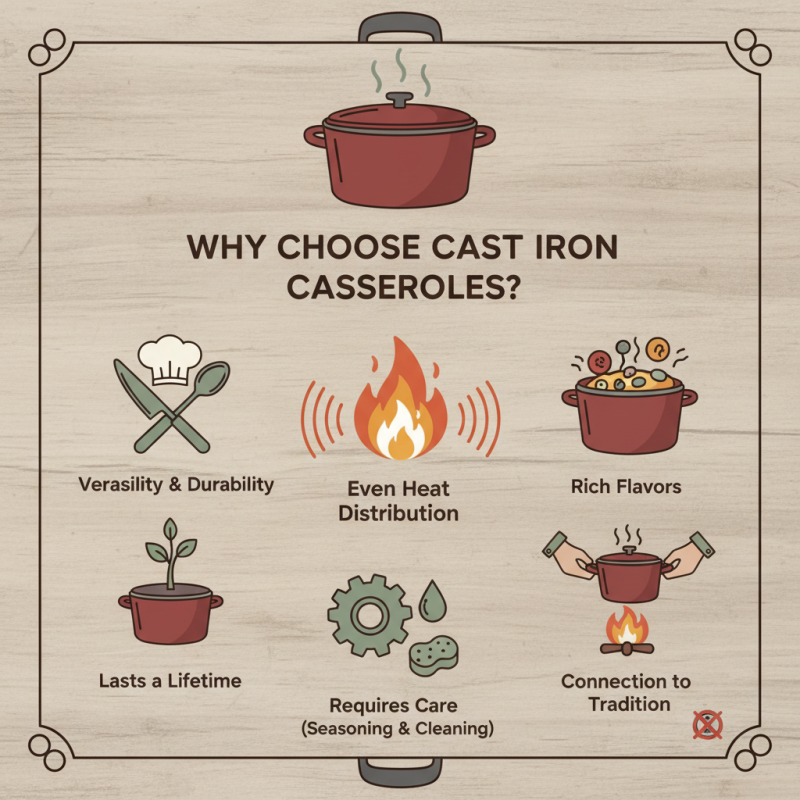
Why Choose Cast Iron Casseroles for Perfect Cooking?
Cooking is an art, and every artist needs the right tools. One essential tool is the cast iron casserole. Its versatility and durability set it apart from other cookware. When properly maintained, a cast iron casserole can last a lifetime.
The even heat distribution is unparalleled. Imagine a stew simmering gently, flavors melding beautifully. This type of casserole allows for that. It can be used on the stovetop and in the oven. However, it requires a bit of care. If not seasoned well, food can stick. Cleaning it improperly can lead to rust.
Despite these challenges, many cooks cherish their cast iron casserole. The rich flavors it imparts are worth the effort. Each meal cooked in it tells a story. It's that connection to tradition that draws many to cast iron cookware. With each use, you refine your technique and deepen your appreciation.
Benefits of Using Cast Iron Casseroles for Cooking
When it comes to cooking, cast iron casseroles are a popular choice among chefs and home cooks alike. Their ability to retain heat is unmatched. Studies show that cast iron can maintain consistent temperatures for longer periods, which is vital for slow-cooking dishes. Dishes like stews and braised meats benefit greatly from this feature. The even heat distribution also helps prevent hot spots, allowing food to cook uniformly.
Using cast iron is not just about heat retention; there are health benefits too. Cast iron cookware can release small amounts of iron into your food. This can boost your dietary iron intake, which is crucial for energy levels. A 2015 study from the International Journal of Environmental Research and Public Health highlighted this benefit, showing that people who used cast iron cookware had higher iron levels.
Tip: To keep your cast iron casserole in good shape, avoid cooking acidic foods for long periods. Acids can break down the seasoning and affect the taste.
Cooking is often about experimentation. Sometimes, new recipes may not turn out as expected. Don't be discouraged by mishaps! These moments often lead to culinary creativity. Try adjusting your cooking times or spices next time. Use that feedback for improvement. Embrace the learning curve with your cast iron dish.
Durability and Longevity: Why Cast Iron Lasts a Lifetime
Cast iron casseroles are famous for their durability. These pots can withstand high temperatures and rough handling. They don’t chip or crack easily. The heavy material retains heat well, making cooking more efficient. With the right care, a cast iron casserole can last a lifetime.
Longevity is a key feature of cast iron cookware. It can be passed down through generations, developing a special seasoning over time. This natural non-stick surface improves with use. Many people find scratches on their cookware, leading to questions about maintenance. Regular seasoning can often fix these imperfections. It’s a process, but worth the effort.
Cleaning cast iron requires attention. Soaking it in water isn't wise. This can lead to rust, which may signal a loss of durability. Some may find this frustrating. However, a well-maintained casserole can be a family heirloom. It tells a story of countless meals cooked and shared. Investing time in care pays off in flavor and function.
Heat Retention and Distribution Properties of Cast Iron
Cast iron casseroles are exceptional tools for cooking. Their ability to retain and evenly distribute heat makes them a favorite among home cooks. When you heat a cast iron casserole, it takes time to warm up, but once it does, the heat stays consistent. This property allows food to cook evenly, reducing the risk of hot spots.
The thick walls of cast iron retain heat well. This means that dishes stay warm long after they've been taken off the heat. Imagine serving a rich stew that remains hot throughout dinner. However, it’s important to note that this heat retention can also lead to overcooked edges if you’re not careful.
Many cooks appreciate how versatile cast iron can be. They can be used on the stovetop or in the oven. Still, some may find them heavy and challenging to handle. This heaviness can sometimes result in spills or accidents. Proper technique and awareness are essential when working with these sturdy pots.
Versatility in Cooking Techniques with Cast Iron Casseroles
Cast iron casseroles offer remarkable versatility in cooking techniques. From braising to baking, these durable dishes handle high heat well. They can be used on the stovetop or in the oven. You can enjoy slow-cooked stews or crisp baked casseroles. The ability to transition seamlessly between cooking methods is a game-changer in any kitchen.
With cast iron, preheating can be essential. It ensures even heat distribution. But if you forget, the results may not be perfect. You might end up with uneven cooking or burnt edges. Using the right technique is crucial. It's easy to underestimate their weight. Heavy dishes can be awkward to handle, leading to spills and frustration.
Cleaning cast iron takes special care. Forget to season it properly, and food may stick. This can be a source of annoyance. However, once you master it, the rewards are plentiful. The aesthetic appeal of a rustic, cast iron dish on the table adds charm. Embracing their imperfections can elevate your cooking experience. Adjusting your methods to these unique tools may lead to delightful surprises.
Why Choose Cast Iron Casseroles for Perfect Cooking?
This chart illustrates the versatility of cooking techniques that can be effectively employed with cast iron casseroles. The data reflects various methods and their corresponding popularity among home cooks.
Easy Maintenance and Care for Cast Iron Cookware
Cast iron casseroles are a fantastic choice for cooking, and they’re surprisingly easy to maintain. After each use, let the cookware cool down. Rinse it with warm water and a soft sponge. Avoid abrasive materials, as they can scratch the surface. Sometimes, stubborn food remains cling to the walls. A little baking soda can work wonders. It’s a gentle abrasive that helps lift residue without damaging the seasoning.
Seasoning is crucial for cast iron care. After washing, dry the casserole thoroughly to prevent rust. Apply a thin layer of vegetable oil. This step ensures smooth cooking and easy food release. If your casserole starts to stick more than usual, it could indicate that it needs re-seasoning. Regular maintenance can take some time, and it can be easy to overlook.
Storing cast iron properly is also essential. Place a paper towel inside the casserole to absorb moisture. This prevents rust buildup during storage. Some users may neglect this step and find their cookware rusty later. A little attention goes a long way in preserving your cast iron piece for years, even generations. With consistent care, these casseroles can become a beloved kitchen staple.
 Skip to content