What Is the Best Waterproof LED Screen from China?
Choosing the best Waterproof Led Screen from China requires more than comparing pixel pitch and price. It requires evidence from factories, field installations, and recognized technical standards. MarketsandMarkets’ 2024 LED Display Market report describes continued demand for large-format displays in outdoor advertising, sports venues, transportation, and public spaces. This demand is practical. A stadium screen may face driving rain, dust, strong sunlight, and repeated thermal changes within one week.
Water resistance should be verified through ingress protection testing, not marketing language. IEC 60529 defines IP ratings, while IP65 generally protects against dust and water jets. However, an IP rating does not guarantee perfect performance after poor installation, aging seals, or damaged cabinets. That detail matters. Omdia’s LED Video Display Market Tracker has also highlighted the growing importance of fine-pitch, high-brightness, and rental-friendly LED systems. Buyers now expect sharper images without sacrificing outdoor reliability.
A dependable Waterproof Led Screen should offer sealed modules, corrosion-resistant cabinet materials, stable power supplies, accessible spare parts, and documented factory testing. Look closely at drainage channels, connector covers, cable glands, and cabinet locks. These small components often decide whether a screen survives a monsoon or fails after one season. Research reports from IMARC Group and Grand View Research continue to show strong global LED display growth, but market growth does not prove every supplier is reliable. Some specifications remain difficult to verify. Therefore, this guide compares Chinese manufacturers through measurable criteria, installation experience, service records, and testing evidence. The “best” screen may not be the cheapest, brightest, or newest. It should be the one that keeps working when the weather becomes inconvenient.
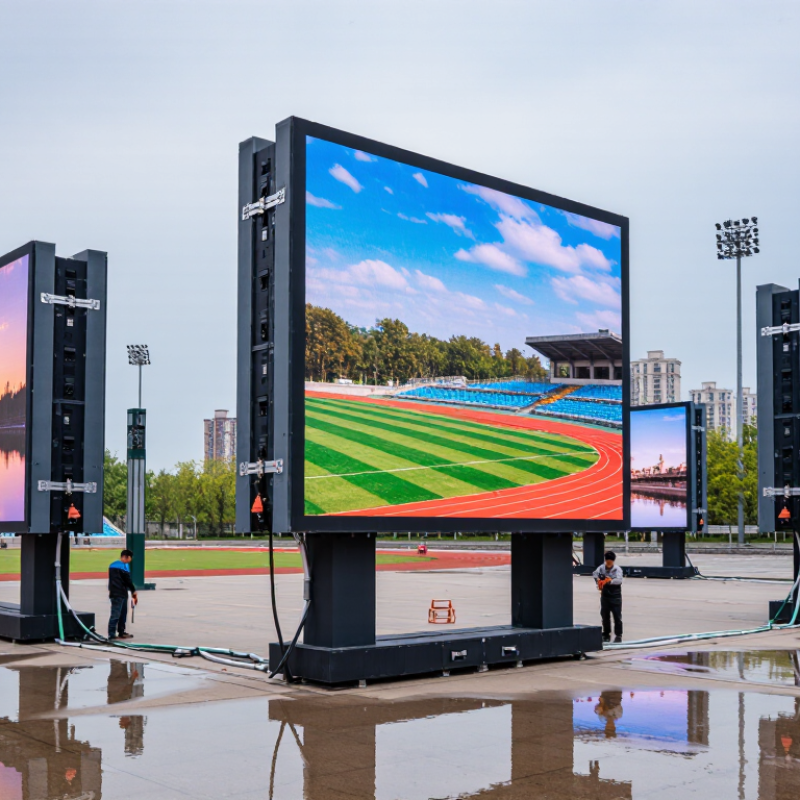
What Defines a High-Quality Waterproof LED Screen?
A high-quality waterproof LED screen is more than a bright cabinet with a rubber seal. Its protection must be tested under IEC 60529. An IP65 rating means dust-tight protection and resistance to water jets. It does not mean safe underwater operation. For exposed coastal sites, IP66 protection, sealed cable glands, and drainage channels provide stronger practical security. The front and rear should carry suitable ratings.
Brightness also needs context. Outdoor screens commonly require about 5,000 to 8,000 nits in direct sunlight, while automatic dimming prevents unnecessary glare at night. Excessive brightness is not quality. It can reduce comfort and increase power consumption. The U.S. Department of Energy’s 2023 Solid-State Lighting report notes laboratory LED efficacy above 200 lumens per watt, but complete display systems perform lower because of drivers, power supplies, and thermal losses.
Thermal design separates reliable screens from attractive samples. High-quality modules use aluminum structures, stable power supplies, temperature monitoring, and controlled ventilation. A refresh rate above 3,840 Hz supports clearer camera footage during live events. Uniform color calibration matters too; visible patches across a large wall suggest weak binning or poor calibration. Industry testing should include salt spray, rain simulation, vibration, and repeated temperature cycling. Certification documents should identify test methods, not only display logos.
One uncomfortable truth remains. Waterproof does not mean maintenance-free. A small installation error can defeat excellent engineering. Check seals after transport, inspect connectors quarterly, and record cabinet temperatures during summer operation. Industry market reports often emphasize brightness and pixel pitch, yet field reliability depends on details buyers rarely photograph.
What Defines a High-Quality Waterproof LED Screen?
The chart uses practical outdoor LED screen benchmarks. The index shows how closely each specification reaches a high-quality reference target.
A dependable waterproof LED screen typically combines IP65 or higher protection, around 5,000–6,000 nits of brightness for daylight visibility, a 3,840 Hz refresh rate for smooth video capture, a wide operating temperature range, and an expected service life of up to 100,000 hours. These factors should be evaluated together rather than judged by waterproofing alone.
Which Waterproof LED Screen Types Are Made in China?
China produces several waterproof LED screen types for outdoor advertising, events, transport hubs, and sports venues. Outdoor fixed screens use sealed cabinets, weather-resistant power supplies, and front protection rated around IP65 or higher. Their aluminum cabinets help reduce corrosion and heat buildup under strong sunlight.
Rental waterproof LED screens are lighter and include quick-lock cabinets for concerts and temporary displays. They often use reinforced handles, corner protectors, and drainage paths. Waterproof rental panels need careful inspection after repeated assembly. A damaged gasket can quietly allow moisture inside. I have seen this problem after heavy rain.
Transparent LED screens are another Chinese-made option. They fit glass walls, retail windows, and building facades. Their open structure allows wind to pass through, but the waterproof level varies by design. Flexible LED screens can follow curved surfaces, although their protection depends heavily on the enclosure and installation method. Poster-style LED displays offer compact advertising solutions and usually include a slim, weather-resistant cabinet.
Perimeter LED screens are designed for stadiums and outdoor courts. Soft masks protect players from sharp panel edges. Their cabinets also support frequent maintenance. COB LED screens provide stronger surface protection than many traditional SMD designs, but repairs may require specialized tools. Factory quality varies, so buyers should request laboratory reports, aging-test records, sample testing, and clear warranty terms. An IP rating alone does not prove long-term reliability. Salt air, dust, vibration, and poor drainage can still shorten service life.
How to Compare Brightness, Pixel Pitch, and Viewing Distance
Brightness, pixel pitch, and viewing distance determine whether an outdoor LED screen looks clear or merely loud. For direct sunlight, many professional installations use 5,000–7,000 nits. Higher brightness can improve visibility, but it may increase heat, power use, and glare. The 2024 Global Digital Signage Market Report by Grand View Research identifies outdoor applications as a major growth area, yet it does not define one universal brightness level. Site testing remains essential. Measure the screen at noon, not only inside a showroom.
Pixel pitch controls image detail. A 4 mm pitch usually suits viewers around four metres away, while a 6 mm pitch can work better beyond six metres. This simple rule is useful, but imperfect. Content type, camera distance, and screen height also matter. For close viewing, smaller pitches reduce visible gaps. However, they often cost more and require tighter quality control. Viewing-distance calculations should be checked with real sample modules before ordering.
Tips: Confirm the IP rating under IEC 60529, not just the word waterproof. IP65 protects against dust and water jets, but it does not mean safe underwater use. Ask for brightness measurements, refresh rate, grayscale performance, and power data from a calibrated test report. Check operation during rain, heat, and strong sunlight. A screen that looks excellent for ten minutes may disappoint after six hours. Supplier claims need evidence, and even standard formulas deserve a second look.
What Waterproof Ratings and Materials Should Buyers Check?
When choosing the best waterproof LED screen from China, inspect the IP rating before brightness or price. IEC 60529 defines the first digit as solid-particle protection and the second as water protection. An IP65 screen resists dust and water jets. IP66 handles stronger water jets. IP67 allows temporary immersion, usually up to one meter for 30 minutes. This does not mean permanent underwater operation.
Materials matter just as much. Look for powder-coated aluminum or die-cast cabinets, stainless fasteners, UV-resistant masks, and silicone gaskets. Cable glands should match the cabinet rating. Internal conformal coating can reduce corrosion on driver boards, but it cannot repair poor sealing. A 2024 MarketsandMarkets LED display report identifies outdoor applications as a major market-growth area, increasing demand for weather-resistant construction. Still, market growth is not proof of product quality. The test certificate must match the actual cabinet design.
Tips: Ask for an IEC 60529 test report, not only an IP label. Check whether testing covered the front, rear, seams, connectors, and ventilation areas. Request thermal-cycle and salt-spray results for coastal installations. Inspect sample corners physically; tiny gaps often appear there first. A higher IP rating may restrict airflow and increase heat. That trade-off is easy to overlook. Use independent inspection before shipment, because factory photos rarely show long-term sealing performance.
How to Choose the Best Chinese Waterproof LED Screen Supplier
Choosing the best Chinese waterproof LED screen starts with the supplier, not the lowest quotation. Ask for the exact protection rating, test conditions, and test date. A cabinet marked IP65 may protect the front well, while the rear needs different protection. Request factory test reports, electrical safety documents, and clear warranty terms.
Visit the production site when possible, or arrange a live video inspection. Check soldering quality, cabinet sealing, cable glands, drainage holes, and power supply placement. Run a sample screen for several hours in bright sunlight. Look for flicker, uneven brightness, excessive heat, and visible color differences between modules. Pixel pitch should match the viewing distance, not merely the sales recommendation.
Ask how the supplier handles spare modules, waterproof connectors, firmware updates, and technical training. Reliable suppliers provide packing photos, installation drawings, replacement procedures, and responsive after-sales support. Request references from projects with similar rain, wind, or coastal conditions. Salt air can damage metal parts faster than expected.
No supplier is perfect. I would still question vague promises. A low price may hide weak sealing or limited support. One practical mistake is testing only the display, not the whole installation. Include brackets, cables, controllers, drainage, and maintenance access in the evaluation. Clear communication matters too, especially when specifications change during production. Before placing a large order, approve a sample, record its measured performance, and compare the delivered units against that record.
What Is the Best Waterproof LED Screen from China? - How to Choose the Best Chinese Waterproof LED Screen Supplier
| Evaluation Dimension | Recommended Target | Why It Matters | How to Verify the Supplier |
|---|---|---|---|
| Waterproof Protection | IP65 or higher on the front; IP54 or higher on the rear for outdoor installations | Reduces the risk of water and dust damage during rain, cleaning, and long-term outdoor use. | Request an IP test report based on IEC 60529 and confirm whether the rating applies to the complete cabinet or only individual modules. |
| Outdoor Brightness | Approximately 5,000–7,000 nits for direct-sunlight applications | Sufficient brightness keeps content readable under strong daylight without unnecessarily increasing power consumption. | Ask for measured brightness data, test conditions, and a sample showing brightness uniformity at different viewing angles. |
| Pixel Pitch | P2.5–P4 for close viewing; P4–P10 for medium or long-distance viewing | A smaller pixel pitch provides higher image detail, while a larger pitch can reduce purchase and maintenance costs. | Select the pitch according to the minimum viewing distance, screen size, content type, and installation environment. |
| Refresh Rate | At least 3,840 Hz for camera-friendly advertising and event applications | A high refresh rate helps reduce flicker, scan lines, and rolling bars when the screen is recorded by cameras. | Request a video test recorded with a camera and confirm the refresh-rate specification on the technical datasheet. |
| Operating Temperature | Common outdoor target: approximately −20°C to +60°C, depending on configuration | The screen must remain stable in seasonal temperature changes and direct solar heating. | Check the specified operating range, cabinet ventilation design, thermal test records, and local climate suitability. |
| Cabinet Material and Sealing | Corrosion-resistant cabinet with sealed connectors, gaskets, and drainage design | Good mechanical protection improves durability in humid, coastal, dusty, or rainy environments. | Inspect a physical sample and check cabinet thickness, coating method, connector covers, drainage paths, and gasket quality. |
| Power Consumption | Compare both maximum and typical power consumption; include energy-saving options where available | Power consumption affects electrical infrastructure, operating cost, heat generation, and cooling requirements. | Request maximum watts per square metre, typical operating watts per square metre, power-supply efficiency, and test conditions. |
| LED Module and Cabinet Serviceability | Front or rear maintenance access matched to the installation location | Convenient maintenance reduces downtime and labour cost when replacing modules, power supplies, or receiving cards. | Confirm spare-part access, module replacement time, cabinet wiring layout, and availability of maintenance tools. |
| Quality Control and Testing | Documented incoming-material inspection, aging test, waterproof test, and final inspection | A repeatable quality process lowers the risk of dead pixels, colour inconsistency, water ingress, and early failures. | Request a quality-control plan, sample inspection report, aging-test records, and photos or videos of production testing. |
| Warranty and Spare Parts | A clearly written warranty, commonly 2–5 years, with defined exclusions and spare-part support | A transparent warranty clarifies responsibility for manufacturing defects and protects long-term project value. | Review warranty terms, response time, spare-parts pricing, remote support, and the process for handling replacement claims. |
| Compliance Documentation | Relevant safety and electromagnetic-compatibility documentation for the destination market | Correct documentation supports customs clearance, site approval, electrical safety, and project acceptance. | Request applicable certificates and test reports, verify the product model and report dates, and confirm destination-country requirements. |
Note: The specifications above are practical selection benchmarks for Outdoor Waterproof Led Screens. Final requirements should be confirmed according to the installation location, viewing distance, climate, content, local regulations, and project budget.
Skip to content