What Is the Best LED Power Supply for 2026?
What Is the Best LED Power Supply for 2026? The honest answer depends on your lights, installation, and environment. A Led Power Supply that works well for a dry living room may be unsuitable for a damp patio or a long commercial run. Start with the LED system’s required output voltage, then check its total wattage. Leave a sensible power margin rather than running the unit continuously at its limit. Small details matter.
For example, a 24-volt strip needs a supply rated for 24-volt output; matching the plug alone is not enough. Check the manufacturer’s data sheet for load limits, dimming compatibility, operating temperature, and enclosure rating. For outdoor use, verify that the complete installation—not just the power supply—has suitable protection from moisture and dust. Give the unit room to shed heat, and use wiring and connectors appropriate for the load. These choices can affect performance and service life.
There is no universal winner. Reputable product documentation, clear warranty terms, and relevant safety certifications are more useful than a bold “best” label. Compare models against your actual setup, and confirm compatibility with the LED manufacturer or a qualified electrician when specifications are unclear. I would not treat a larger wattage rating as an automatic upgrade; it does not fix the wrong voltage or incompatible dimming. That distinction is easy to miss. The sections below explain how to compare power, protection, efficiency, and practical features when choosing a reliable supply for 2026.
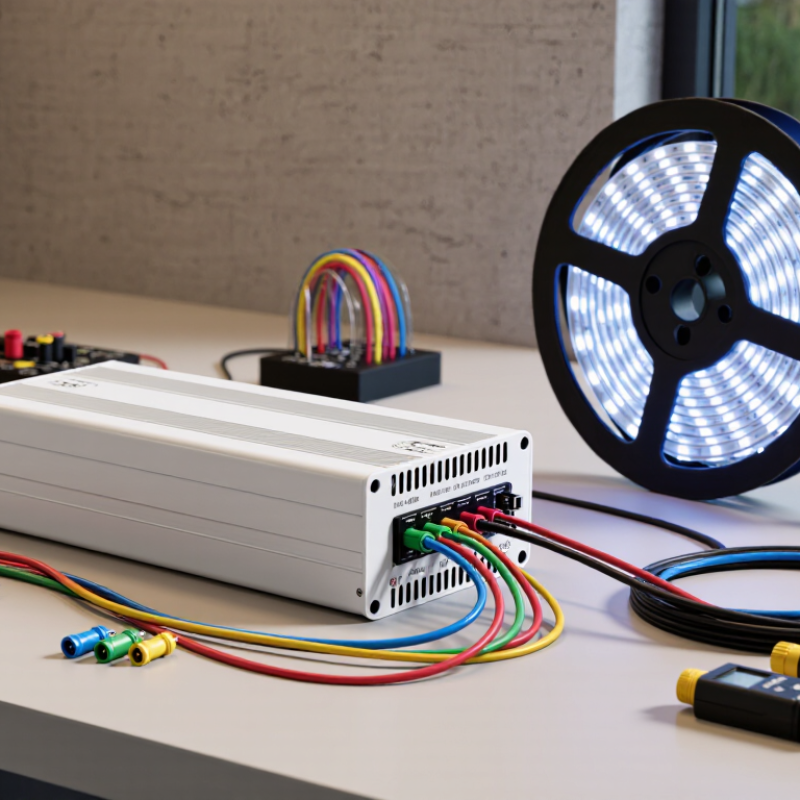
What an LED Power Supply Does and How It Works
What Is the Best LED Power Supply for 2026?
What an LED Power Supply Does and How It Works
An LED power supply converts incoming electricity into the form an LED fixture can use. Household current is typically alternating current, while most LED systems need controlled direct current. The supply regulates voltage or current, helping LEDs shine steadily instead of flickering or overheating. Simple job, critical role.
Inside, electronic components adjust the incoming power and limit electrical output. A constant-voltage supply maintains a set voltage, often for LED strips designed to operate at that level. A constant-current supply maintains a set current, common in fixtures with specified LED arrays. Using the wrong type can cause uneven light or shorten component life. Dimming compatibility matters, too.
It is tempting to treat wattage as the whole answer; it isn't. Match the supply’s output voltage and control type to the fixture, then check its rated power. Leave reasonable capacity for the connected load, while avoiding an unnecessarily large unit. Check the product specifications, including whether it is intended for indoor or outdoor installation. Heat also matters: a supply packed into a warm, unventilated space may not perform as expected. In practice, the label tells only part of the story. Installation conditions deserve a closer look.
The Main Types of LED Power Supplies
What Is the Best LED Power Supply for 2026?
The Main Types of LED Power Supplies
LED power supplies differ mainly in how they regulate electricity and where they operate. Constant-voltage models are common for 12- or 24-volt LED strips. They hold output voltage steady, while the connected load draws current within the supply’s rated capacity. Constant-current drivers suit LEDs that require a specified current. They adjust voltage as needed within their operating range. That distinction matters. Using the wrong type can cause flickering, overheating, or shortened LED life.
Dimmable supplies add another layer. Some use PWM, while others work with control methods such as 0–10 V; the driver and dimmer must be compatible. For damp locations, sealed models help resist moisture, but an enclosure rating alone does not make every installation suitable outdoors. Check the label. In a cabinet, a supply may sit beside warm electronics with little airflow, so allow space for heat to escape and avoid loading it continuously at its maximum rating. The categories overlap more than charts suggest. A dimmable unit can also be constant-voltage or constant-current, so match the supply to the LED’s electrical requirements, controls, and environment—not just its name.
What Is the Best LED Power Supply for 2026? - The Main Types of LED Power Supplies
| Power Supply Type | Output Regulation | Typical Applications | Advantages | Key Selection Considerations |
|---|---|---|---|---|
| Constant-voltage (CV) driver | Maintains a set DC voltage, commonly 12 V or 24 V; the connected load determines current within the unit’s rated limits. | LED strips, signage modules, and other LED products designed for a specified DC voltage. | Simple to use with compatible voltage-rated loads; multiple parallel branches may be possible within the supply’s current and power ratings. | Match the output voltage to the LED product. Check total load wattage, output current, wiring, and any required dimming method. |
| Constant-current (CC) driver | Regulates output current at a specified value, while output voltage varies within the driver’s stated operating range. | LED modules, COB LEDs, and fixtures specified for a particular drive current. | Helps maintain the intended LED current when used with a compatible LED load. | Match the rated current exactly and ensure the LED string’s forward-voltage range falls within the driver’s output-voltage range. |
| Non-dimmable driver | Provides constant-voltage or constant-current output without a supported dimming control input. | Installations that operate at a fixed light level, including compatible strips, modules, or fixtures. | Often a straightforward option when dimming is not required. | Confirm the output type and electrical ratings. Do not assume that adding an external dimmer will make the driver dimmable. |
| Dimmable driver | May provide constant-voltage or constant-current output and accept a specified control method, such as phase-cut, 0–10 V, PWM, or DALI. | Lighting systems that need adjustable brightness or integration with a compatible control system. | Allows light output to be adjusted when the driver, control, and LED load are compatible. | Match the dimming protocol and wiring requirements. Check the compatible dimmer or controller, dimming range, and minimum-load requirements where specified. |
| Plug-in AC/DC adapter | Usually supplies a fixed DC output; it may be constant-voltage or, less commonly, designed for a specified constant-current load. | Small LED products or low-power installations designed for an external adapter. | Convenient to install or replace where a compatible plug-in supply is appropriate. | Verify output voltage or current, polarity, connector, input requirements, and rated power. Use only with loads designed for that adapter type. |
| Enclosed or open-frame driver | Either constant-voltage or constant-current; enclosure describes construction rather than output regulation. | Enclosed units suit many general installations; open-frame units are typically installed inside a suitable product enclosure. | Enclosed designs can provide mechanical protection; open-frame designs can fit equipment where a separate enclosure is provided. | Check mounting, ventilation, temperature limits, electrical safety requirements, and whether the installation provides adequate protection from contact and the environment. |
| Weather-protected driver | May be constant-voltage or constant-current; protection level depends on the specific unit’s IP rating. | Outdoor or damp-location lighting when the driver is rated for the actual installation conditions. | A suitable ingress-protection rating can help protect against specified dust and water exposure. | Choose an IP rating appropriate to the exposure. Check installation instructions, cable entries, connectors, temperature limits, and local electrical requirements. |
Selection note: There is no single best type for every LED installation. First match constant-voltage or constant-current operation to the LED load, then check rated output, total power, dimming compatibility, installation environment, and applicable safety requirements. Driver features and ratings vary by model.
Key Specifications for Choosing an LED Power Supply
Choosing an LED power supply starts with matching its output to the fixture, not just its advertised wattage. Check the LED module’s required current and voltage, then select a constant-current or constant-voltage supply accordingly. A mismatch can cause flicker, overheating, or uneven brightness. Leave roughly 20% capacity above the load for practical headroom, especially in enclosed fixtures. Small details matter. DOE’s 2020 U.S. Lighting Market Characterization estimated that LEDs represented about 48% of installed lighting stock, making dependable driver selection important across many applications.
Efficiency, power quality, and thermal limits deserve equal attention. For commercial installations, a power factor of 0.9 or higher is a useful target; also review total harmonic distortion and the supplier’s test conditions. The DesignLights Consortium’s technical requirements assess power-quality measures such as power factor and harmonic distortion. Read the fine print. Check whether efficiency figures apply at full load, and compare the driver’s rated case temperature with the actual fixture environment. A supply rated for 50,000 hours may not reach that figure inside a hot, sealed ceiling cavity. Dimming compatibility, surge protection, and ingress protection should match the site, too. I still double-check dimmer compatibility; a technically suitable supply can behave poorly with an incompatible control.
How to Match a Power Supply to an LED System
What Is the Best LED Power Supply for 2026?
How to Match a Power Supply to an LED System
Choosing the best LED power supply starts with the LED system, not a headline wattage. Check the fixture’s required output: many LED strips use constant voltage, while some modules require constant current. Match the supply type and output exactly. A mismatch can cause flicker, excess heat, or early failure. Measure the full connected load, including every segment. Then leave sensible headroom.
For continuous installations, a capacity margin of about 20 percent is a common starting point, but follow the equipment instructions. It is only a rule of thumb. I would still check the actual load and temperature. Confirm dimming compatibility, enclosure rating, and ventilation, especially inside a sealed sign or above a kitchen cabinet. Long cable runs matter too: thin wire can lower voltage at distant LEDs, making them visibly dimmer. Use suitable wire and verify voltage under load. One detail is easy to miss: the supply may sit in a hot, dusty space, not in a catalog diagram. A careful match is usually steadier than simply buying the largest unit available.
What Is the Best LED Power Supply for 2026?
Match the supply’s output voltage to the LED system, then choose enough wattage for the load plus a reserve. These examples use a 24 V system and a 20% capacity reserve, calculated as load watts ÷ 0.8.
For example, a 144 W LED load calls for a supply rated at approximately 180 W or higher. Check the LED product’s voltage and power specifications, and follow its manufacturer’s guidance for installation and operating conditions.
How to Identify the Best LED Power Supply for 2026
What Is the Best LED Power Supply for 2026?
How to Identify the Best LED Power Supply for 2026
The best LED power supply depends on the fixture, installation, and operating conditions. Start by checking the LED’s required voltage and current. A constant-voltage strip, for example, needs a supply with matching output voltage. Some modules instead require a constant-current driver. Check the label.
Next, estimate the total load by adding the wattage of every connected LED. Choose a supply with suitable capacity and some headroom, often around 20 percent, while following the manufacturer’s guidance. Running a supply continuously near its maximum can increase heat and shorten service life. I would not choose by wattage alone; that shortcut can mislead.
Check whether dimming controls are compatible, and confirm that the supply includes protection against overload, short circuits, and overheating. Heat matters. For outdoor or damp locations, review the enclosure’s ingress rating and installation instructions rather than assuming it is weatherproof. Also consider ventilation, ambient temperature, and access for maintenance. A quiet, compact unit may seem ideal, but its specifications and safety documentation matter more. Compare those details with the actual installation before deciding; one small mismatch can cause flicker, unreliable operation, or premature failure.
Skip to content