10 Best Laser Meters for Accurate Distance Measuring?
Choosing the right Laser Meter can turn a difficult measurement into a quick, repeatable task. Yet the best model is not always the most expensive one.
A reliable device should deliver consistent readings across walls, floors, ceilings, and uneven outdoor surfaces. Range matters, but so does accuracy at ordinary room distances. A bright display, responsive buttons, and a stable grip can prevent small mistakes on busy job sites. They matter more than flashy specifications.
Laser measurement trainer Daniel Reed offers a practical reminder: “A precise tool still needs a careful operator.”
That point deserves attention. Dust, bright sunlight, reflective glass, and angled targets can affect results. Even the strongest Laser Meter may produce misleading numbers when its reference point changes. I have also found that compact designs can feel easier to use, although smaller buttons may slow repeated measurements.
This guide examines ten highly regarded options for accurate distance measuring. Each model is considered for measuring range, stated accuracy, target modes, indirect measurement functions, memory, connectivity, battery performance, and durability. Some units suit home renovation. Others are better prepared for construction, interior design, surveying support, or professional estimating.
The comparison also considers real handling details. Can you read the screen beside a bright window? Does the casing survive a crowded tool bag? Is calibration guidance easy to understand?
No meter is perfect. Specifications can look impressive on paper. Practical performance may still depend on technique, surface conditions, and maintenance.
Use this list as a careful starting point, not a final verdict. Your working environment should decide the winner.
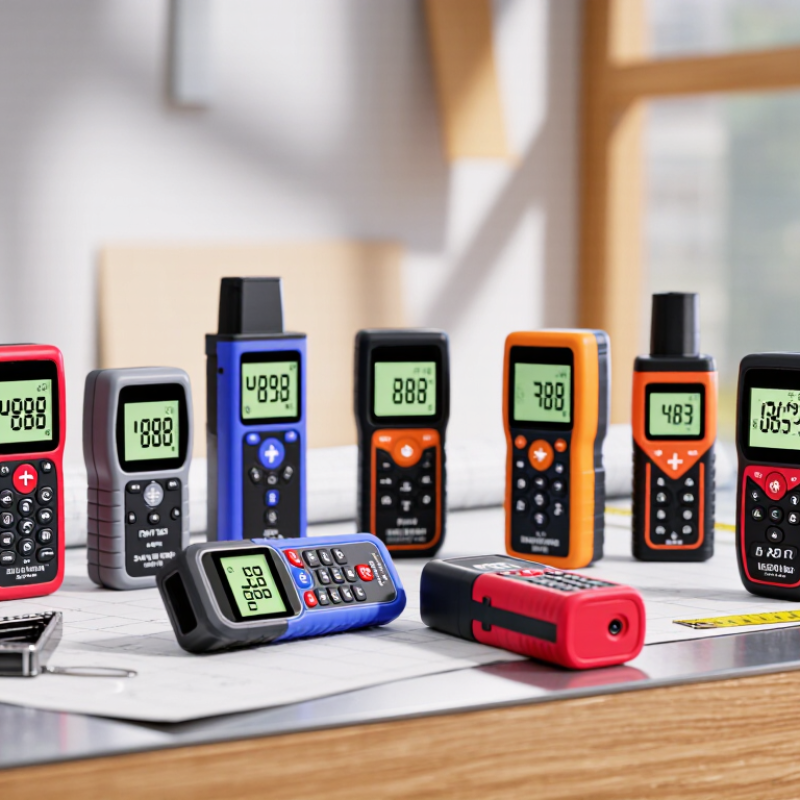
What Is a Laser Distance Meter and How Does It Work?
A laser distance meter measures the gap between its reference point and a target. It sends out a narrow beam and detects light reflected back. Depending on the model, the device calculates distance from the return time or a change in the light’s phase. The result appears on a small screen, often within seconds. Simple, but not magic.
For a room measurement, place the meter flat against a wall and aim at the opposite surface. Check whether the reading starts from the front or rear edge of the tool; that setting can change the result. Bright sunlight, glass, dark surfaces, and angled targets may weaken the return signal. A shaky hand can also shift the reading. On site, taking two measurements is a sensible check, especially before cutting material. I sometimes forget the reference setting, and that small mistake can create a surprisingly large mismatch.
Tips: Aim at a solid, matte surface when possible. Keep the tool steady, and avoid measuring through glass. Compare repeated readings if the number seems unexpected. For critical work, verify the distance with another method; a laser meter can be precise, but setup and target conditions still matter.
10 Best Laser Meters for Accurate Distance Measuring: Typical Maximum Ranges
A laser distance meter measures the time or phase shift of a laser beam reflected from a target and converts it into distance. The chart shows representative maximum measuring ranges commonly specified for different meter categories.
Basic indoor meters often reach about 40–60 m, while professional and target-assisted models can reach approximately 100–200 m. Typical stated accuracy is around ±1–3 mm under suitable conditions. Bright sunlight, reflective or dark surfaces, dust, and obstructions can reduce measuring performance.
Key Features That Define a Reliable Laser Measuring Tool
A reliable laser measuring tool should do more than show a distance quickly. Accuracy begins with a stable laser, a clear reference point, and consistent readings. Look for stated accuracy within a few millimeters, especially when measuring room dimensions or installed materials. A bright backlit display helps in dim corners. Large digits matter when dust or glare affects visibility.
Range is important, but it should match your real work. Indoor renovations may need 40 to 60 meters, while outdoor projects require stronger visibility and a longer rated range. Automatic reference-point selection reduces mistakes from the front or rear edge. Useful modes include area, volume, continuous measurement, and indirect height calculation. Keep it simple.
Protection also defines reliability. An IP-rated housing can resist ordinary job-site dust and splashes, but it is not waterproof by default. A rubberized grip, physical buttons, and a tripod connection improve control. Rechargeable batteries are convenient, yet replaceable batteries may be safer during long projects. Check battery life under active use, not only standby claims.
I have found that a perfect reading is not always a trustworthy reading. A reflective wall, angled surface, or moving hand can distort results. Measure twice when the cut matters. The tool should store recent values, warn about weak signals, and maintain calibration over time. Even then, occasional comparison with a known reference remains sensible. Small errors become expensive quickly.
How to Compare the 10 Best Laser Meters for Different Needs
Comparing the 10 best laser meters means matching their tested performance to the job, not just choosing the longest advertised range. For indoor room layouts, check short-distance accuracy, display readability, and whether the tool measures from its front or rear edge. For outdoor work, a bright aiming point, viewfinder, and tripod mount can matter more than extra functions. ISO 16331-1:2012 provides performance requirements and test methods for handheld laser distance meters, making it a useful reference when comparing accuracy claims. Small differences matter.
Look closely at the conditions behind each accuracy figure: target surface, distance, and lighting can change results. A pale wall is easier to measure than dark fabric or glass. NIST Technical Note 1297 explains that expanded measurement uncertainty often uses a coverage factor of 2, corresponding to roughly 95% confidence under suitable assumptions. That is a reminder to compare uncertainty, not just a single millimeter figure. For renovation, area and volume modes save steps; for site measurements, memory, battery life, and a protective rating may be more useful. And specs can mislead. Test repeatability on the same wall several times, then compare the readings with a tape measure before relying on a device for tight-fit work.
Accuracy, Range, Durability, and Ease of Use Explained
A laser meter’s accuracy matters most when a small error can affect a cut, cabinet fit, or room plan. Check the stated tolerance, often given in millimeters, and test the tool against a known distance before relying on it. A steady target helps. Bright sunlight, a reflective surface, or a soft angle can make readings jump. Measure twice when the result seems odd; even good tools have limits.
Range should match the spaces you actually measure, not just the largest number on the package. Long readings may be harder to take indoors if the beam is difficult to see or the target is narrow. For durability, look for a sturdy housing and clear information about dust or water resistance. A rubberized edge can help after an accidental bump, but it does not make a meter indestructible. Ease of use is practical, too: buttons should be easy to distinguish, the display readable at arm’s length, and common functions simple to reach. I would trade a few extra features for a clear screen and dependable readings. That preference may not suit everyone.
How to Choose the Right Laser Meter for Your Projects
A good laser meter starts with the spaces you measure, not the longest range on its box. For room renovations, a 40-meter range may be plenty; open sites or long corridors can call for more. Check the stated accuracy, too. A difference of a few millimeters matters when fitting cabinets, but less when estimating a wall’s paint area. Read how accuracy and range are defined, rather than treating headline figures as guarantees.
Think about the environment. Bright sunlight can make a laser dot hard to see, so an outdoor-viewing aid or target plate may help. Indoors, a clear display, backlight, and simple buttons are often more useful than a long list of modes. Measure from the front or rear reference point? Choose a model that makes this setting obvious, because one wrong reference can shift every reading. Dust and damp conditions also matter; check the protection rating if the meter will be used on a busy job site.
Then match features to real tasks. Area and volume calculations can save time when estimating flooring or paint, while continuous measurement helps position a shelf. Bluetooth can be convenient, but only if you will use the records. Hold the meter as you would on site, and test its readings against a known tape-measure distance. Test it twice. Small details count. I would not pay extra for features that stay untouched, though it is easy to underestimate how often a tripod thread or carrying case helps.
 Skip to content