2026 Top Mens Heated Sweatshirt Suppliers for Global Buyers
The 2026 Mens Heated Sweatshirt market is moving from niche outdoor gear toward practical daily wear. Buyers now expect warmth, washable fabrics, reliable batteries, and clear safety documentation. They also demand consistent production across seasons.
Market estimates remain uneven. Grand View Research reported strong growth across the global heated clothing market, driven by cold-weather workwear, outdoor recreation, and aging consumers. Fortune Business Insights also identified battery miniaturization as a major growth factor. The figures differ between reports. That difference deserves attention, not blind confidence.
Yvon Chouinard, Patagonia’s founder and a respected outdoor apparel authority, once said, “The best thing you can do for the planet is buy less stuff.” His warning matters here. A low-cost sweatshirt that fails after one winter creates waste and replacement costs. Global buyers should inspect fabric weight, heating-zone placement, battery cycle life, wash testing, and warranty terms. Small details matter. A supplier may promise “fast heating,” yet provide no measured heating time or temperature range.
This guide examines leading 2026 Mens Heated Sweatshirt suppliers for international buyers. It considers manufacturing experience, private-label capability, certifications, sample quality, order flexibility, and after-sales support. Buyers should also verify regional plug requirements and battery shipping procedures. No supplier is perfect. Even established factories may struggle with color consistency or peak-season capacity. Careful sampling remains essential before large orders.
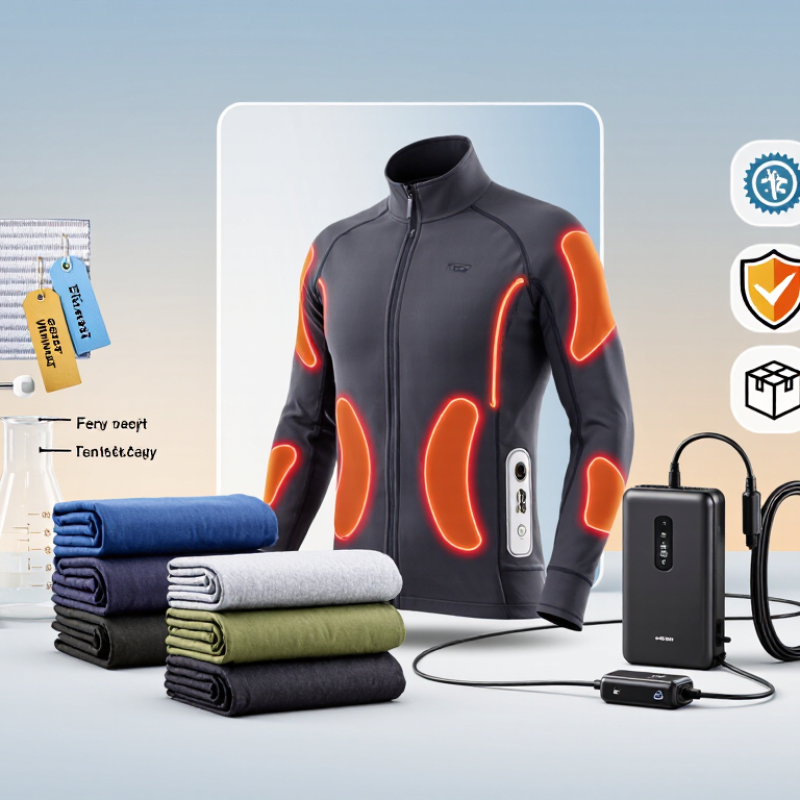
What Defines a High-Quality Men’s Heated Sweatshirt Supplier in 2026
A high-quality men’s heated sweatshirt supplier in 2026 must offer more than attractive product photos. Buyers should examine heating zones, temperature control, battery performance, fabric weight, and wash durability. Reliable suppliers provide test reports, clear material specifications, and samples that match bulk production. They should also explain how heating elements are protected from moisture, bending, and repeated washing.
Tips: Request two samples from different production batches. Test warmth across the chest, back, and sleeves. Check battery charging time and operating hours. Review relevant safety documents for your target markets. Ask for factory audit records, quality-control procedures, lead times, and replacement policies. Small details matter.
Supplier experience becomes visible during difficult questions. Can the factory maintain stable output during winter demand? Can it adjust sizing for different markets? Does the team respond with evidence instead of vague promises? Strong suppliers usually provide inspection checkpoints, packaging details, transparent pricing, and practical after-sales support. No supplier is perfect. A sample may feel excellent but reveal weak stitching after several washes. That possibility deserves attention. Global buyers should compare communication speed, production consistency, compliance awareness, and willingness to correct mistakes before signing a long-term agreement. Reliable cooperation is built through documented processes, honest limitations, and repeated performance.
Key Supplier Categories and Leading Global Manufacturing Regions
Global buyers usually choose among three supplier categories: OEM factories, ODM developers, and specialized heated-apparel manufacturers. OEM suppliers follow detailed specifications, while ODM teams offer ready-made designs with controlled customization. Specialized manufacturers often manage heating panels, wiring, battery pockets, and garment assembly under one roof. This can reduce coordination problems, but it may limit fabric choices.
China remains a major production region because its textile networks support fast sampling and component sourcing. Vietnam is increasingly attractive for cut-and-sew production and competitive labor costs. Bangladesh suits larger apparel programs, although heated garments require stronger technical oversight. Turkey and Eastern Europe can support shorter delivery routes into European markets. North American suppliers may provide closer communication and smaller production runs, but prices are often higher.
Tips: Request a working sample, not only product photos. Test heating consistency across the chest and back. Check wash-cycle performance, battery connections, insulation, and size grading. Ask for documented quality procedures and production lead times. Independent factory audits can reveal issues hidden in sales discussions. No sourcing map is perfect. A low quotation may exclude testing, packaging, or replacement parts. Buyers should compare the complete landed cost, not just the unit price. A practical supplier review should include technical capability, communication speed, worker conditions, export experience, and after-sales responsiveness.
| Manufacturing Region | Key Supplier Category | Primary Product Strength | Heating-System Capability | Typical Buyer MOQ | Indicative Bulk Lead Time | Cost Position | Best Fit for Global Buyers | Important Sourcing Checks |
|---|---|---|---|---|---|---|---|---|
| Mainland China | Large-scale OEM/ODM sportswear and workwear factories | Broad fabric, trim, garment, and electronics-sourcing ecosystem; suitable for fleece, French terry, softshell, and workwear constructions. | Strong capability for carbon-fiber or printed-heating panels, USB power connections, wiring channels, controller pockets, and integrated garment testing. | 300–1,000 units per style | 30–60 business days | Low to medium | Large international programs, private-label collections, multi-color orders, and technically complex heated apparel. | Request battery-safety documentation, wash-test results, heating-zone consistency, insulation protection, and applicable export certifications. |
| Vietnam | Export-oriented knitwear and outdoor-apparel manufacturers | Reliable cut-and-sew production for hoodies, sweatshirts, fleece layers, and lightweight outdoor garments. | Good capacity for sewn-in heating components and functional garment assembly, often supported by established export compliance systems. | 300–1,000 units per style | 35–65 business days | Medium | Buyers seeking diversified Asian sourcing, consistent export quality, and dependable production for sports or outdoor channels. | Confirm local versus imported component content, factory capacity during peak seasons, testing ownership, and shipping documentation. |
| Bangladesh | High-volume basic apparel and fleece specialists | Cost-competitive production of cotton, polyester, fleece, and basic sweatshirt silhouettes at commercial volumes. | More suitable for standardized heating designs with pre-approved components and clear assembly instructions than highly customized electronics. | 1,000–3,000 units per style | 45–75 business days | Low | High-volume promotional, uniform, private-label, and entry-level heated sweatshirt programs. | Validate electrical assembly experience, needle and seam protection, battery-pack logistics, social compliance, and production-line quality controls. |
| India | Vertically integrated cotton and technical-textile suppliers | Strong access to cotton yarns, knitted fabrics, fleece, dyeing, printing, embroidery, and garment finishing. | Suitable for moderate-complexity heated sweatshirts, especially when heating modules and battery packs are supplied to a defined specification. | 300–1,500 units per style | 40–75 business days | Low to medium | Buyers needing fabric customization, cotton-rich constructions, private labeling, and diversified textile sourcing. | Check fabric shrinkage, colorfastness, electronic-component sourcing, labeling rules, and compatibility with destination-country requirements. |
| Türkiye | Nearshore fashion, sportswear, and private-label manufacturers | Fast-response production for cotton-rich sweatshirts, brushed fleece, fashion silhouettes, and European-market collections. | Best suited to controlled heating layouts, premium trims, and smaller development runs when the supplier has established technical partners. | 100–500 units per style | 25–50 business days | Medium to high | European buyers prioritizing shorter transport routes, faster sampling, and flexible replenishment. | Confirm heating-component availability, EU product-safety documentation, customs classification, and the supplier’s experience with rechargeable batteries. |
| Portugal | Premium small-to-medium-batch cut-and-sew manufacturers | High-quality jersey, fleece, organic-cotton, and premium casualwear production with strong finishing and traceability potential. | Appropriate for premium heated sweatshirts using modular heating inserts or carefully engineered sewn-in panels. | 100–300 units per style | 30–55 business days | High | Premium labels, sustainable collections, European capsule launches, and buyers emphasizing workmanship and traceability. | Review minimum fabric commitments, component traceability, wash-care instructions, battery transport procedures, and testing responsibilities. |
| Pakistan | Cotton, fleece, and vertically linked knitwear manufacturers | Competitive access to cotton yarns, knitted fabrics, fleece garments, dyeing, and large-volume basic apparel production. | Works best with standardized heating kits, clearly documented sewing operations, and external validation of electrical performance. | 500–2,000 units per style | 35–65 business days | Low | Cost-sensitive buyers sourcing cotton-rich heated sweatshirts and repeat-volume programs. | Audit power-module assembly controls, fabric performance, needle detection, social compliance, and export readiness for target markets. |
| Indonesia | Sportswear, fleece, and casual knitwear factories | Established production of knitted garments, fleece layers, activewear, and casual apparel for export markets. | Suitable for mid-volume heated apparel when electronic parts, wiring layouts, and quality-control procedures are standardized. | 300–1,500 units per style | 40–70 business days | Medium | Sports, lifestyle, and outdoor buyers seeking an additional Southeast Asian sourcing base. | Confirm component import lead times, moisture protection, wash durability, battery declarations, and peak-season capacity. |
| Eastern Europe | Nearshore technical cut-and-sew and workwear suppliers | Flexible production for workwear, uniform layers, fleece garments, and short-run replenishment programs serving European buyers. | Potentially strong for controlled technical assembly, especially where the supplier already produces protective or functional clothing. | 100–500 units per style | 25–55 business days | Medium to high | European uniform, industrial, and outdoor buyers requiring proximity, smaller runs, and responsive delivery. | Verify heating-safety risk assessment, protective-clothing requirements, factory specialization, and the origin of batteries and electronic modules. |
How to Compare Heating Technology, Materials, Safety, and Product Quality
2026 Top Mens Heated Sweatshirt Suppliers for Global Buyers
Comparing heated sweatshirt suppliers starts with the heating system, not the product photo. Check heating zones, temperature settings, warm-up time, and heat distribution. A quality design should warm the chest and back evenly, without uncomfortable hot spots. Carbon-fiber or printed conductive elements may offer flexible coverage, but construction quality still matters more than technical labels. Ask for test samples. Measure heat performance after repeated use, not only on the first day.
Material selection affects comfort, durability, and user safety. Look for breathable outer fabric, soft inner layers, secure wiring, and reinforced seams around heating panels. A sweatshirt that feels warm but traps moisture may perform poorly during outdoor work. Check whether the battery pocket closes firmly and whether cables remain protected during movement. Wash-care instructions should be clear and realistic. Some suppliers claim easy maintenance, yet their samples may show fabric distortion after washing.
Safety documents deserve careful review. Request battery protection details, charging instructions, electrical test reports, and temperature-control information. Suppliers should explain overheat protection and short-circuit prevention in plain language. Product quality also depends on inspection records, size consistency, packaging, and replacement support. I would compare at least two production samples before placing a large order. One sample can hide weak stitching or unstable heating. No comparison is perfect. Real users may reveal problems that laboratory checks miss. Supplier communication matters too, especially when specifications change during production.
Supplier Verification: Certifications, Capacity, Pricing, and Customization
2026 Top Mens Heated Sweatshirt Suppliers for Global Buyers
Supplier verification should begin with documents, not attractive product photos. Ask for current quality certificates, factory audit records, and laboratory reports for fabric, wiring, controllers, and batteries. Requirements differ by destination, so a certificate accepted in one market may not satisfy another. Check report numbers, issuing laboratories, test dates, and product model details. A polished catalog is not proof.
Capacity needs practical checking. Request monthly output, sewing-line numbers, heating-element assembly capacity, and peak-season lead times. Compare these claims with production photos, staff counts, and a live video inspection. Order samples from the same production line used for bulk goods. Test heating zones, wash resistance, connector strength, and temperature stability. Small details reveal weak process control. Suppliers may overstate capacity.
Pricing should show fabric, heating components, packaging, testing, tooling, and shipping separately. The lowest quote often excludes important costs. Ask for tiered prices at 500, 1,000, and 5,000 units, then confirm payment terms and replacement policies. Customization may include logo placement, color, pocket layout, battery position, labels, packaging, and app-free controls. Provide a technical specification sheet with measurements and tolerance limits. My own mistake was approving a sample before checking sleeve fit. Revisions later increased both cost and delay. Reliable suppliers welcome documented changes and provide a pre-production sample before mass manufacturing.
How Global Buyers Can Select and Manage the Right Supplier Partnership
2026 Top Mens Heated Sweatshirt Suppliers for Global Buyers
Selecting a heated sweatshirt supplier requires more than comparing factory prices. Grand View Research expects the heated clothing market to expand strongly through 2030, increasing supplier pressure and quality risks. Global buyers should request production samples, heating-zone maps, battery specifications, and wash-test results before signing a large order. A warm sample is not enough.
Ask suppliers to document temperature control, charging protection, fabric composition, and inspection procedures. The Textile Exchange Materials Market Report 2024 states that polyester represented about 57% of global fiber production in 2023. Buyers should therefore verify recycled-content claims, test certificates, and traceability instead of trusting product descriptions. Independent laboratory testing can check electrical safety, thermal consistency, and durability after repeated washing.
Supplier management needs measurable terms. Set approval samples, acceptable defect limits, delivery milestones, spare-part rules, and corrective-action deadlines. Review factory capacity before peak winter production.
The World Bank’s Logistics Performance Index 2023 shows major differences in logistics performance between markets, so shipping buffers matter. Keep dual sourcing when practical. It costs more initially.
Still, one delayed battery shipment can stop an entire collection. I would also schedule quarterly video audits, though remote inspections can miss real working conditions. That limitation deserves honest attention.
Skip to content