2026 Best Window Awnings for Global Buyers?
Choosing the 2026 best Window Awnings requires more than comparing prices and fabric colors. Global buyers face different sunlight levels, rainfall patterns, wind conditions, and building styles. A balcony in Dubai needs strong heat protection. A coastal home in Portugal needs corrosion-resistant frames. A townhouse in Canada may need seasonal flexibility and dependable snow clearance.
Building scientist and window researcher John Carmody has observed, “Awnings are one of the most effective ways to control solar heat gain through windows.” That principle still matters in 2026. The right awning can shade glass before heat enters the room, reduce glare, and make outdoor spaces more comfortable. However, performance depends on projection depth, fabric openness, installation angle, and local exposure. Bigger is not always better.
Real-world testing reveals small but important differences. Some acrylic fabrics retain color after years of strong sunlight. Others fade around the edges. Motorized models offer convenience, yet sensors can fail or require professional adjustment. Manual systems may feel old-fashioned, but they are often easier to maintain. I also recognize a limitation: no single ranking can suit every climate, budget, or window shape.
This guide compares retractable, fixed, drop-arm, and smart Window Awnings for international buyers. It considers material quality, wind resistance, water handling, warranty coverage, repair access, and installation support. Read the specifications carefully. Ask local installers questions. A reliable purchase should fit your building, not merely follow a popular trend.
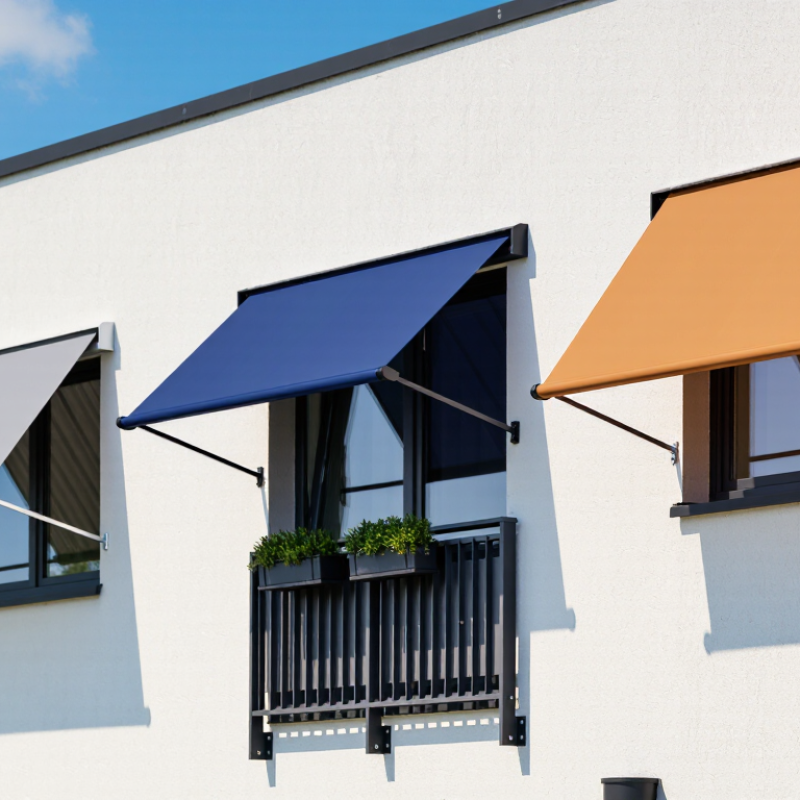
Types of Window Awnings for Different Global Climates and Buildings
2026 Best Window Awnings for Global Buyers?
Types of Window Awnings for Different Global Climates and Buildings
Window awnings should match local weather, wall structure, and daily building use. In hot, dry regions, retractable fabric awnings can shade glass while allowing evening ventilation. Light-colored, UV-resistant fabric usually reduces heat gain more effectively than dark material.
Coastal buildings need corrosion-resistant frames and sealed fixings. Salt air attacks ordinary metal quickly. Rainy tropical areas benefit from sloped awnings with strong drainage and quick-drying fabric. Wider projections can protect walls, but they may collect wind loads during storms. This detail is often underestimated.
Cold climates require careful placement around snow, ice, and window opening angles. Fixed awnings can reduce glare, yet they may block useful winter sunlight. Adjustable models offer better seasonal control. They also need regular inspection.
Different buildings create different installation challenges. Brick homes may accept heavier brackets than lightweight wall systems. Older buildings should receive a structural check before installation. High-rise projects need safe access plans and verified fixing points. A small office window may need a compact drop-arm awning, while a restaurant frontage may require a continuous canopy.
Performance is not only about appearance. Measure the window, wall exposure, wind direction, and maintenance access. On real projects, buyers sometimes choose maximum coverage and regret the darker interior. A practical awning can still look slightly awkward. That is acceptable if it protects the room, drains water, and remains serviceable. No single design fits every climate.
Key Materials, Designs, and Operating Systems Explained
2026 Best Window Awnings for Global Buyers?
Key Materials, Designs, and Operating Systems Explained
Choosing a window awning starts with climate, not appearance. Acrylic-coated fabric handles strong sunlight and resists color fading. Polyester is lighter and often costs less, but may need earlier replacement.
Aluminum frames provide stable support near coastal buildings. However, salt air can still attack poorly protected fasteners. Check corrosion resistance, drainage, and fabric tension before purchase.
A cassette design protects rolled fabric from dust and rain. Open designs are easier to inspect and usually cost less. Sloped awnings shed water better than nearly flat models. Compact drop-arm systems suit narrow windows and balconies.
I have seen attractive awnings fail because their projection blocked ventilation. Measure the window, wall clearance, and opening angle carefully. Small errors matter.
Operating systems range from a hand crank to motorized controls.
Manual systems remain practical where electricity is unreliable. Motors improve daily comfort, especially for wide awnings or high windows. Wind, light, and temperature sensors can adjust shade automatically.
Yet sensors need correct calibration and occasional cleaning. Wireless controls offer convenience, but signal range varies between buildings.
Some buyers focus too much on automation. A simple, serviceable system may perform better over ten years. Verify installation skills, replacement parts, safety features, and local weather requirements before ordering internationally.
How to Compare Energy Efficiency, Weather Resistance, and Durability
2026 Best Window Awnings for Global Buyers?
How to Compare Energy Efficiency, Weather Resistance, and Durability
Energy efficiency begins with fabric performance, not appearance. A light-colored awning can reflect strong sunlight and reduce indoor heat. However, shade depends on window direction, installation angle, and local climate. Ask for solar reflectance, thermal emittance, and visible light data. These figures are more useful than vague claims such as “cooling fabric.” In hot regions, a projection of 60 to 90 centimeters may noticeably reduce afternoon glare.
Weather resistance requires practical checking. Look for solution-dyed acrylic or coated polyester with reliable ultraviolet protection. Inspect seams, stitching, and drainage design. Weak seams often fail before the fabric does. For coastal homes, corrosion-resistant frames and stainless fasteners matter greatly. In windy areas, buyers should check tested wind ratings, not just marketing photographs. No awning is storm-proof.
Durability also depends on daily handling. A manual model may suit a small window, while larger awnings need a stable operating system. Ask how the product performs after repeated opening cycles. Replacement fabric availability is important, especially for overseas buyers. It can prevent an entire frame from becoming waste. I have seen buyers focus on fabric color and overlook mounting strength. That mistake is expensive. The awkward truth is that the most durable option may cost more initially, yet a cheaper awning can fade, loosen, or trap water within a few seasons. Check warranty terms, maintenance instructions, and local installation support before comparing final prices.
Installation, Maintenance, Safety, and Regional Compliance Considerations
2026 Best Window Awnings for Global Buyers?
Installation, Maintenance, Safety, and Regional Compliance Considerations
Window awnings can reduce cooling demand when correctly sized and positioned. The U.S. Department of Energy reports that exterior awnings may reduce summer solar heat gain by up to 65% on south-facing windows and 77% on west-facing windows. However, performance depends on fabric openness, projection, window orientation, and local climate. IEA’s Buildings 2024 analysis also shows that buildings consume about 30% of global energy demand, making passive shading increasingly practical.
Measure twice.
Installers should inspect masonry, timber, insulation layers, and hidden electrical cables before drilling. Coastal buyers need corrosion-resistant fixings and stronger wind controls. In cyclone or typhoon regions, retractable awnings should include a tested retraction strategy, not only a stronger frame. European projects may need products assessed against EN 13561 and local construction requirements. North American installations should follow applicable building codes, electrical rules, and manufacturer load data. Requirements differ by city.
Maintenance is often underestimated. Clean fabric with mild soap, check brackets after severe weather, and keep motorized components dry. A loose anchor can damage both the awning and the wall. Outdoor shading systems should also avoid blocking emergency exits, ventilation paths, or fire-service access. Product labels, installation records, and wind-rating documents help buyers verify claims. Yet no checklist replaces a qualified local inspection. My practical concern is simple: energy savings are useful, but unsafe installation makes the investment difficult to defend.
2026 Best Window Awnings for Global Buyers? - Installation, Maintenance, Safety, and Regional Compliance Considerations
Practical comparison of common window-awning systems for residential and light-commercial applications. Final selection should be confirmed against local building rules, structural conditions, weather exposure, and manufacturer instructions.
| Awning system | Typical projection / width | Best installation surfaces | Recommended pitch and drainage | Typical installation requirements | Routine maintenance | Safety considerations | Suitable climate exposure | Regional compliance checkpoints |
|---|---|---|---|---|---|---|---|---|
| Manual retractable folding-arm | Projection commonly 1.5–4.0 m; single-unit width commonly up to about 6 m, subject to frame design. | Reinforced concrete, structural masonry, steel beams, or verified timber framing. Avoid unsupported cladding and weak render. | Use a positive slope, often around 10–15 degrees, to improve runoff. Keep the front bar clear of doors, windows, and pedestrian routes. | Accurate bracket alignment, suitable chemical or mechanical anchors, level fixing line, and a structural check for pull-out and overturning forces. | Clean fabric with mild soap and water at least twice yearly; inspect arms, joints, fixings, and fabric tension every 6–12 months. | Retract during strong wind, storms, and heavy rain unless specifically engineered for those conditions. Keep moving arms away from children and obstructions. | Good for sunny, moderate climates. Less suitable for exposed coastal or high-wind locations without wind-rated engineering and regular inspection. | Check local planning rules, façade restrictions, property-line limits, wind-load design, and accessibility clearance. Heritage façades may require approval. |
| Motorized retractable cassette | Projection commonly 2.0–4.0 m; width is determined by tube, arm, fabric, and wind-load limits. | Structural concrete, masonry, steel, or engineered timber. The cassette should be supported by dedicated brackets rather than façade cladding. | Set sufficient pitch for runoff and prevent water pooling. Confirm that the closed cassette does not obstruct window operation or ventilation. | Requires electrical supply by a qualified installer, weather-protected connections, limit-switch setup, bracket alignment, and possible wind or sun sensors. | Clean fabric and cassette twice yearly; test controls and sensors seasonally; inspect cables, seals, arms, and fixings annually. | Use automatic retraction only as a supplementary control, not a substitute for safe operating limits. Include an accessible isolation switch where required. | Suitable for sun control and light weather protection. Specify corrosion-resistant components for marine air and a suitable wind class for exposed sites. | Verify electrical safety rules, outdoor equipment ratings, radio or control requirements, energy controls, and local wind-load provisions. |
| Drop-arm / pivot-arm awning | Projection commonly 0.6–1.2 m; individual widths commonly 0.6–3.5 m depending on arm and fabric configuration. | Solid masonry, concrete, or a verified structural frame around the window opening. Fixings must not rely only on window trim. | Usually installed with a slight outward fall. Maintain clearance from sills, handles, ventilation openings, and emergency egress windows. | Requires correct arm geometry, secure side brackets, unobstructed movement, and accurate positioning relative to the window frame. | Wash fabric every 6–12 months; remove leaves and dirt from hinges; check arm tension, brackets, and fabric edges. | Do not block required escape windows or fire-access routes. Retract before high winds and prevent the arms from projecting into walkways. | Effective for vertical solar shading and moderate rain protection. Generally less appropriate for large openings or very windy façades. | Check emergency-egress dimensions, façade permissions, projection limits over public space, and requirements for external window attachments. |
| Fixed sloped canopy | Projection commonly 0.6–1.5 m; width is normally matched to the window or entrance opening. | Designed steel, aluminium, or timber support structure fixed into load-bearing masonry or structural framing. | Use a permanent slope appropriate to the roof or fabric system; provide a safe discharge path and prevent water from draining onto entrances. | Requires a site-specific check for dead load, wind uplift, snow load where applicable, flashing, waterproofing, and façade penetration sealing. | Clear debris twice yearly; inspect waterproofing, seams, frame corrosion, brackets, and drainage after severe weather. | Designed as a permanent structure; do not use it as a balcony, storage support, or climbing surface. Ensure safe headroom above doors and paths. | Better for regular rain and sun protection than retractable systems, provided the frame and drainage are designed for local weather loads. | May require planning or building approval, structural calculations, snow and wind design, fire-separation review, and stormwater management. |
| Fabric window shade / screen | Drop length commonly 1.0–3.0 m; width commonly 0.6–4.0 m, depending on tube size and side-guide design. | Window reveals, masonry, concrete, or a dedicated subframe. Side guides require accurate, continuous fixing surfaces. | Primarily vertical; maintain a small separation from glazing and provide bottom-bar clearance to avoid friction and trapping. | Requires precise measurement, level headbox installation, guide alignment, and adequate allowance for fabric movement and thermal expansion. | Dust or wash according to fabric instructions every 6–12 months; inspect side guides, bottom bars, fasteners, and motor limits. | Use child-safe operating systems where applicable. Keep the screen clear of window locks, heaters, vents, and emergency exits. | Very effective for glare and solar-heat reduction. Mesh openness should be selected according to glare, privacy, daylight, and ventilation needs. | Review daylight, ventilation, egress, electrical, fire-performance, and accessibility requirements, especially in multi-unit or commercial buildings. |
| Tensioned cable or guide awning | Projection commonly 1.0–3.0 m; width commonly 1.0–5.0 m, depending on cable span, fabric weight, and anchorage. | Solid masonry, concrete, steel, or engineered timber capable of resisting cable tension and wind forces. | Install with enough fall to shed water; avoid fabric pockets that can collect rain and increase loads on anchors. | Needs accurate anchor spacing, tension adjustment, corrosion-resistant cable hardware, and a structural review of both end supports. | Inspect cable tension, anchor plates, turnbuckles, fabric seams, and corrosion every 6 months and after severe weather. | Cable tension can create significant local forces. Protect users from exposed cables and remove or retract fabric when conditions exceed its rating. | Useful for balconies and irregular openings; choose marine-grade hardware in salt-air environments and engineer carefully for high winds. | Check structural approval, projection over public areas, fall protection near balconies, corrosion requirements, and local façade-control rules. |
A Practical Framework for Choosing the Best Window Awning in 2026
Choosing the best window awning in 2026 requires more than comparing fabric colors and online prices. Start with climate, window orientation, and daily use. In site assessments, west-facing glass often creates the sharpest afternoon heat, while south-facing windows need seasonal control. The U.S. Department of Energy reports that properly installed awnings can reduce solar heat gain by up to 65% on south-facing windows and 77% on west-facing windows. Actual performance varies with projection, fabric openness, glass type, and installation quality.
Measure twice. A practical framework should check projection depth, mounting surface, drainage, wind exposure, and operating access. Retractable systems may suit changing seasons, but fixed awnings can offer simpler maintenance in harsh locations.
Wind changes everything. Buyers should request tested wind ratings, corrosion information, UV resistance, and installation instructions based on recognized construction standards. A low-cost product can become expensive if brackets loosen or water reaches the wall.
Energy performance also matters. The 2024 UNEP Global Status Report for Buildings and Construction states that buildings consume about 32% of global energy and produce roughly 34% of global carbon emissions. Exterior shading is not a complete efficiency solution, but it can reduce cooling demand before mechanical equipment operates. Compare the awning’s expected service life, repairability, packaging, and local replacement access. Be skeptical of universal claims. A model that performs well in a dry inland climate may fail earlier near salt air or under repeated storms. The best choice is therefore a documented fit for the building, not simply the highest advertised specification.
Skip to content